
 Egypt
 Libya
 Morocco
 Sudan
 Tunisia
 Benin
 Burkina Faso
 Cabo Verde
 Côte d'Ivoire
 Ghana
 Guinea
 Guinea-Bissau
 Liberia
 Mali
 Mauritania
 Niger
 Nigeria
 Senegal
 Sierra Leone
 The Gambia
 Togo
 Cameroon
 Central African Republic
 Chad
 DR Congo
 Equatorial Guinea
 Gabon
 Republic of the Congo
 São Tomé and Príncipe
 Burundi
 Comoros
 Djibouti
 Eritrea
 Ethiopia
 Kenya
 Madagascar
 Malawi
 Mauritius
 Mozambique
 Rwanda
 Seychelles
 Somalia
 South Sudan
 Tanzania
 Uganda
 Angola
 Botswana
 Eswatini
 Lesotho
 Namibia
 South Africa
 Zambia
 Zimbabwe
When Algerian heritage travels to Montreal
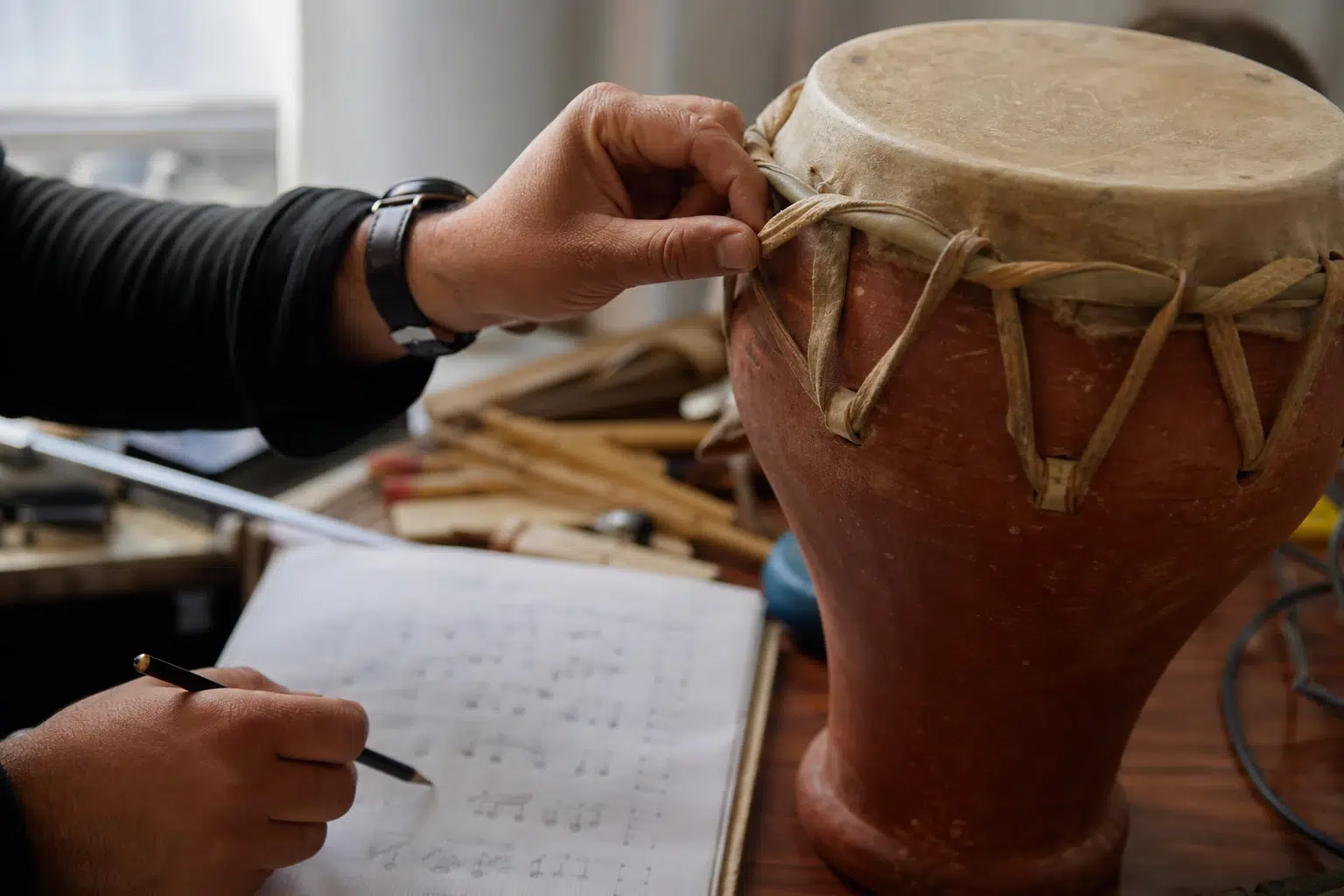
A terracotta drum, sung poetry and Indigenous voices from Quebec. That is where Sidi Bémol’s new project begins. It is not looking for the effect of a collection. Rather, it seeks to bring musical memories into dialogue, each in its own way bearing language, land and transmission.
For an Algerian audience, the stakes go beyond the release of an album. They touch on a broader question: how can old forms be kept alive without being frozen in time? How can popular traditions such as melhoun and guellal be given contemporary resonance without uprooting them? That is precisely the wager of Guellal Montréal, billed as the 13th album by Hocine Boukella, known by his stage name Sidi Bémol.
An Algerian musician whose path was forged beyond the usual frameworks
Born in Algiers in 1957 and raised in Belcourt, Hocine Boukella belongs to a generation of Algerian artists who have developed their own idiom beyond rigid categories. His biology studies at Bab Ezzouar, followed by his move to Paris in 1985 to pursue a doctorate in population genetics, already tell the story of a detour. Art eventually took precedence, without eclipsing science or drawing, two other dimensions of his career. His discography, documented by RFI Instrumental, shows a consistent approach: blending rock, blues, chaâbi, Kabyle music, gnawa and singer-songwriter traditions.
This freedom is no pose. It took shape in the 1990s, with a repertoire that often shifted the familiar reference points of Algerian music in the diaspora. In this journey, the return to melhoun is no retreat. It is more a return to a source. In Algeria, melhoun poetry remains a major part of oral culture. Algerian Radio regularly recalls its place in collective memory and its role in passing on social and historical narratives.
The guellal, melhoun and an Indigenous echo
The heart of the project can be read in its title. The guellal is one of the emblematic percussion instruments of western Algeria. It has long accompanied the rural and popular music of Oran, where it converses with the gasba and the sung forms of bedoui. Melhoun, meanwhile, refers to sung popular poetry, sophisticated in form, accessible in language and deeply rooted in social life. The project brings them together and sets them resonating with Indigenous writing from Quebec.
The Quebec inspiration is not decorative. Two names shape the album: Joséphine Bacon and Natasha Kanapé Fontaine. The former is a leading figure in Quebec’s Innu culture, a poet, translator and custodian of memory. The latter, from Pessamit, is an Innu poet and writer whose work foregrounds language, territory and the rights of First Peoples. Their biographies, available through Quebec institutions and on their official website, confirm the importance of these voices in Quebec’s literary and cultural life.
Sidi Bémol’s approach rests on a simple intuition: some traditions recognise one another through the place they give to speech, land and memory. The artist says he found in Innu texts an emotion akin to that of melhoun and Berber poetry. This comparison does not erase historical differences. It highlights an inner rhythmic affinity: a way of singing of survival, continuity and attachment to the living world.
An album release, but also a political reading of culture
The launch concert scheduled at the Cabaret Sauvage in Paris on 25 September 2026 gives the project visibility in Europe, but its centre of gravity remains Algerian. At a time when Algerian music circulates widely through the diaspora, this kind of offering is a reminder that innovation does not come only from commercial channels. It also emerges from reinterpreting popular heritage. The Cabaret Sauvage website announces the concert and says the artist will unveil tracks from his new album, described as inspired by Native American poetry and driven by the sound of the guellal.
The album contains 12 tracks, including songs in Arabic, Kabyle, French and English. This linguistic plurality is no accident. It reflects the position of an Algerian artist based between several cultural spaces, who continues to see his country as an aesthetic matrix. For Algeria, this kind of creation has a tangible impact: it gives prominence to heritage forms often associated with the past while giving them international reach. It is also a reminder that Algerian musical modernity cannot be reduced to raï, chaâbi or rock. It is a crossroads.
The significance is regional, too. Across North Africa, sung poetry repertoires, vernacular percussion and marginalised languages often play the same role: preserving memory where written archives have been fragile, incomplete or contested. By placing Algerian melhoun alongside Innu writing, Sidi Bémol joins a broader conversation about the South-South circulation of heritage and the ability of artists from the continent to engage with other Indigenous peoples without passing through the filter of dominant cultural centres.
What this release says about Algeria’s culture today
Ultimately, Guellal Montréal tells more than the story of an encounter between Algeria and Quebec. It says something about the Algerian music scene itself: its ability to project itself far afield while returning to its oldest materials. The album was preceded by several tracks, including “Les Menottes”, “Chicoutimiya” and “Trop de Boulot”, showing that the project was built up gradually. A book of lyrics, translations and scores also accompanies the release, a sign that the work is intended to remain accessible, transmissible and available for reuse by other musicians or researchers.
The next steps will unfold over the coming months: dates in France and Belgium, a tour of Algeria announced for February 2027, then a return to Canada in the autumn. For Algerian audiences, the story is not simply that of a diaspora artist performing in Paris. It is that of a musician reminding them that the traditions of Oran, Kabylia and melhoun are not relics. They remain living materials, able to travel, transform and speak to other peoples without losing their distinctive voice.



