Egypt
 Libya
 Morocco
 Sudan
 Tunisia
 Benin
 Burkina Faso
 Cabo Verde
 Côte d'Ivoire
 Ghana
 Guinea
 Guinea-Bissau
 Liberia
 Mali
 Mauritania
 Niger
 Nigeria
 Senegal
 Sierra Leone
 The Gambia
 Togo
 Cameroon
 Central African Republic
 Chad
 DR Congo
 Equatorial Guinea
 Gabon
 Republic of the Congo
 São Tomé and Príncipe
 Burundi
 Comoros
 Djibouti
 Eritrea
 Ethiopia
 Kenya
 Madagascar
 Malawi
 Mauritius
 Mozambique
 Rwanda
 Seychelles
 Somalia
 South Sudan
 Tanzania
 Uganda
 Angola
 Botswana
 Eswatini
 Lesotho
 Namibia
 South Africa
 Zambia
 Zimbabwe
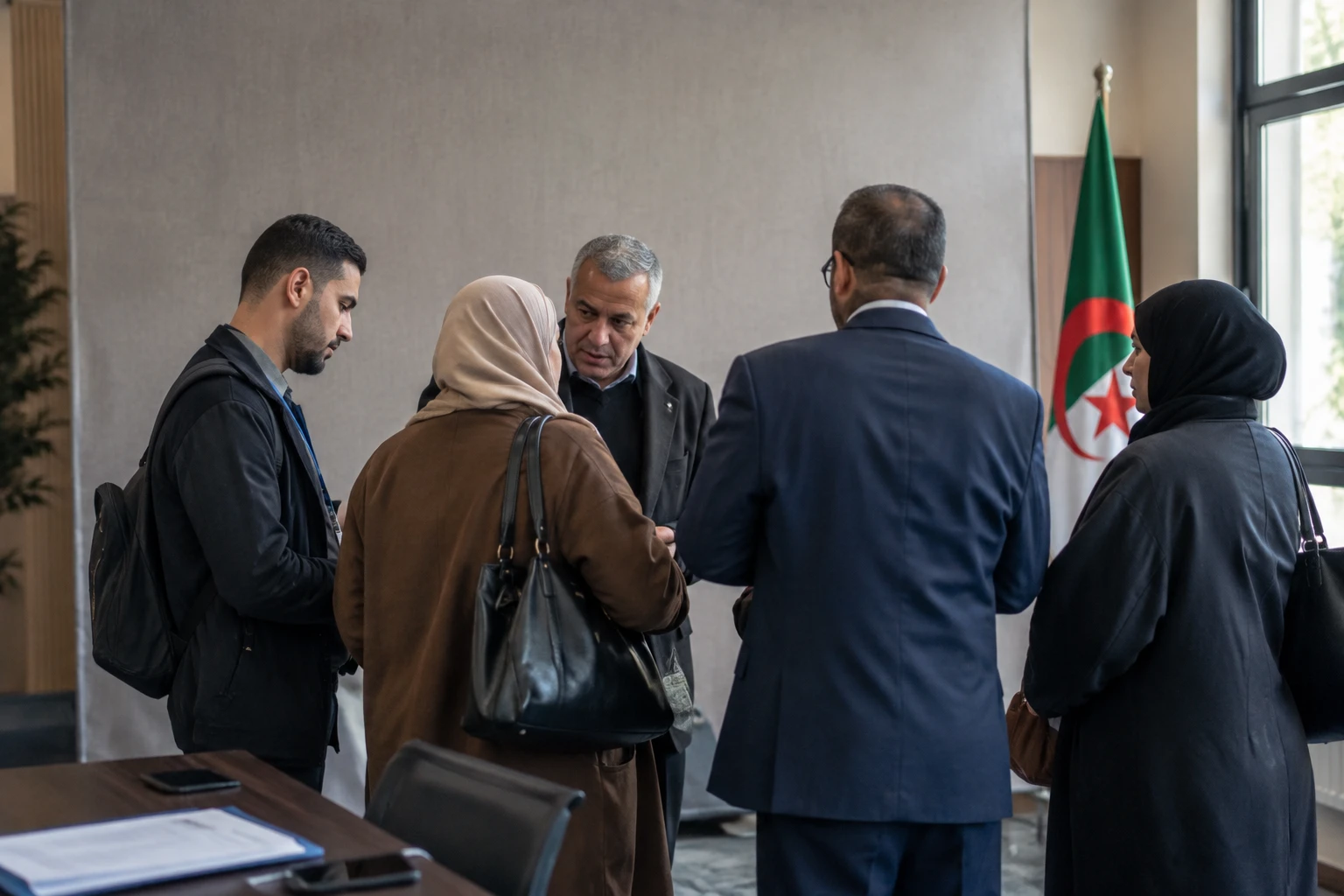
In Paris, a football match is a reminder that an Algerian legal case has also become an issue between two capitals. On 11 November 2026, the 500th day of Christophe Gleizes’s detention, his family was received by France’s foreign minister. They are now hoping for a pardon from Algerian President Abdelmadjid Tebboune, although no decision has been announced.
A legal case at the heart of bilateral tensions
The journalist’s detention comes amid a Franco-Algerian relationship marked by political and diplomatic disagreements. These tensions complicate consular efforts and exchanges between governments, although they do not, on their own, explain any particular judicial decision.
In North Africa, the Arab Maghreb Union (AMU) brings together Algeria, Tunisia, Morocco, Libya and Mauritania. The organisation remains largely inactive, however. The Gleizes case therefore falls primarily within the bilateral relationship between Algiers and Paris, rather than under a regional mediation mechanism.
In 2021, the Algerian authorities designated the Movement for the Self-Determination of Kabylie (MAK), an independence movement, as a terrorist organisation. This designation sheds light on the security framework invoked in the case. On its own, it does not settle the question of the journalistic nature of Gleizes’s work or the evidence considered by the judges.
Contested conviction, hoped-for pardon
Christophe Gleizes, a French sports journalist, was arrested in Algeria in May 2024 and then placed under judicial supervision. He had travelled to the country to prepare reports on Jeunesse sportive de Kabylie (JSK), a football club based in Tizi Ouzou. On 29 June 2025, a court sentenced him to seven years in prison, notably for “apology for terrorism” and possession of publications for propaganda purposes. On 3 December 2025, the court of appeal upheld the sentence. The report on the appeal hearing sets out these judicial findings.
At the heart of the case are interviews conducted several years earlier with a JSK official who also had links to the MAK. The Algerian authorities considered these contacts and documents seized as part of proceedings under counter-terrorism legislation. Reporters Without Borders (RSF), which is campaigning for the journalist’s release, instead presents these exchanges as part of his professional work. These opposing positions must remain attributed: they do not replace examination of the court rulings and the case file.
In May 2026, Gleizes withdrew his appeal to the Court of Cassation, paving the way for a possible presidential pardon. This step means neither automatic release nor recognition of a miscarriage of justice. A pardon is a decision for the head of state and is not the same as an acquittal. As of 11 November, no pardon had been announced.
The family was received on 11 November by Jean-Noël Barrot, France’s foreign minister. The ministry said French diplomacy remained mobilised to secure the journalist’s release and return to France. In Paris, a match organised in support of Gleizes to mark 500 days in detention gave public visibility to his family’s campaign. It expresses solidarity; it does not, in itself, alter the proceedings in Algeria.
Between public pressure and diplomatic room for manoeuvre
For the family, a pardon appears to be a possible outcome after certain stages of the judicial process have been exhausted. But this expectation depends on an Algerian decision. France can make representations to the authorities and monitor the consular situation of its national; it cannot take the place of Algerian institutions.
The case also highlights a broader difficulty for foreign journalists: working with local contacts can take on a security dimension when those people are linked to a banned movement. The boundary between journalistic activity and criminal suspicion then becomes central to the case. The Algerian government defends the application of its legislation; press freedom organisations dispute the conviction and warn of its consequences for reporting.
The effects are not the same for everyone. The family, based in France, is leading the public campaign and diplomatic efforts. In Algeria, the case is proceeding under the national legal system, with issues relating to security and the Kabylie question. For Algerian and foreign journalists, it raises questions about professional contacts, travel and the legal risks associated with covering sensitive subjects.
The diplomatic context shapes perceptions of the case, but conflating the two would be misleading: an improvement in relations between Algiers and Paris would not guarantee a pardon, just as a period of tension does not allow the judicial outcome to be inferred. The report on the 11 November campaign describes the family’s reception and the diplomatic impasse.
A signal watched beyond the Franco-Algerian stand-off
For Algeria, the case concerns how counter-terrorism legislation applies to reporting activities and links with political actors designated as terrorists by the state. For France, it tests the ability of consular diplomacy to secure a favourable outcome without turning the case into a permanent public confrontation.
At regional and continental level, no AMU or African Union mechanism has been announced as directly involved. The issue nevertheless extends beyond the two countries: African governments, press organisations and newsrooms are watching how national security, a fair trial and freedom to report are reconciled in cases involving cross-border contacts.
The next decisive development remains a possible decision by President Tebboune. Until then, French statements, the family’s efforts and any communication from the Algerian authorities will help show whether the case is moving forward. The 500 days mark a symbolic milestone for the family; they do not foreshadow what comes next.