
 Egypt
 Libya
 Morocco
 Sudan
 Tunisia
 Benin
 Burkina Faso
 Cabo Verde
 Côte d'Ivoire
 Ghana
 Guinea
 Guinea-Bissau
 Liberia
 Mali
 Mauritania
 Niger
 Nigeria
 Senegal
 Sierra Leone
 The Gambia
 Togo
 Cameroon
 Central African Republic
 Chad
 DR Congo
 Equatorial Guinea
 Gabon
 Republic of the Congo
 São Tomé and Príncipe
 Burundi
 Comoros
 Djibouti
 Eritrea
 Ethiopia
 Kenya
 Madagascar
 Malawi
 Mauritius
 Mozambique
 Rwanda
 Seychelles
 Somalia
 South Sudan
 Tanzania
 Uganda
 Angola
 Botswana
 Eswatini
 Lesotho
 Namibia
 South Africa
 Zambia
 Zimbabwe
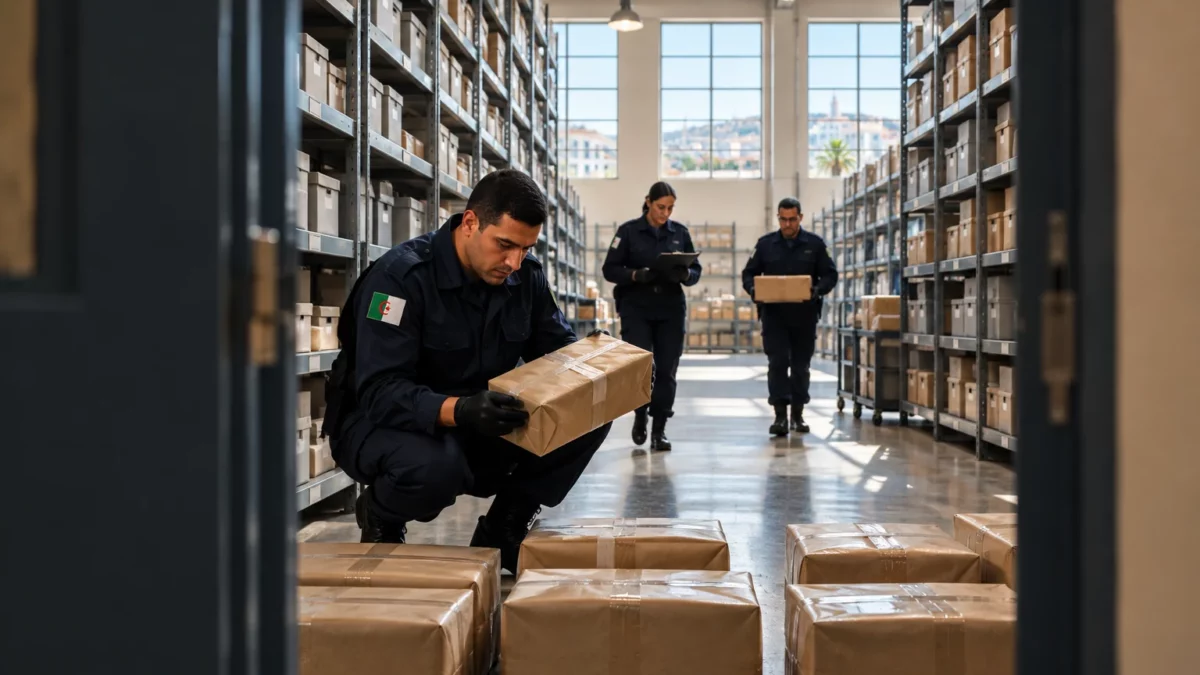
A massive seizure does not, by itself, reveal where the drugs came from or who organised their passage. In Algeria, the debate now has a diplomatic and security dimension: President Abdelmadjid Tebboune has raised the possibility of targeting production sites, without publicly naming a country.
A border at the heart of a severed relationship
Algeria shares with Morocco a land border that has been closed since 1994. Diplomatic relations between the two countries have been severed since August 2021. Disagreements concern, among other things, Western Sahara, regional security and mutual accusations. In this climate, any statement about trafficking can be heard as more than a policing matter.
Both states are members of the Arab Maghreb Union (AMU), which also brings together Tunisia, Libya and Mauritania. But tensions between Algiers and Rabat have long hindered regional cooperation. Trafficking networks cross borders and can use several routes. Dismantling them often depends on intelligence-sharing and coordination between neighbouring countries.
Algeria regularly says that consignments of cannabis resin come from Morocco. Rabat was not named in Tebboune’s statement reported here. And the Algerian authorities have said that the origin of the products recently destroyed remained uncertain. This distinction matters: a political accusation is not, by itself, proof of the origin of any particular seizure.
Strong words, but no named target
On Sunday 15 November, at the opening of the 2026-2027 judicial year at the Supreme Court in Algiers, Tebboune described drug trafficking as a “declared war against Algeria”. He added that the army would be “on the front line” and that the country could, “if necessary”, go as far as the source of production, in the name of self-defence. The date and remarks have been reported by several media outlets, including Ahram Online, citing AFP, and the Algerian daily Cap Ouest.
The president did not name Morocco and did not specify what measures might be considered. His words therefore signal a firm stance, but do not allow us to conclude that an operation beyond Algeria’s borders has been decided. The reference to self-defence is a justification advanced in his speech, not a clarification of the legal or military terms of any potential action.
A few days earlier, the Algerian authorities had announced the destruction of nearly ten tonnes of cannabis resin and 33 million psychotropic pills seized. This volume illustrates the scale of the products removed from illegal channels. Without further data, it does not make it possible to measure consumption in the country, identify the networks responsible or determine the origin of each batch.
Between border security and public health
The government presents drug trafficking as a threat to national security and young people. The previous month, Tebboune had already spoken of a “hybrid war” waged by “saboteurs”, without identifying any actors. The Ministry of Defence regularly publishes seizure figures, sometimes accompanied by information about their origin. These announcements report on the work of the services, but do not replace detailed findings from judicial investigations into the networks and their backers.
The security response primarily concerns forces deployed at the borders and the police, gendarmerie and justice services. It also affects residents of border regions, whose movements and economic activities may be impacted by tighter checks. In cities, the issues also play out in distribution networks and prevention and treatment services. Seizures alone do not provide information on access to treatment, consumer profiles or the effectiveness of prevention.
The substances mentioned do not come from a single supply chain. Cannabis resin and psychotropic pills differ in their production, transport and sales networks. A strategy focused on one border or country could therefore overlook other routes and the networks organising supply. An article in Le Monde on the strengthening of Algeria’s security response highlights precisely the diversity of the routes and substances involved.
The risk of political escalation
The statement’s significance thus extends beyond the fight against drugs. In an already strained bilateral relationship, talking of action “at the source” without specifying its framework can fuel tensions, even without explicitly naming anyone. H24info’s report also notes that Morocco was not named in the speech, while recalling Algiers’ repeated accusations against it.
For the largely inactive AMU, the question is whether concrete cooperation against transnational networks is possible despite political disagreements. At the continental level, this is part of a broader challenge: securing trafficking routes without conflating presumed origin, transit and criminal responsibility. What happens next will depend on the decisions announced by Algiers, the evidence made public by investigations and how Rabat responds to the recurring accusations. At this stage, Tebboune has not named any actor as the target of a specific action.



