End of oil revenues threatens African budgets and stability
Expected global oil demand declines expose highly dependent African states. Budgets, jobs, currencies and public services could come under pressure if diversification remains too slow.
 Algeria
 Angola
 Benin
 Botswana
 Burkina Faso
 Burundi
 Cabo Verde
 Cameroon
 Central African Republic
 Chad
 Comoros
 Côte d'Ivoire
 Djibouti
 DR Congo
 Egypt
 Equatorial Guinea
 Eritrea
 Eswatini
 Ethiopia
 Gabon
 Ghana
 Guinea
 Guinea-Bissau
 Kenya
 Lesotho
 Liberia
 Libya
 Madagascar
 Malawi
 Mali
 Mauritania
 Mauritius
 Morocco
 Mozambique
 Namibia
 Niger
 Nigeria
 Republic of the Congo
 Rwanda
 São Tomé and Príncipe
 Senegal
 Seychelles
 Sierra Leone
 Somalia
 South Africa
 South Sudan
 Sudan
 Tanzania
 The Gambia
 Togo
 Tunisia
 Uganda
 Zambia
 Zimbabwe
Expected global oil demand declines expose highly dependent African states. Budgets, jobs, currencies and public services could come under pressure if diversification remains too slow.
Tripoli aims to raise gas production to 4 billion cubic feet a day to ease pressure on the domestic market and revive sales to Italy. But…
After a 13-year hiatus, a direct flight once again connects Libya and France. The resumption of the Benghazi-Paris route signals a cautious revival of economic and…
Libya has confirmed the commercial viability of the Essar field in the Sirte Basin. For Tripoli, OMV and the NOC, the project is intended to speed…
The closure of a valve on the Hamada-Zawiya pipeline halted three oil sites in Libya. The National Oil Corporation threatens to declare force majeure if the…
Algeria consolidated gas deliveries to Spain and Italy in 2026, while Libya lost ground in the Italian market. Algiers is also counting on new investment to…
In northern Chad, Tibesti’s gold weighs on security and local balances of power. N’Djamena is strengthening ties with Tripoli and Benghazi to better control a strategic,…
In northern Chad, Tibesti’s gold fuels both the local economy and security tensions. The Miski agreement highlights a still-fragile peace on the Libyan border.
Libya is moving towards a new political compromise after years of division. Beyond the vote, the stakes include the Central Bank, the budget and oil revenues.
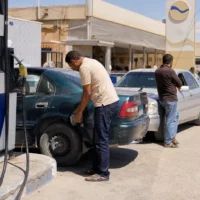
In Tripoli, power cuts and fuel shortages are disrupting businesses, households and petrol stations. The energy crisis exposes the weight of corruption, imports and fragile institutions…
The NOC has formalised a production-sharing agreement with Chevron for Zone 106 in the Sirte Basin. The contract points to renewed investment in Libya, but remains…
The NOC has signed a production-sharing agreement with Chevron in the Sirte Basin. The partnership is intended to support Libya’s goal of producing 2 million barrels…
As Libya reopens bidding, the NOC is seeking $30–40 billion to develop more than 60 fields. But liquidity, security and political rivalry continue to hold back…
Power cuts in Tripoli and several other cities are fuelling anger over what is seen as poor management. The UN has highlighted fuel diversion and deep-rooted…
Drone strikes on Zawiya highlight the vulnerability of Libya’s energy assets. As the NOC seeks to raise production, site security remains the main obstacle for investors.
Libya’s second-largest refinery in Zawiya has been targeted in a series of unclaimed drone attacks, raising fresh concerns over energy security just kilometres from Tripoli.
A drone struck a fuel tank at Zawiya, sparking a major fire at the most strategic refinery in western Libya. No injuries were reported, but the…
A petrol storage tank was destroyed in an attack on a key site in Libya’s oil industry. The incident has renewed concerns over the security of…
Naji Issa’s resignation has revived tensions over the Central Bank of Libya, a key institution in managing oil revenues. Political uncertainty in Tripoli could once again…
Under pressure from European sanctions, Georgia’s Kulevi refinery is accelerating diversification. Libyan crude is due to arrive in late August, signalling a reshaping oil market.
At Mellitah, protesters blocked the gas complex believing they were defending the domestic market. The NOC says most gas already supplies Libya.