Algeria
 Egypt
 Morocco
 Sudan
 Tunisia
 Benin
 Burkina Faso
 Cabo Verde
 Côte d'Ivoire
 Ghana
 Guinea
 Guinea-Bissau
 Liberia
 Mali
 Mauritania
 Niger
 Nigeria
 Senegal
 Sierra Leone
 The Gambia
 Togo
 Cameroon
 Central African Republic
 Chad
 DR Congo
 Equatorial Guinea
 Gabon
 Republic of the Congo
 São Tomé and Príncipe
 Burundi
 Comoros
 Djibouti
 Eritrea
 Ethiopia
 Kenya
 Madagascar
 Malawi
 Mauritius
 Mozambique
 Rwanda
 Seychelles
 Somalia
 South Sudan
 Tanzania
 Uganda
 Angola
 Botswana
 Eswatini
 Lesotho
 Namibia
 South Africa
 Zambia
 Zimbabwe
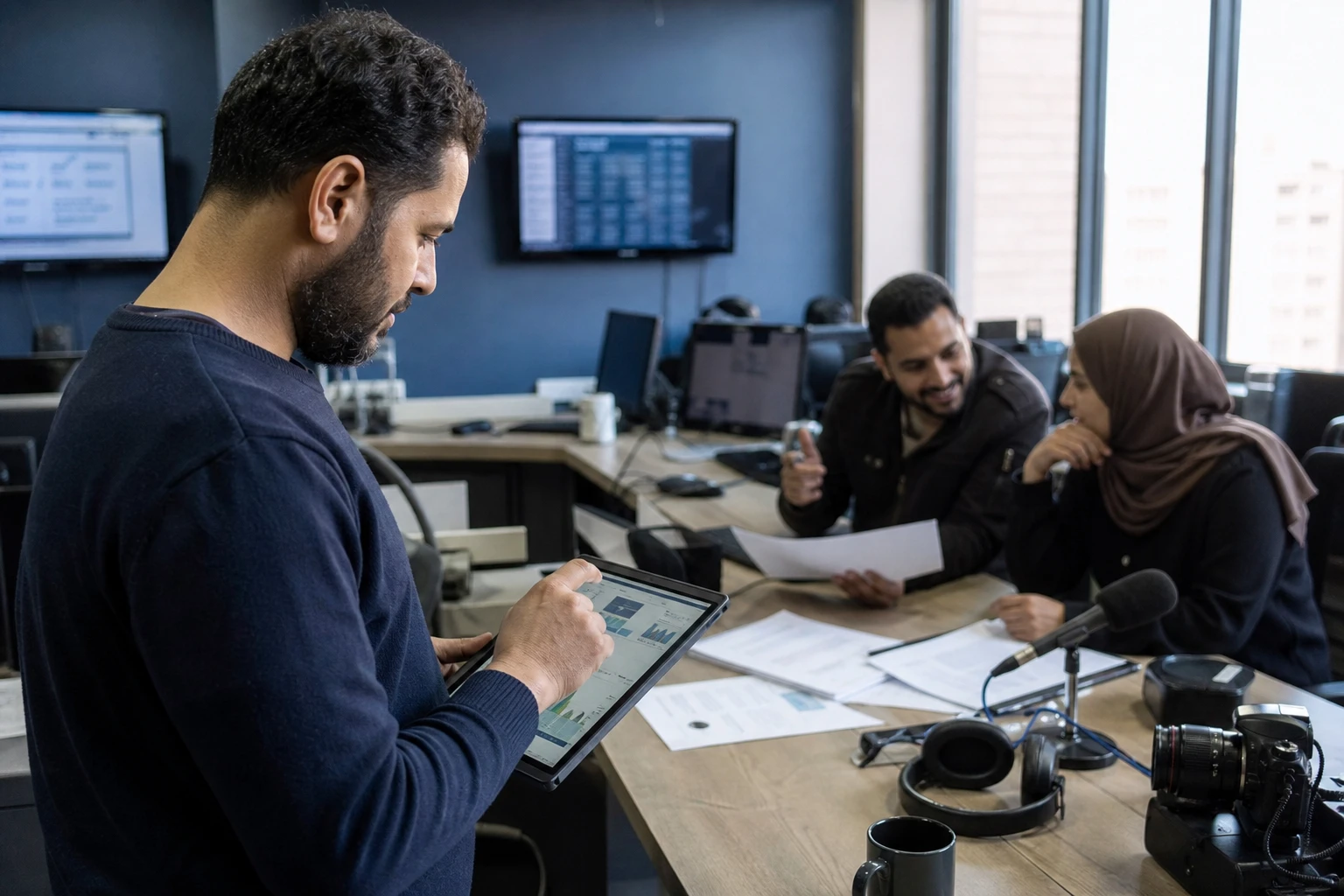
In Tripoli, gas is not just a resource: it is also a lifeline
In Libya, every increase in domestic consumption is felt immediately in households, on the electricity grid and even in export contracts. Natural gas, which is supposed to earn foreign currency, is first used to keep power stations running, especially when demand rises in the summer heat. In a country where hydrocarbons still dominate the economy, the question is not simply how to produce more. It is also how to stabilise an energy system under pressure, from Tripoli to the country’s western terminals.
This issue fits a familiar Libyan pattern. Since 2011, institutional fragmentation has held back investment, weakened infrastructure and made every strategic site politically sensitive. The Government of National Unity, based in Tripoli, remains the internationally recognised authority, but it governs a country riven by persistent rivalries with the east, where Khalifa Haftar’s camp holds sway. In this landscape, the National Oil Corporation, or NOC, remains the sector’s central technical player. It manages flows, contracts and much of the country’s energy continuity.
A stated goal: turning already discovered gas into room for manoeuvre
On 15 September, Libya’s Minister of Oil and Gas, Khalifa Abdulsadek, said in Bangkok that Libya aimed to produce at least 4 billion cubic feet a day within the next three to five years. According to him, the target is based on resources already discovered, whether free gas or associated gas – gas extracted alongside oil. Several specialist media outlets have reported the target, which is in line with the revival strategy pursued by the Tripoli authorities since the start of the year.
The need is real. Available data show that domestic consumption has absorbed a large share of gas production, reducing exportable volumes. The World Bank Group says the Libyan economy remains highly dependent on hydrocarbons, which still accounted for 65% of GDP, 93% of exports and 72% of public revenue in 2024. The EIA, for its part, estimates that the country’s gas exports have fallen sharply since their 2019 peak, while local demand and technical problems have limited flows abroad.
In other words, Tripoli is seeking less a revolution than a rebalancing. Producing more should help secure supplies to power stations, ease pressure on the domestic market and return a larger share of gas to export markets. It is also a budgetary issue. When public revenue depends so heavily on hydrocarbons, every cubic metre consumed locally without planning costs the state a share of its foreign currency.
Mellitah, Greenstream and the political cost of outages
Tensions came into the open at Mellitah, west of Tripoli, where protesters broke into the industrial complex on 28 July 2026 to denounce power cuts. The NOC warned that shutting down gas lines could increase the risk of a nationwide blackout. The AP news agency confirmed that the incident had disrupted supplies to power stations and that the complex plays a strategic role in transporting gas to Italy. The NOC later clarified that most of the gas in question was destined for the domestic market, underscoring Mellitah’s role in Libya’s energy balance even before exports.
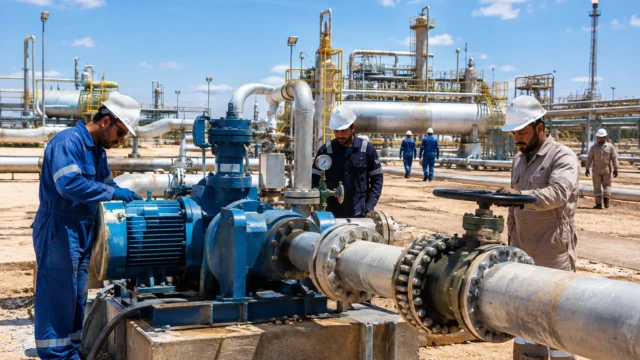
The site brings together several issues at once. On the one hand, it supplies the Greenstream pipeline, which links Libya to Sicily and remains the main route for Libyan gas into the Italian market. On the other, it supplies power stations that keep Libya’s electricity grid running. As outages mount, local grievances thus become a systemic risk. Figures cited by specialist sources show that exports to Italy remain well below the pipeline’s theoretical capacity of about 8 billion cubic metres a year.
The problem is structural. Domestic gas demand is growing faster than the sector’s ability to invest, repair and modernise. In recent months, however, the NOC has sent several signals of recovery: talks with Eni, a resumption of offshore exploration work, Sonatrach’s return to the Ghadames Basin, and the opening of new blocks to foreign companies. These moves show a clear desire to put Libya back on the regional energy map, but they remain exposed to a factor that contracts and announcements alone cannot resolve: the security of sites and the stability of institutions.
What this means for Libya, and what North Africa is watching
For the authorities in Tripoli, the stakes are immediate: more gas could mean more electricity, more revenue and greater room to negotiate with foreign partners. For households, however, the promise is worthwhile only if it brings fewer outages and a visible improvement in public services. For businesses, particularly in transport, construction and light industry, reliable energy determines their ability to produce, deliver and hire. The same molecule of gas therefore has very different effects depending on whether it stays in the domestic system or crosses the Mediterranean.
At regional level, Libya plays a role that is often underestimated. It is not part of a major economic community such as ECOWAS or SADC, but it remains a link in North Africa and the Mediterranean basin. Its energy choices affect Italy, part of the European gas market and, more broadly, perceptions of risk in African hydrocarbon investment. Tripoli’s announced revival will therefore be closely watched, not only for its volumes but also for its ability to withstand internal tensions. In the short term, the real question is not simply whether Libya can reach 4 billion cubic feet a day. It is whether such a strategic sector can be consolidated in a country where stability remains elusive.