Algeria
 Egypt
 Morocco
 Sudan
 Tunisia
 Benin
 Burkina Faso
 Cabo Verde
 Côte d'Ivoire
 Ghana
 Guinea
 Guinea-Bissau
 Liberia
 Mali
 Mauritania
 Niger
 Nigeria
 Senegal
 Sierra Leone
 The Gambia
 Togo
 Cameroon
 Central African Republic
 Chad
 DR Congo
 Equatorial Guinea
 Gabon
 Republic of the Congo
 São Tomé and Príncipe
 Burundi
 Comoros
 Djibouti
 Eritrea
 Ethiopia
 Kenya
 Madagascar
 Malawi
 Mauritius
 Mozambique
 Rwanda
 Seychelles
 Somalia
 South Sudan
 Tanzania
 Uganda
 Angola
 Botswana
 Eswatini
 Lesotho
 Namibia
 South Africa
 Zambia
 Zimbabwe
A strategic facility in a city already on edge
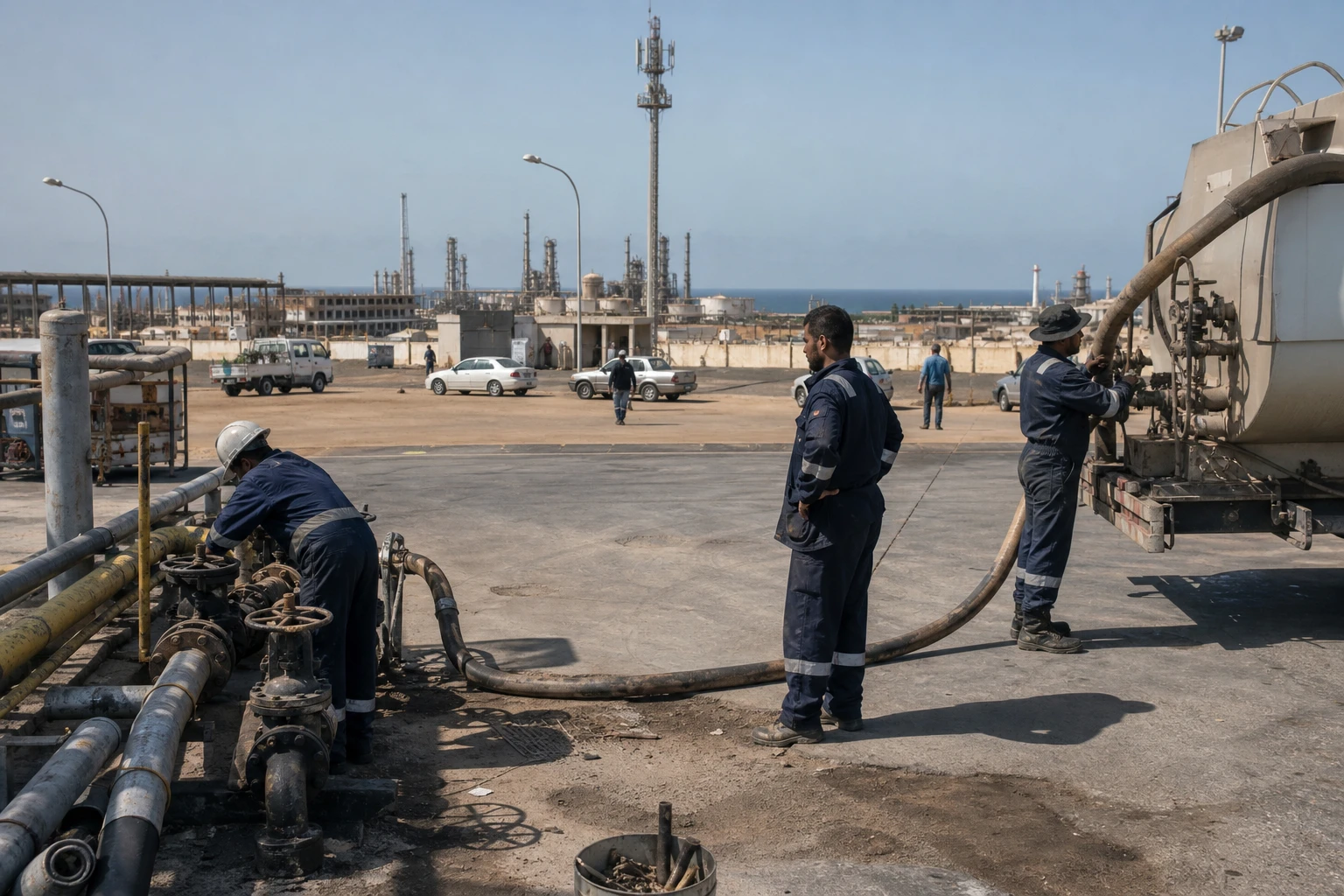
In Zawiya, about 40 kilometres west of Tripoli, energy is about more than production figures. It is also tied to neighbourhood security, the movement of fuel and the stability of an area where any industrial incident can become political. That is what makes the drone strikes reported in recent days so sensitive for Libyans: they have hit a critical site in the country at a time when the city has already experienced armed clashes and repeated alerts around its infrastructure.
The Zawiya refinery is the largest facility of its kind still operating in Libya. Its capacity is estimated at 120,000 barrels a day, and it supplies a wider complex comprising an oil port, an export terminal and power facilities. In a country where oil funds most public revenue, the refinery is more than an industrial site: it is a buffer for domestic supply, especially in western Libya.
What the confirmed facts show
Since Saturday 8 August, the city of Zawiya has been targeted in a series of unclaimed drone attacks. The first strikes hit vital energy-related infrastructure, including an electricity substation and a desalination plant. On Monday evening, a kamikaze drone struck a large petrol tank. The tank contained 4.5 million litres of fuel, according to information reported at the scene. The fire was so intense that rescue teams had to spray water on neighbouring tanks to prevent it from spreading. Another drone then targeted the site, causing no further damage.
The Libyan National Oil Corporation responded by placing the refinery on maximum alert and warning that continued attacks could lead to a shutdown. The incident follows several months of instability in Zawiya. In May, fighting had already led to a precautionary closure of the complex, the evacuation of tankers from the port and the temporary suspension of operations. The UN mission in Libya had warned at the time against using civilian infrastructure for military purposes and about the risks to residents.
Institutionally, the response has been both local and national. Oil authorities reported the threat, while political officials condemned the attacks without naming those responsible. No group has claimed the strikes. The absence of a claim leaves a range of possibilities open, but it should not obscure the main point: in western Libya, energy facilities remain exposed to a war of pressure in which armed force is also used as economic and territorial leverage.
Why Zawiya matters far beyond the city
For residents, the stakes are immediate. A weakened refinery, a damaged electricity substation or a disrupted desalination plant can have cascading effects on daily life: fuel, electricity, water and transport. For the Libyan state, the stakes are broader still. Oil revenues remain the main source of budget income. Every alert about Zawiya is a reminder that the national economy depends on a small number of concentrated and vulnerable sites. The crisis is therefore both industrial and political.
This vulnerability also has a regional dimension. Zawiya lies on the coastal strip linking Tripoli to several centres in western Libya. When a strategic site shuts down, the effects spread to local markets, transport and fuel distribution to neighbouring cities. The Libyan state is seeking to maintain supplies to the capital and its outskirts, but recent events show how fragile that continuity remains, dependent on security arrangements around the sites. In May, the oil company said supplies to Tripoli had not been interrupted; the August alert nevertheless underlines how precarious that assurance is.
The continental significance is clear. Libya remains one of Africa’s major crude producers, and its refining, storage and export infrastructure matters beyond its borders. When Zawiya falters, it brings the debate over energy security, infrastructure resilience and economic sovereignty back into focus. It is also a signal to regional and African organisations working to stabilise Libya: without local disarmament, genuine protection for civilian facilities and a lasting clarification of the relationship between militias, authorities and public resources, any improvement will remain reversible.
The key question now is simple: will the attacks stop, or will they force the operator to suspend operations? In a country where rivalry between rival power centres and security fragmentation have already weighed on production, Zawiya’s fate will quickly show whether this episode remains a warning shot or opens a new phase of pressure on Libya’s oil sector.