Egypt
 Libya
 Morocco
 Sudan
 Tunisia
 Benin
 Burkina Faso
 Cabo Verde
 Côte d'Ivoire
 Ghana
 Guinea
 Guinea-Bissau
 Liberia
 Mali
 Mauritania
 Niger
 Nigeria
 Senegal
 Sierra Leone
 The Gambia
 Togo
 Cameroon
 Central African Republic
 Chad
 DR Congo
 Equatorial Guinea
 Gabon
 Republic of the Congo
 São Tomé and Príncipe
 Burundi
 Comoros
 Djibouti
 Eritrea
 Ethiopia
 Kenya
 Madagascar
 Malawi
 Mauritius
 Mozambique
 Rwanda
 Seychelles
 Somalia
 South Sudan
 Tanzania
 Uganda
 Angola
 Botswana
 Eswatini
 Lesotho
 Namibia
 South Africa
 Zambia
 Zimbabwe
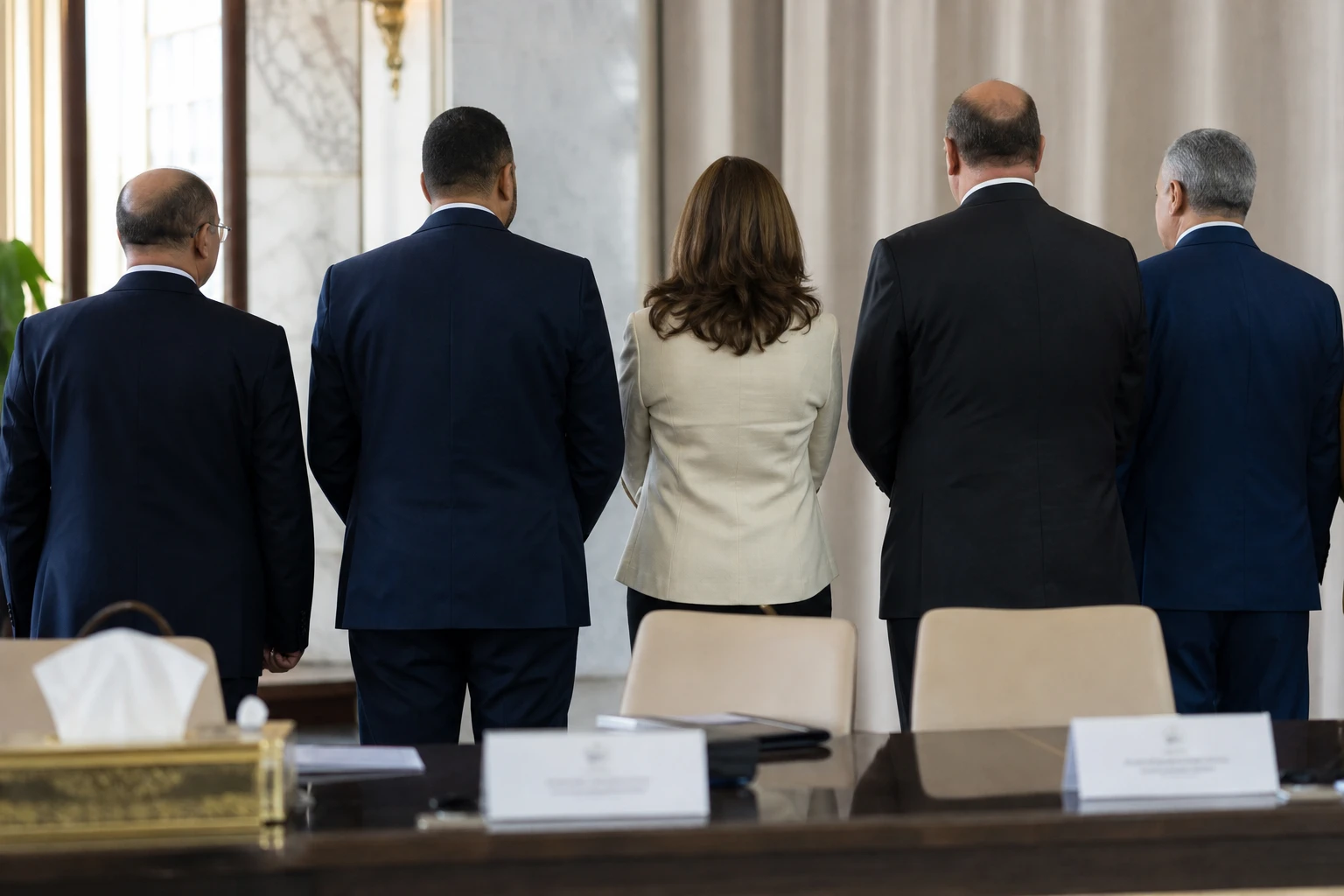
A migration issue that goes beyond visas
In Algiers, the dispute over visas is more than a diplomatic quarrel. It affects families, students, businesspeople and ordinary travellers, who are often caught in the ups and downs of an already fragile Franco-Algerian relationship. In this kind of dispute, the word “quota” quickly becomes a political symbol. It ends up obscuring what matters: who decides, on what criteria, and with what practical consequences for Algerians and for French people living on either side of the Mediterranean.
The context is fraught. Bilateral relations between Algiers and Paris remain marked by the legacy of colonialism, but also by close human ties: 32,812 French people lived in Algeria in 2021, while 623,145 Algerians held a residence permit in France in 2020, excluding dual nationals. On migration, the Franco-Algerian regime remains distinct, with specific rules governing entry, residence and certain types of residence permit.
What Algiers said, and what Paris clarified
In an interview broadcast on Monday 27 July, Algerian President Abdelmadjid Tebboune said he had “never” asked France for a visa quota or a number of visas, and had not even discussed visas in those terms. His clarification came after controversy erupted over remarks by France’s ambassador to Algeria, Stéphane Romatet, who had referred to an increase in visas, probably returning to pre-crisis levels of around 250,000 a year.
The exchange was then taken up at the highest level of the French state. Emmanuel Macron said he wanted to correct remarks attributed to his ambassador. According to the Élysée, there is “no numerical target” for visas for Algerians, and France is seeking a “calm” and “constructive” relationship with Algiers. This is an important point: it shows that the controversy did not stem from an official announcement of a quota, but from a public interpretation of diplomatic remarks about the level of visa issuance.
The figures give an indication of the scale of the issue. In 2024, France recorded 3,486,275 visa applications, 578,687 refusals and 2,858,083 visas issued. Algerian nationals received 250,095 visas, up 19.3% year on year, making Algeria the third-largest beneficiary by nationality, behind China and Morocco. The French Senate confirms this increase and notes that the three Maghreb countries are among the main nationalities concerned.
A relationship in which memory weighs as heavily as the figures
The visa controversy cannot be viewed in isolation. It is part of broader tensions between Algiers and Paris, reignited in recent months by disputes over historical memory and the Western Sahara issue. In summer 2024, France backed an autonomy plan under Moroccan sovereignty for the disputed territory, a position rejected by Algeria, which supports the Polisario Front. Algiers then recalled its ambassador to France.
Colonial memory also remains a central political marker. In March and then April 2026, the Algerian parliament adopted a text criminalising French colonisation in Algeria, following debates that focused in particular on apologies and reparations. The Élysée, for its part, had already sent junior minister Alice Rufo to Sétif in May 2026 to commemorate the events of 8 May 1945, in a move presented as a more clear-eyed recognition of shared history.
In this context, visas are as much a diplomatic tool as an administrative matter. On the Algerian side, the presidential discourse seeks to avoid any suggestion of dependence or a request for a favour. The message is clear: Algiers wants to be treated as a partner, not an applicant. On the French side, the government is trying to defuse a quarrel that has become explosive in domestic debate, where the right and far right often use visas as a marker of toughness.
What this means for Algerians and the region
For Algerians, the stakes are very practical. Visas are not just about tourism. They affect family visits, medical care, business trips, study and trade. France’s ambassador to Algeria himself acknowledged that difficulties securing appointments and cuts to consular resources had affected the Algerian population. When procedures become more restrictive, households, small businesses and everyday travel are the first to pay the price.
For France, Algeria remains a highly important partner. France still has a large Algerian community, and the bilateral agreement governs specific rights that differ from those under ordinary law. Visas thus become a tool for managing migration, but also a test of diplomatic credibility. If Paris hardens its tone to cater to domestic politics, it risks undermining a channel of cooperation that is already useful on consular, security and economic issues.
Across Africa, the affair highlights a broader reality: movement between Africa and Europe is often treated as a source of tension, even though it is primarily about human mobility, education, trade and family ties. Algeria, a North African power and an actor in the Mediterranean region, also views this issue through the lens of its relationship with the African Union and its positions on sovereignty, memory and the movement of people. A visa controversy between Algiers and Paris therefore quickly spills beyond the bilateral framework. It says something about the balance of power between North Africa and Europe, and about how states seek to defend their dignity in negotiations.
What happens next will depend on whether the two capitals can separate substance from posturing. The next signals will come in the resumption of consular dialogue, statements on visas and the way each side manages its own public opinion. The issue between Algiers and Paris is not closed. It remains suspended on a simple but difficult equation: normalise without humiliating, co-operate without giving up ground, and rebuild a relationship that serves both peoples.