
 Egypt
 Libya
 Morocco
 Sudan
 Tunisia
 Benin
 Burkina Faso
 Cabo Verde
 Côte d'Ivoire
 Ghana
 Guinea
 Guinea-Bissau
 Liberia
 Mali
 Mauritania
 Niger
 Nigeria
 Senegal
 Sierra Leone
 The Gambia
 Togo
 Cameroon
 Central African Republic
 Chad
 DR Congo
 Equatorial Guinea
 Gabon
 Republic of the Congo
 São Tomé and Príncipe
 Burundi
 Comoros
 Djibouti
 Eritrea
 Ethiopia
 Kenya
 Madagascar
 Malawi
 Mauritius
 Mozambique
 Rwanda
 Seychelles
 Somalia
 South Sudan
 Tanzania
 Uganda
 Angola
 Botswana
 Eswatini
 Lesotho
 Namibia
 South Africa
 Zambia
 Zimbabwe
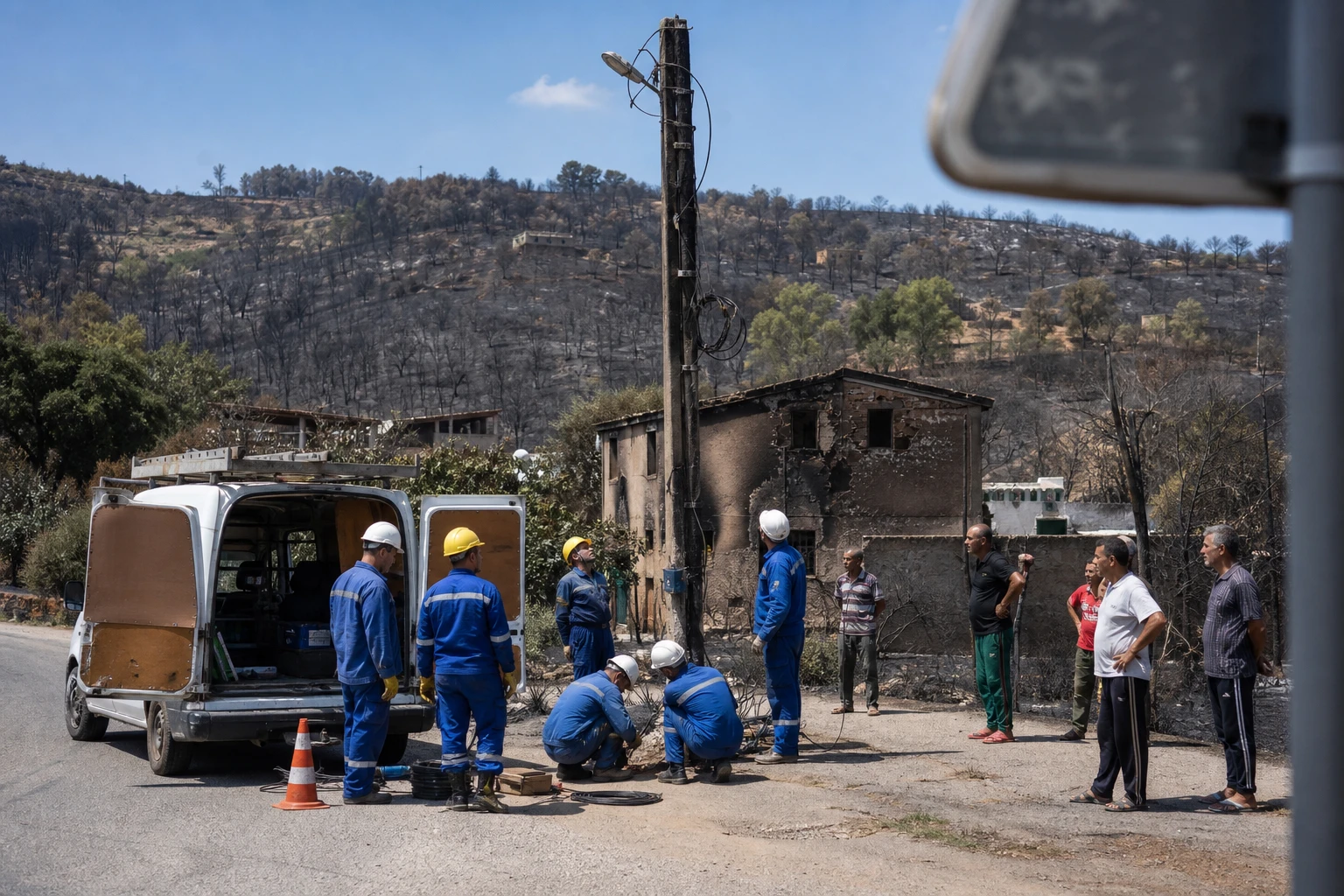
Blackened homes, families facing the task of rebuilding
In Bordj Tahar, in Jijel province, the emergency is no longer just about fighting the fire. Residents must now find their footing again in a village where the flames have left cracked walls, collapsed roofs and families sifting through rubble to salvage whatever they can. In this part of north-east Algeria, the fire did not just burn trees: it also damaged homes, livestock and water networks, and in some cases destroyed a family’s only house.
The fires occurred in an area often exposed to summer blazes, particularly in the provinces of Jijel, Béjaïa and Tizi Ouzou. Algeria regularly faces such outbreaks along its northern coast and in the wooded mountain ranges of Kabylia and the east, where heat, wind and drought accelerate the spread of flames. This year, the National Meteorological Office again reported a heatwave, with temperatures potentially reaching 49 °C in several provinces, adding to the pressure on Civil Protection and local authorities.
Heavy toll, public services under strain
The toll announced by the authorities on Wednesday stood at at least 12 dead and 54 injured, including six serious burn cases, in the provinces of Jijel, Béjaïa and Tizi Ouzou. According to information reported by several media outlets and the public news agency APS, five deaths were recorded in Jijel, four in Béjaïa and three in Tizi Ouzou. Interior Minister Saïd Sayoud also said that the injured were being treated at Souk El Tenine hospital in Béjaïa, which he visited with Health Minister Mohamed Seddik Ait Messaoudene.
On the ground, Civil Protection continued its operations in several areas, with figures changing throughout the day. At 8pm on Wednesday, it reported that 69 fires were still active. The following morning, APS said 110 of the 174 fires recorded over the previous 24 hours had been extinguished. Meanwhile, the National Gendarmerie closed three major roads in the east of the country, a sign that traffic, rescue operations and local supplies had to adapt to a still-shifting fire front.
In the affected communities, the crisis is also measured in the most basic terms: electricity, telephone, internet and access to the outside world. Residents said they had slept outdoors, cut off from communications networks, as teams from the national electricity company worked to repair damaged lines. Such outages weigh first on families, but also on shopkeepers, small-scale farmers and livestock breeders, who can lose a day’s sales, a harvest, food stocks or livestock. Accounts gathered on the ground also point to another reality that is often underestimated: when fires hit a village, they destroy livelihoods as well as domestic life.
What this episode tells us about the fire season in North Africa
The tragedy in Jijel is a reminder that fires are no longer just a forest issue. They have become a matter of civil protection, land-use planning and climate adaptation. Algeria is facing more severe fire seasons, in a Maghreb region where extreme heat events and periods of drought are lasting longer. The latest assessment by the World Meteorological Organization notes that Africa experienced an exceptionally hot July by recent standards, while heat and drought conditions are driving an increase in fires in several regions around the world.
This is not the country’s first warning. In July 2023, fires had already killed more than 30 people in the Béjaïa region, before further deadly outbreaks in eastern Algeria. This recent memory weighs on the authorities, who are now stepping up ministerial visits, on-site assessments and announcements on restoring basic services. But beyond the immediate response, the challenge is structural: strengthen prevention, improve monitoring of forested areas, protect villages at risk and coordinate firefighting with the management of water, roads and electricity networks.
Across the continent, this episode extends far beyond Algeria. It forms part of a broader question facing North Africa, the Sahel and the Mediterranean coast: how can we protect areas where heat is intensifying, soils are becoming more fragile and homes are sometimes spreading closer to wooded zones? For the countries of the Maghreb, the lesson is clear: forest-fire management must now be treated as a top-priority public policy, on a par with water, health and transport. The next test will be how quickly communities can rebuild and whether another season can be prevented from once again turning into a human toll.



