Egypt
 Libya
 Morocco
 Sudan
 Tunisia
 Benin
 Burkina Faso
 Cabo Verde
 Côte d'Ivoire
 Ghana
 Guinea
 Guinea-Bissau
 Liberia
 Mali
 Mauritania
 Niger
 Nigeria
 Senegal
 Sierra Leone
 The Gambia
 Togo
 Cameroon
 Central African Republic
 Chad
 DR Congo
 Equatorial Guinea
 Gabon
 Republic of the Congo
 São Tomé and Príncipe
 Burundi
 Comoros
 Djibouti
 Eritrea
 Ethiopia
 Kenya
 Madagascar
 Malawi
 Mauritius
 Mozambique
 Rwanda
 Seychelles
 Somalia
 South Sudan
 Tanzania
 Uganda
 Angola
 Botswana
 Eswatini
 Lesotho
 Namibia
 South Africa
 Zambia
 Zimbabwe
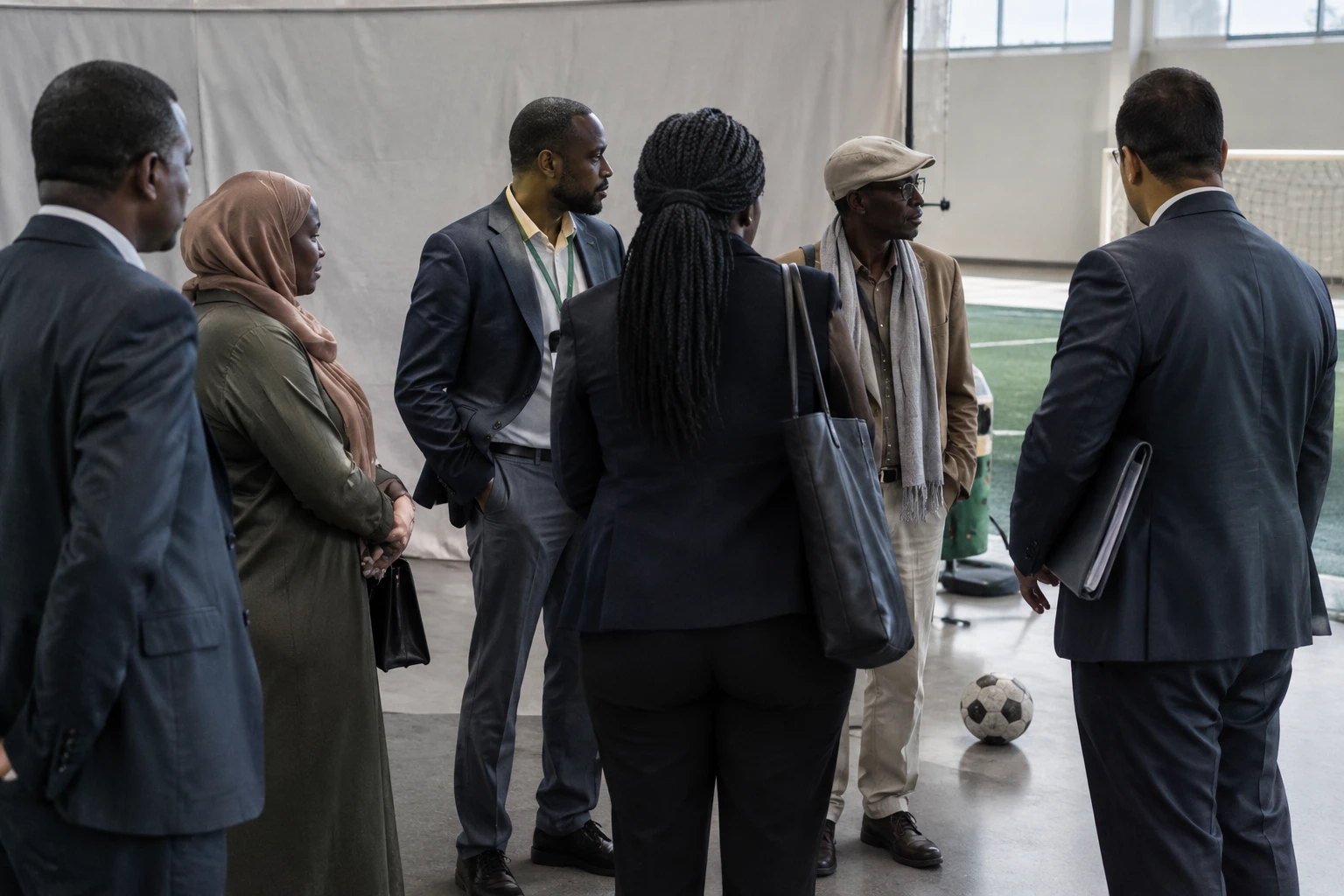
Can a football match remind people that a reporter is still in prison? In Paris, this Wednesday 11 November 2026, journalists, sports figures and relatives of Christophe Gleizes are gathering to mark his 500 days in detention in Algeria. But behind the campaign, one question remains: how can journalistic reporting be distinguished from a criminal offence when the authorities invoke national security?
A case rooted in Kabyle football
Christophe Gleizes is a French sports journalist. He travelled to Algeria in May 2024 to investigate Jeunesse sportive de Kabylie (JSK), a club in Tizi Ouzou whose history is closely linked to the region’s cultural and sporting life. He was arrested on 28 May 2024 and then placed under judicial supervision. He was not allowed to leave the country.
The case touches on a sensitive subject for the Algerian state: the Movement for the Self-Determination of Kabylia (MAK), which the Algerian authorities classified as a terrorist organisation in 2021. The journalist is notably accused by the courts of having contacts with figures linked to the movement. In June 2025, the Tizi Ouzou court sentenced him to seven years in prison for “glorifying terrorism” and possessing publications for propaganda purposes that undermine the national interest. The court of appeal upheld the sentence on 3 December 2025.
The judicial proceedings and the charges are established; their interpretation, however, remains disputed. Press freedom organisations believe the alleged acts relate to his journalistic work. The Algerian authorities have not made public a detailed explanation of the case in the available independent reports. It is therefore necessary to distinguish the grounds cited by the court from the criticism voiced by the reporter’s supporters.
A sporting campaign, a press freedom issue
For the anniversary, Reporters Without Borders (RSF) and the City of Paris are organising a solidarity match. Football, media and cultural figures are expected to take part. Christophe Gleizes’s parents are also at the heart of the campaign. Their presence highlights the human reality of a prolonged detention: visits, exchanges and waiting now shape the lives of his relatives.
Sport gives the campaign particular visibility. JSK is a major Algerian football club, and the case thus links a sporting investigation to questions of security and political expression. But a support event does not decide the judicial proceedings. It aims to keep public attention on the case and make the journalist’s situation known, while his family and supporters call for his release.
The case has also moved beyond the French media sphere. Figures from sport and professional organisations have echoed calls in his support. This solidarity can influence public debate, without guaranteeing any judicial or diplomatic change. Nor should it make people forget Algerian journalists, whose working conditions and possible prosecutions deserve attention in their own right, beyond this particular case.
Algiers, Paris and strained bilateral ties
The detention comes at a time of difficult relations between Algiers and Paris. Several political disputes have weighed on exchanges between the two capitals. In this climate, the journalist’s relatives and his support committee sometimes present the case as caught up in a diplomatic crisis. That is their interpretation; on its own, it is not proof that the proceedings are being used as a bargaining tool between the two states.
For Algiers, the case primarily concerns national justice and the fight against activities considered a threat to the country’s unity. For Gleizes’s supporters, the severity of the sentence and the facts relating to his journalistic contacts raise concerns about press freedom. These positions are not equivalent in nature: one sets out the grounds adopted by the court, while the other challenges the application of that classification to a reporter. Rigorous reporting must present both without turning an accusation into a proven fact or automatically adopting either side’s framing.
The regional context also matters. Algeria belongs to the Arab Maghreb Union, which also brings together Libya, Mauritania, Morocco and Tunisia. The organisation provides a framework for North African cooperation, but tensions between some of its members limit its ability to play a common political role. The Gleizes case therefore remains primarily bilateral and national; it should not be presented as the position of the Maghreb as a whole.
Press freedom beyond a single case
This case tests an essential boundary: the one separating exchanges necessary for an investigation from participation in a prohibited activity. For journalists, the risk is that contacts with controversial people may be equated with support for their objectives. For the authorities, cases involving movements classified as terrorist concern security and territorial integrity. The debate therefore also concerns the evidence, its context and the proportionality of the criminal response.
Across the continent, the issue goes beyond the detainee’s French passport. Press freedom concerns African and international newsrooms alike, and the conditions for reporting on sensitive subjects vary from country to country. The campaign around a foreign journalist is not enough to describe the overall state of the Algerian media; it can, however, bring back to the fore the question of the guarantees afforded to anyone investigating matters of public interest.
The next milestone will be any developments in his situation in prison and in the courts, as well as decisions by the Algerian authorities. The 11 November match can keep the case in the public eye, but it cannot replace legal avenues or diplomatic efforts. After 500 days, the central fact remains simple: Christophe Gleizes is detained in Algeria, his seven-year sentence was upheld on appeal, and his relatives continue to call for his release.
To follow publicly available information on the case, consult RSF’s information on the 500-day campaign, the report on the appeal ruling and the list of member countries of the Arab Maghreb Union.