Egypt
 Libya
 Morocco
 Sudan
 Tunisia
 Benin
 Burkina Faso
 Cabo Verde
 Côte d'Ivoire
 Ghana
 Guinea
 Guinea-Bissau
 Liberia
 Mali
 Mauritania
 Niger
 Nigeria
 Senegal
 Sierra Leone
 The Gambia
 Togo
 Cameroon
 Central African Republic
 Chad
 DR Congo
 Equatorial Guinea
 Gabon
 Republic of the Congo
 São Tomé and Príncipe
 Burundi
 Comoros
 Djibouti
 Eritrea
 Ethiopia
 Kenya
 Madagascar
 Malawi
 Mauritius
 Mozambique
 Rwanda
 Seychelles
 Somalia
 South Sudan
 Tanzania
 Uganda
 Angola
 Botswana
 Eswatini
 Lesotho
 Namibia
 South Africa
 Zambia
 Zimbabwe
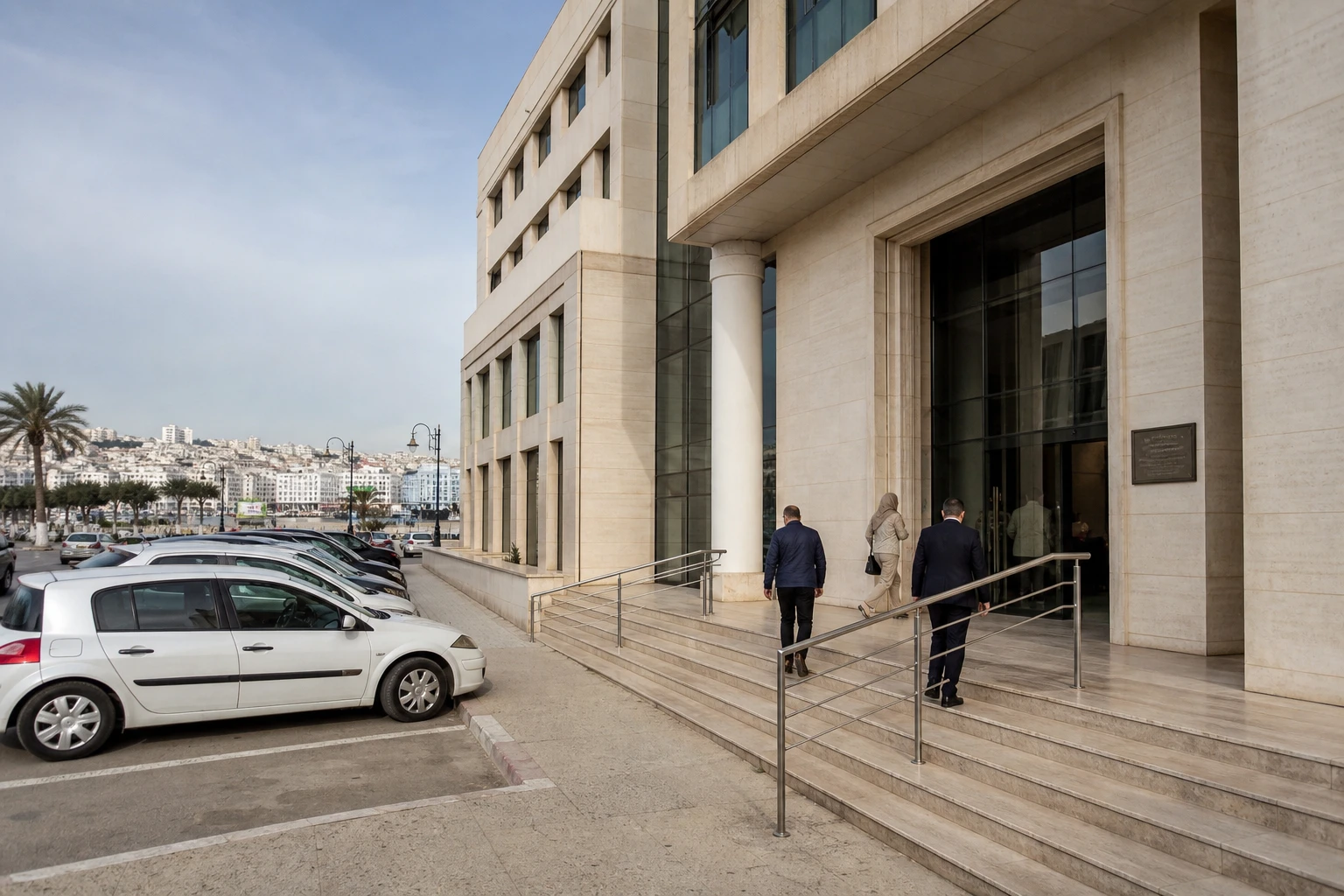
A coastal plant in a market under pressure
In Arzew, in western Algeria, an industrial project could have an impact far beyond the quays of Oran. When fertilisers become scarce or more expensive, food security, farmers’ margins and export revenues also come under pressure. Algeria wants precisely to turn this constraint into an industrial advantage.
The project is part of a clear national trajectory: Algeria is seeking to reduce the share of hydrocarbons in its overseas sales without abandoning its gas expertise, which remains one of the foundations of its chemical industry. At the same time, the country wants to strengthen its markets in North Africa and beyond, in a Maghreb region where the Arab Maghreb Union remains poorly integrated, but supply chains are highly sensitive to external shocks.
What the agreement signed in Arzew provides for
On Monday 23 August 2026, the Algerian authorities announced an agreement with Omani group Suhail Bahwan Holding to begin expanding the plant of the Algerian-Omani Fertiliser Company, AOA, in Arzew. The project provides for the addition of a new ammonia and urea production line, with a stated aim of increasing the site’s total capacity by 50%.
The site is not new. It has been operating since December 2017 and was built for $2.6 billion as a joint venture between Sonatrach, with a 49% stake, and Suhail Bahwan Holding, with 51%. According to available information, the plant produces ammonia and granular urea, more than 90% of which is exported to Europe, the Americas and Asia.
Algerian Minister of Energy and Mines Mohamed Arkab has promised to remove any obstacles that could slow the work. The agreement comes after nearly a year of technical and commercial consultations, but neither the investment amount nor the implementation timetable has been made public at this stage.
Why the timing is favourable
Timing matters. Since disruptions in the Strait of Hormuz and rising tensions in the Middle East, global fertiliser markets have tightened sharply. The World Bank says its fertiliser price index rose by more than 12% in the first quarter of 2026 and could increase by more than 30% over the year as a whole. Urea prices have risen particularly sharply.
Against this backdrop, producers located outside areas of tension are seeking to secure contracts and extend their value chains. Algeria has a straightforward advantage: natural gas, an industry already established in Arzew and logistical proximity to Mediterranean markets. This is not a revolution, but a strategic position that grows stronger as the global market tightens.
Recent figures confirm this trend. Algeria exported 245,000 tonnes of urea to India in the first quarter of the 2026-2027 financial year, making it the third-largest supplier to that market, behind Egypt and ahead of Nigeria, according to data from India’s Ministry of Commerce. In the first seven months of 2025, Algerian exports of fertilisers and chemicals reached $1.5 billion, up 9% year on year, according to information reported by Algerian public radio.
What this means for Algeria’s economy
For Algiers, the stakes extend beyond the Arzew plant alone. For several years, the country has been seeking to broaden its export base. The World Bank notes that non-hydrocarbon exports reached $5.1 billion in 2023, still modest compared with the weight of oil and gas revenues, but a marked increase on previous years. Fertilisers are already among the leading sectors in this diversification.
Algerian customs put fertiliser exports at $1.25 billion and 3.53 million tonnes in 2023. These figures alone show that Arzew is more than just an industrial site: it is a cornerstone of Algeria’s strategy to move up the value chain in its exports, in a country where the chemical industry can still capture more added value than sales of raw materials alone.
For households and farmers, however, the benefits are not automatic. If global prices rise, exporting producers earn more. But local buyers and fertiliser importers may face a higher bill. The equation is a familiar one: the more buoyant the overseas market, the more sensitive the trade-off between foreign currency earned and domestic costs becomes.
An impact beyond Algeria
The Arzew project resonates across Africa. The continent remains exposed to fertiliser price fluctuations, while many countries still import a significant share of their agricultural inputs. Each new production capacity in North Africa therefore matters for the markets of the Sahel and the Mediterranean, and for South-South trade flows more broadly.
It also says something about Algeria’s place in Africa’s industrial transition. The country is seeking to move beyond its image as a rentier economy. It is investing in sectors where it has a genuine comparative advantage: energy, chemicals, fertilisers and materials. Cooperation with Oman also shows that an Arab-African joint venture can still deliver tangible results when it is built on existing, fully depreciated industrial assets, established markets and tight global demand.
The next stage will depend on implementation. The authorities have not published a detailed timetable, but the expansion of the AOA plant will be closely watched by fertiliser buyers, Algerian exporters and regional players seeking to secure their supplies. In a still-unstable global market, Arzew could become a full-scale test of Algeria’s ability to turn an existing industrial base into a lasting source of commercial power.