
 Egypt
 Libya
 Morocco
 Sudan
 Tunisia
 Benin
 Burkina Faso
 Cabo Verde
 Côte d'Ivoire
 Ghana
 Guinea
 Guinea-Bissau
 Liberia
 Mali
 Mauritania
 Niger
 Nigeria
 Senegal
 Sierra Leone
 The Gambia
 Togo
 Cameroon
 Central African Republic
 Chad
 DR Congo
 Equatorial Guinea
 Gabon
 Republic of the Congo
 São Tomé and Príncipe
 Burundi
 Comoros
 Djibouti
 Eritrea
 Ethiopia
 Kenya
 Madagascar
 Malawi
 Mauritius
 Mozambique
 Rwanda
 Seychelles
 Somalia
 South Sudan
 Tanzania
 Uganda
 Angola
 Botswana
 Eswatini
 Lesotho
 Namibia
 South Africa
 Zambia
 Zimbabwe
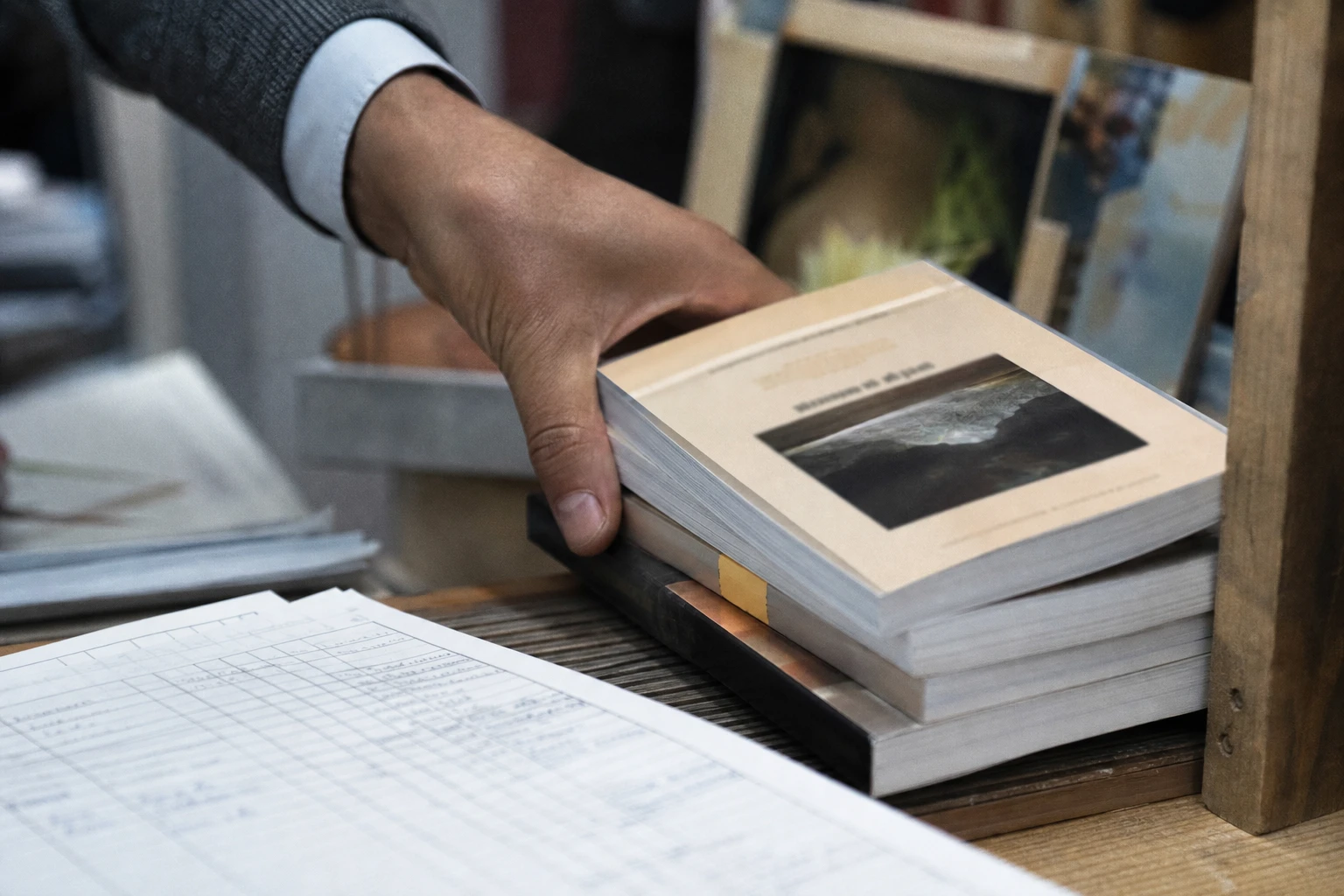
Two days before the first International Algeria Days open in Paris, literature is becoming a space for dialogue between generations, languages and memories. On 26 and 27 September 2026, writers, scholars, publishers and readers will gather at FIAP, in the 14th arrondissement, to explore the links between Algerian creativity, history and identity.
A meeting between the two shores
The event is more than a series of book signings. It aims to place Algerian works within a long history marked by the French conquest, 19th-century resistance, the war of liberation, the construction of the state after 1962 and the violence of the Black Decade.
This approach directly concerns relations between Algeria and France. Paris remains an important place of publication, circulation and debate for many Algerian authors. The French capital is also home to part of the Algerian diaspora, whose experiences contribute to a family and collective memory with many voices.
The announced programme brings together conferences, round tables, meetings with writers, book presentations, signing sessions, a screening and a musical evening. The event is billed as the first Algerian literary fair to be held in Paris in this format, with a programme devoted to the diversity of writing and cultural expression.
Organisers are planning discussions on engaged women’s writing, Amazigh novels, the evolution of Algerian cinema, family histories between France and Algeria, and changes in contemporary literature. Algerian publishing houses are also expected to present their catalogues.
A literature shaped by historical ruptures
Since the beginning of the colonial period, Algerian writers have often used literature to describe relations of domination, social upheaval and the search for cultural sovereignty. Mouloud Feraoun, Mohammed Dib, Mouloud Mammeri and Kateb Yacine helped make the novel a place to observe Algerian society.
The question of language occupies a central place in this history. French, introduced by colonisation, was appropriated by Algerian authors to tell an experience that escaped the official colonial narrative. Kateb Yacine described it as a “war booty”, a phrase that has become emblematic of the tensions between imposed inheritance, creativity and reclamation.
After independence, literary production broadened. Assia Djebar, Rachid Boudjedra, Tahar Djaout and Yasmina Khadra extended this reflection in different styles. At the same time, Arabic and Tamazight asserted their place in creative work, education and publishing.
This plurality is a reminder that Algerian literature is not a homogeneous whole. It brings together Francophone, Arabophone and Amazighophone writing. It also sets urban and rural experiences in dialogue, alongside accounts from within the country and voices from emigration.
From Emir Abdelkader to Frantz Fanon
The programme draws on two figures separated by more than a century but united by their relationship to Algerian history. Emir Abdelkader will be discussed through his role in resisting the French conquest, followed by his exile and detention at the Château d’Amboise after the fighting ended.
A conference announced on the cessation of hostilities on 23 December 1847 will revisit this period. The episode remains important in Algerian memory because it links military resistance, political negotiation and Emir Abdelkader’s international trajectory.
Frantz Fanon occupies a different historical period. Born in Martinique in 1925, he was a psychiatrist and writer who arrived in Algeria in the early 1950s. At Blida-Joinville psychiatric hospital, he studied the psychological effects of colonial domination and challenged medical practices based on racial classifications.
Fanon left Algeria in 1956, then fully joined the independence struggle. His books Black Skin, White Masks and The Wretched of the Earth later reached beyond the Algerian context. They became reference works for anti-colonial movements, studies of racism and debates on decolonisation.
The film Frantz Fanon, directed by Algerian filmmaker Abdenour Zahzah, will be screened during the event. It focuses on the years 1953 to 1956, when Fanon headed a division at Blida-Joinville hospital. The film first explores his work as a psychiatrist and his medical experience, before showing the gradual development of his political commitment. It was presented at the Berlinale in 2024 and received the jury prize at Fespaco’s Critics’ Week in 2025, according to specialist sources covering African cinema.
The screening will be followed by a discussion with Abdenour Zahzah and academic Benaouda Lebdaï. The discussion is expected to connect Fanon’s history with contemporary representations of him, spanning historical research, filmmaking and Algerian memory.
A cultural question for Algeria and its diaspora
The Paris gathering comes at a time when Algerian works are circulating more widely between Algiers, cities across the country and diaspora communities. This circulation is not limited to books. It also takes place through cinema, festivals, bookshops, universities and digital networks.
For Algerian publishers, Paris is an important market, but also a place to engage with other audiences and critical traditions. For readers from immigrant backgrounds, such gatherings can help pass on family stories that do not always find a place in conventional school or media settings.
The impact will not be the same for everyone. Publishing professionals will see it as a space for distribution. Researchers can compare their interpretations. Young readers, meanwhile, can discover national history through accounts, voices and forms that are not confined to major political events.
An evening devoted to malouf, Kabyle song and chaabi will extend this diversity through music. It will be a reminder that Algerian heritage is transmitted not only through texts. It also lives in sung languages, regional repertoires and the cultural practices of the diaspora.
A reach beyond Paris
The International Algeria Days are part of the cultural space of the Arab Maghreb Union, a regional organisation bringing together Algeria, Libya, Mauritania, Morocco and Tunisia. Although the event focuses on Algerian-French relations, debates about languages, colonial memories and literary exchange concern the whole of North Africa.
The main question will be whether this initiative establishes a lasting event for Algerian publishing and Maghrebi literature. On 26 and 27 September 2026, Paris will serve as a meeting point. But the stories told will be, first and foremost, those of Algeria, its authors, its readers and its many legacies.



