
 Egypt
 Libya
 Morocco
 Sudan
 Tunisia
 Benin
 Burkina Faso
 Cabo Verde
 Côte d'Ivoire
 Ghana
 Guinea
 Guinea-Bissau
 Liberia
 Mali
 Mauritania
 Niger
 Nigeria
 Senegal
 Sierra Leone
 The Gambia
 Togo
 Cameroon
 Central African Republic
 Chad
 DR Congo
 Equatorial Guinea
 Gabon
 Republic of the Congo
 São Tomé and Príncipe
 Burundi
 Comoros
 Djibouti
 Eritrea
 Ethiopia
 Kenya
 Madagascar
 Malawi
 Mauritius
 Mozambique
 Rwanda
 Seychelles
 Somalia
 South Sudan
 Tanzania
 Uganda
 Angola
 Botswana
 Eswatini
 Lesotho
 Namibia
 South Africa
 Zambia
 Zimbabwe
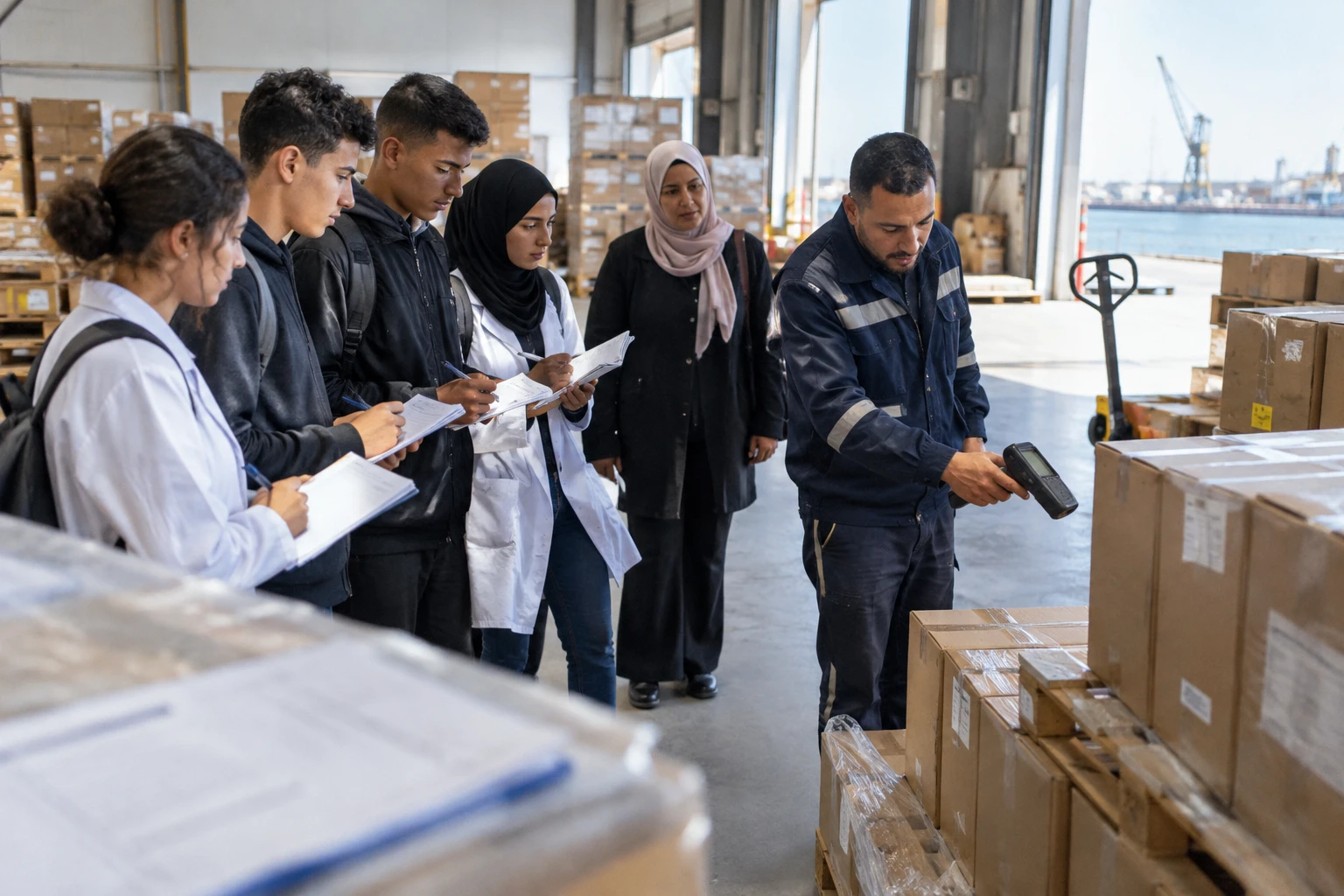
Algeria’s schools now face a dual challenge: accommodating a large school-age population while better linking learning to the skills that will be in demand in the future. Announced reforms set out this ambition. Their impact, however, will depend on how they are implemented in schools, teacher training and the resources available across the country.
Modernising a large school system
On 5 October 2026 in Algiers, the Minister of National Education, Mohammed Seghir Sadaoui, made the case for modernising schools on World Teachers’ Day. The announced programme covers curricula, teaching methods, equipment and the school environment. It comes as the system educates nearly 12 million pupils, according to figures reported by the ministry in information released this year.
The material investment required remains considerable. The authorities have counted more than 30,000 public schools and allocated DZD 150 billion in commitment authorisations for school construction in the 2026 Finance Act, up from DZD 67 billion in 2025. The funding is intended to address rising pupil numbers and infrastructure needs. On its own, however, it says nothing about delivery times or how equipment will be distributed between regions.
This regional dimension matters. A computer room or science club offers different opportunities when equipment is lacking, internet access is unreliable or teachers are not trained. Modernisation will therefore be measured as much by pupils’ practical access as by national announcements.
From the curriculum to practical skills
For the 2026-27 school year, the ministry confirmed that English would be introduced from the third year of primary school. French now begins in the fourth year, while English is being expanded in middle school. At secondary level, computing has been introduced in some science and technical streams. The ministry also plans to establish a dedicated computing stream from 2027-28.
These changes are part of an evolution in educational pathways, but their effect will depend on how they fit alongside other learning. Teaching a language or computing subject does not in itself guarantee practical skills. Pupils need time to work hands-on, experiment and solve problems, as well as appropriate teaching support.
Some initiatives already give pupils the chance to experiment. In April, the first national school innovation competition, dedicated to robotics, brought together 742 projects by primary, middle and secondary pupils. The ministry has also reported 99 artificial intelligence clubs and 95 robotics clubs. These figures point to institutional interest and pupil engagement; they do not yet show how many schools offer regular activities or how many young people can take part.
The issue is linked to the national artificial intelligence strategy examined by the government on 25 May 2026. It is based in particular on data, digital infrastructure and human skills. In September, the Ministry of Higher Education said implementation was entering a new phase, with research projects planned from October. The connection between schools, universities and the digital economy is therefore a matter of continuity, not simply a question of the school curriculum.
Foundational skills remain crucial
The growing role of digital learning does not make difficulties in foundational subjects disappear. The 2024 annual report of Algeria’s Court of Accounts points to widespread reliance on private tuition. It cites French in particular: 74.5% of fifth-year primary pupils covered by the data examined were said to have received additional support. The report links this to several factors, including difficulties with comprehension and pressure over academic results.
This finding calls for a closer look beyond clubs and competitions. If families who can afford it make up for gaps with paid tuition, access to skills also depends on household resources. The challenge, then, is to strengthen support within schools without setting general subjects against technological learning.
The labour market offers another measure of the urgency, though it does not establish a direct link between education and unemployment. According to ILO data cited by the World Bank, unemployment among 15- to 24-year-olds in Algeria stood at about 29.4% in 2025. This indicator covers young people who are economically active and looking for work; it describes neither all young people nor, on its own, the causes of their difficulties finding work.
Implementation is the next test for reform
For pupils, the challenge will be to turn announcements into accessible, lasting learning. For teachers, this requires coherent curricula, usable equipment and ongoing training. For families, the quality of state schools also affects the need to seek private tuition. Employers and training providers, meanwhile, will have a role in bridging the gap between skills acquired and the actual needs of different sectors.
At regional level, Algeria is a member of the Arab Maghreb Union (AMU), a co-operation organisation for North African countries. The ambition to develop digital skills reflects shared regional priorities: training young people, supporting innovation and facilitating the exchange of expertise. But national trajectories and education systems remain different, and comparisons must take those differences into account.
The next step will be to see how new teaching choices take shape in classrooms, and how they are then aligned with the artificial intelligence strategy and vocational training. In Algeria, the challenge is no longer simply to provide access to school. It is to ensure that every pupil, in Algiers and across the other wilayas, can acquire the foundations and practical skills needed to continue their studies and find a place in an economy undergoing transformation.



