
 Egypt
 Libya
 Morocco
 Sudan
 Tunisia
 Benin
 Burkina Faso
 Cabo Verde
 Côte d'Ivoire
 Ghana
 Guinea
 Guinea-Bissau
 Liberia
 Mali
 Mauritania
 Niger
 Nigeria
 Senegal
 Sierra Leone
 The Gambia
 Togo
 Cameroon
 Central African Republic
 Chad
 DR Congo
 Equatorial Guinea
 Gabon
 Republic of the Congo
 São Tomé and Príncipe
 Burundi
 Comoros
 Djibouti
 Eritrea
 Ethiopia
 Kenya
 Madagascar
 Malawi
 Mauritius
 Mozambique
 Rwanda
 Seychelles
 Somalia
 South Sudan
 Tanzania
 Uganda
 Angola
 Botswana
 Eswatini
 Lesotho
 Namibia
 South Africa
 Zambia
 Zimbabwe
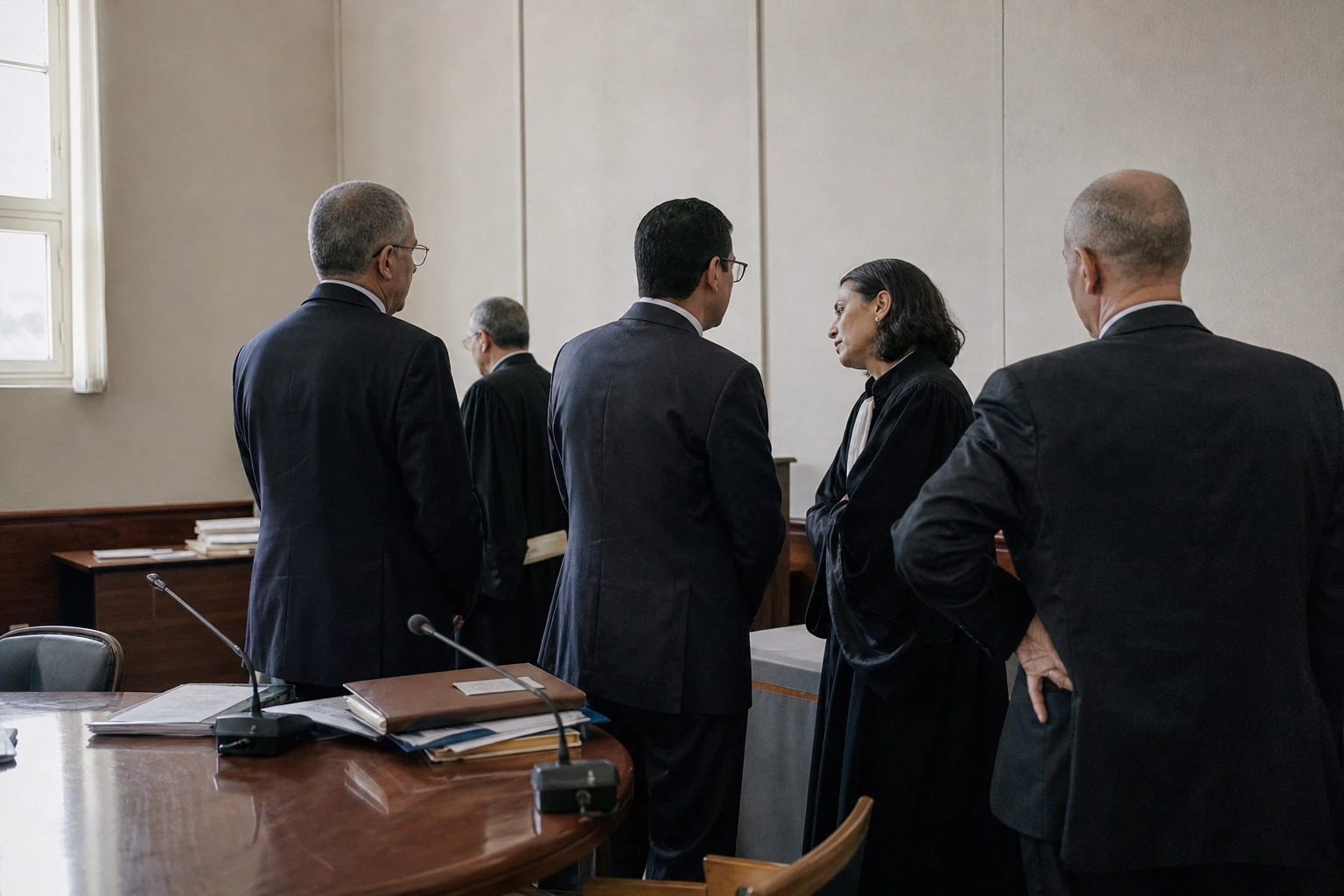
In Algiers, the debate over the death penalty is taking on a new dimension. Algerian justice has handed down its first death sentences in a drug-trafficking case since a new penal framework came into force. The decision comes as the country maintains a de facto moratorium on executions, in place since 1993.
A verdict linked to an exceptional seizure
The criminal court attached to the Algiers Court of Appeal sentenced nine people to death on Monday 5 October 2026. Three defendants were present at the hearing. The other six were tried in absentia, according to several Algerian media outlets.
The case concerns a network prosecuted for importing, transporting, shipping, storing and possessing drugs for sale. The offences were allegedly committed as part of an organised criminal group. The charges also include smuggling, identity theft and money laundering.
The investigation dates back to September 2025, in M’sila province, about 230 kilometres south-east of Algiers. Security services announced the seizure of 113 kilograms of cocaine and 225,030 pregabalin tablets. The medicine is used in some medical treatments, but its diversion also fuels illicit markets for psychotropic drugs.
Initial reports issued after the operation referred to more than 100 kilograms of cocaine and more than 220,000 tablets. The figures cited in the court case are therefore more precise. They were reported by the Algerian press based on the prosecution’s evidence and the judgment.
The sentence is based on Law No. 25-03 of 1 July 2025, on the prevention and punishment of the illicit use of and trafficking in narcotic drugs and psychotropic substances. The law provides for the death penalty in cases involving certain aggravating circumstances, particularly when the offences are linked to an organised group or have serious consequences for public health.
Algeria’s Official Gazette sets out the provisions introduced into national law. The death penalty nevertheless remains a sentence handed down by courts, rather than an automatic execution. Any decision must still go through the appeals procedures provided for under Algerian law.
The moratorium remains in force
Algeria has carried out no executions since 1993. That year, the last executions involved three men convicted of a deadly attack at Algiers airport. Since then, courts have continued to hand down death sentences, but the authorities have applied a moratorium on carrying them out.
This distinction is essential. The 5 October verdict therefore does not mean that an execution is imminent. Rather, it marks an expansion in the judicial use of the death penalty at a time when the authorities want to demonstrate a tougher response to organised trafficking.
The case forms part of a broader political trajectory. President Abdelmadjid Tebboune called for a tougher criminal response to several forms of serious crime at the end of summer 2026. A few days before the judgment, the National People’s Assembly adopted an amendment to the Criminal Code providing for the death penalty for certain arson attacks and some child abductions.
Algeria Press Service reported the adoption of the law on 1 October 2026. The reform targets, in particular, the deliberate burning of forests and fields, certain acts committed on behalf of foreign parties, and child abductions involving violence or abuse.
The timing gives the verdict particular significance. Here, the courts are applying a provision on narcotics that has already come into force. At the same time, parliament is extending the scope of the death penalty to other offences. These two developments are based on different laws, but form part of the same move towards tougher criminal penalties.
A response targeting networks, but raising questions
For the Algerian authorities, the issue goes beyond individual drug use. The quantities seized in M’sila point to import, storage, transport and money-laundering networks. The strategy therefore targets the alleged organisers and financial flows as well as the dealers on the ground.
This approach may affect different players in the trafficking trade in different ways. Those who control funding and routes often have the means to hide or leave the country. By contrast, operatives and intermediaries are more exposed to arrest. The judgment will therefore need to be examined in detail to distinguish the roles attributed to each of the nine people sentenced.
Pregabalin adds a public-health dimension to the case. The product is not an illicit drug when used normally for medical purposes. However, it becomes a diverted substance when sold or consumed outside a therapeutic setting. Criminal penalties cannot therefore replace pharmaceutical controls, prevention, access to care and addiction treatment.
Questions over judicial safeguards are also central. The six sentences handed down in absentia will need to be considered in light of the available appeals and the conditions under which the accused will be able to present their defence. These safeguards are particularly important in cases carrying the death penalty.
A signal for North Africa
The Algerian case resonates across North Africa, a region facing cross-border trafficking. Cocaine, cannabis and psychotropic drugs do not follow administrative boundaries. Their routes involve ports, roads, border areas and financial networks spanning several countries.
Algeria is part of the Maghreb, where regional cooperation remains limited despite shared interests in security and border control. The Arab Maghreb Union, an organisation created to strengthen exchanges between countries in the region, remains largely inactive politically. In this context, bilateral investigations and cooperation with specialist agencies play a decisive role.
At African Union level, the case also highlights the need to coordinate the fight against criminal networks without reducing the response to harsher penalties. Tracking financial flows, sharing information, monitoring diverted medicines and protecting populations must advance together.
The next point to watch will be what happens in court following the 5 October 2026 sentences. In particular, attention will focus on appeals, the status of the defendants tried in absentia and how the moratorium on executions is maintained. For Algeria, the debate is no longer solely about cracking down on drug trafficking. It now concerns the balance between public security, health and fundamental safeguards.



