
 Egypt
 Libya
 Morocco
 Sudan
 Tunisia
 Benin
 Burkina Faso
 Cabo Verde
 Côte d'Ivoire
 Ghana
 Guinea
 Guinea-Bissau
 Liberia
 Mali
 Mauritania
 Niger
 Nigeria
 Senegal
 Sierra Leone
 The Gambia
 Togo
 Cameroon
 Central African Republic
 Chad
 DR Congo
 Equatorial Guinea
 Gabon
 Republic of the Congo
 São Tomé and Príncipe
 Burundi
 Comoros
 Djibouti
 Eritrea
 Ethiopia
 Kenya
 Madagascar
 Malawi
 Mauritius
 Mozambique
 Rwanda
 Seychelles
 Somalia
 South Sudan
 Tanzania
 Uganda
 Angola
 Botswana
 Eswatini
 Lesotho
 Namibia
 South Africa
 Zambia
 Zimbabwe
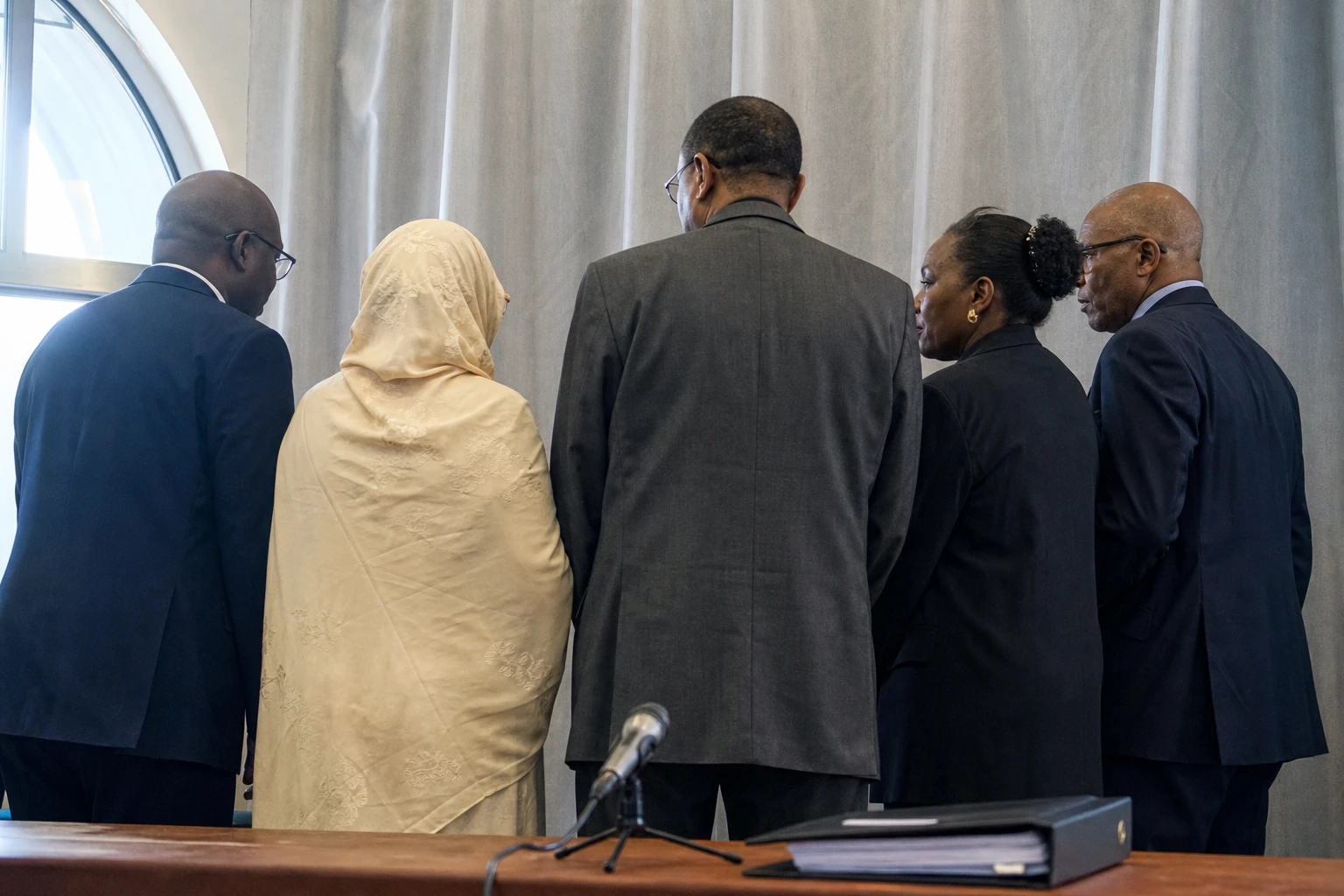
Twelve years after the crash of flight AH5017, French justice has established a first criminal liability in a disaster that deeply affected Algeria, Burkina Faso, Mali and several European countries. The Paris criminal court on Monday 28 September 2026 fined Spanish airline Swiftair 225,000 euros for involuntary manslaughter.
The decision concerns the operator of the aircraft chartered by Air Algérie. It does not close the chapter on the tragedy. It does, however, offer a judicial response to the families of the 116 people who died in northern Mali on 24 July 2014.
A regional flight at the heart of a pan-African tragedy
Flight AH5017 linked Ouagadougou, the capital of Burkina Faso, with Algiers, the capital of Algeria. The aircraft, a McDonnell Douglas MD-83 registered as EC-LTV, belonged to Swiftair and was operated on behalf of Air Algérie.
There were 110 passengers and six crew members on board. No one survived when the aircraft crashed near Gossi, in the Timbuktu region of northern Mali. The victims were of several nationalities, including Algerians, Burkinabè, French, Lebanese and Spaniards.
The route illustrated the ties that shape African air transport. It connected West Africa with North Africa, with an Algerian airline as charterer and a Spanish company as the aircraft operator. The crash therefore went beyond the remit of a single airline or country.
The official safety investigation report, conducted by the Malian authorities with technical assistance from the French Bureau of Enquiry and Analysis, states that the aircraft had reached cruising altitude after departing from Ouagadougou. The crew had earlier changed course to avoid an area of storms.
What the court accuses Swiftair of
At the end of the trial, the judges found that shortcomings in the crew’s training and practice had certainly contributed to the accident. According to the judgment, as reported after the hearing, the pilots had not been adequately prepared to respond to the situation encountered in flight.
The decision does not identify a single cause. It forms part of a chain of technical and human events analysed since 2014. The safety report drawn up after the accident describes a drop in the aircraft’s speed, probably linked to engine pressure sensors being obstructed by ice crystals. This led to a reduction in thrust, followed by a loss of control at high altitude.
The engines’ anti-icing systems were reportedly not activated. The aircraft, on autopilot, then stalled at an altitude of about 9,500 metres. The safety report specifies, however, that its purpose was to improve accident prevention, not to determine criminal liability.
The court considered the matter at another level. It examined Swiftair’s organisation, the preparation of its crews and the company’s training obligations. The conviction is therefore based on the view that the company’s failings contributed to the deaths of those on board, even though the accident also resulted from a complex chain of technical events.
A lengthy case followed from Algeria and across the region
The trial was held in Paris from 9 to 26 March 2026. Prosecutors had sought the maximum fine applicable to a legal entity in this case: 225,000 euros. The defence contested the accusations and noted that a case had been dismissed in Spain in the same matter. The argument did not persuade the French judges.
The French proceedings took place after several years of technical and judicial investigations. For the bereaved, the delay was particularly difficult. The crash took place on 24 July 2014. In the intervening years, families had to follow the identification work, aviation investigations and debates over the division of responsibility between the charterer, operator and crew.
The AH5017-Ensemble association, which brings together victims’ relatives, described the judgment as an important step. The National Federation of Victims of Attacks and Collective Accidents also welcomed the recognition of criminal responsibility linked to the disaster.
For Algerian families, this decision meets a particular expectation. Air Algérie carried the flight number and marketed the route, but the aircraft and crew belonged to Swiftair. This arrangement, common in commercial aviation, can make it difficult to understand who is responsible after an accident.
A safety issue that goes beyond the trial
The judgment highlights the issues surrounding outsourcing in air transport. An airline may sell a ticket and deal with passengers, while another operator provides the aircraft and crew. Safety then depends on clear contracts, competency checks and monitoring of training.
This issue directly concerns routes between North Africa, West Africa and Europe. African carriers operate in a market where partnerships, charters and capacity-sharing agreements have become essential. These arrangements make it possible to open routes and maintain services. They also require rigorous oversight of operational standards.
The case also points to the role of national authorities. Algeria, Burkina Faso and Mali were directly involved through the flight, its route or the investigation. Civil aviation authorities must be able to verify crew training, aircraft maintenance and compliance with procedures, including when the operator is based in another country.
At continental level, the accident highlights the need for closer cooperation between civil aviation authorities. The African Union’s aviation safety agency and regional organisations can help harmonise checks and improve the sharing of information about airlines operating across several markets.
What the conviction means for families
The financial penalty remains limited given the scale of the human toll. It cannot make up for the loss of 116 lives or erase the consequences for families. Its significance is nevertheless symbolic and institutional: a company has been found criminally responsible for failings that contributed to the accident.
The judgment also opens the way to possible civil proceedings, depending on the cases brought by relatives and the rules governing compensation. It will also be necessary to see whether the decision is appealed and whether its reasoning influences other cases involving aviation safety.
For Algeria and its regional partners, the crash of flight AH5017 remains a concrete reminder. The safety of a route does not depend solely on the flag shown on the ticket. It rests on an entire chain, from the selection of the operator to crew training, as well as technical checks and oversight by the authorities.



