
 Egypt
 Libya
 Morocco
 Sudan
 Tunisia
 Benin
 Burkina Faso
 Cabo Verde
 Côte d'Ivoire
 Ghana
 Guinea
 Guinea-Bissau
 Liberia
 Mali
 Mauritania
 Niger
 Nigeria
 Senegal
 Sierra Leone
 The Gambia
 Togo
 Cameroon
 Central African Republic
 Chad
 DR Congo
 Equatorial Guinea
 Gabon
 Republic of the Congo
 São Tomé and Príncipe
 Burundi
 Comoros
 Djibouti
 Eritrea
 Ethiopia
 Kenya
 Madagascar
 Malawi
 Mauritius
 Mozambique
 Rwanda
 Seychelles
 Somalia
 South Sudan
 Tanzania
 Uganda
 Angola
 Botswana
 Eswatini
 Lesotho
 Namibia
 South Africa
 Zambia
 Zimbabwe
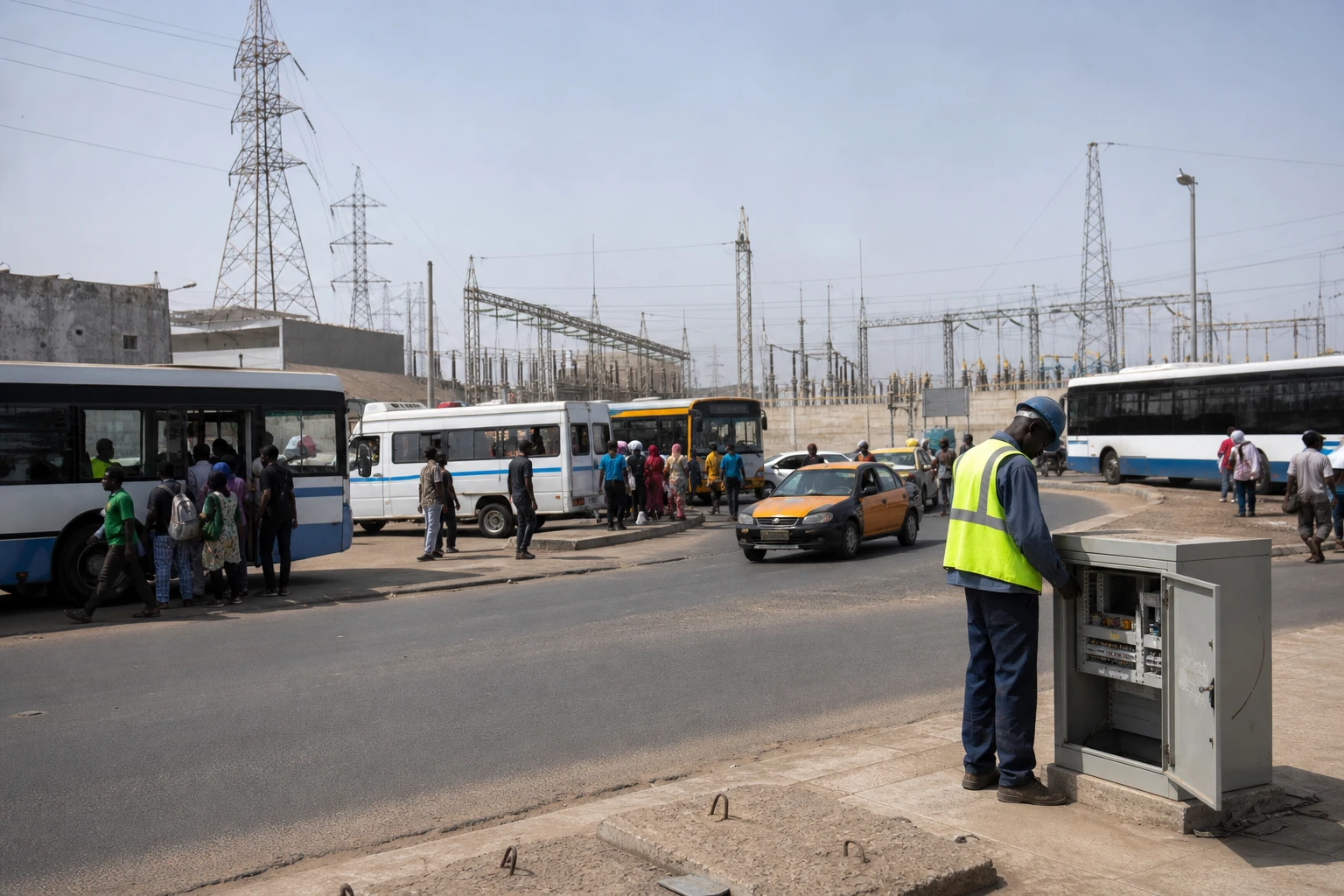
In Dakar, the challenge is no longer simply to produce more electricity. Fuel supplies must also be secured, networks modernised and Senegal’s gas resources turned into energy available to households and businesses. It is against this backdrop that Senelec and Algeria’s Sonelgaz group are drawing closer.
Partnership signed after fresh grid strains
On 3 October 2026, in Algiers, Senegal’s national electricity company, Senelec, and Sonelgaz signed a memorandum of understanding. The document is intended to provide a framework for cooperation in the electricity sector. It was signed in the presence of Senegal’s Minister of Energy and Petroleum, El Hadji Abdourahmane Diouf, and his Algerian counterpart responsible for Energy and Renewable Energy, Mourad Adjal.
The memorandum’s operational scope, however, remains to be clarified. The two parties have yet to detail the list of projects covered, their implementation timetable or financing arrangements. The agreement therefore provides a framework for cooperation in the first instance. Its real significance will depend on the contracts and programmes that follow.
The signing comes as Senegal’s electricity system enters another period of vulnerability. In September, incidents at several generating units and constraints on fuel supplies reduced available capacity margins. Senelec responded by organising load-shedding – temporary power cuts intended to balance supply and demand.
For households, these interruptions disrupt daily life. They also affect shops, workshops, digital services and small processing businesses. In urban areas, the impact is immediate. In less well-served regions, it compounds the persistent challenges of extending and maintaining the grid.
Gas at the heart of Senegal’s strategy
Senegal now wants natural gas to become a mainstay of electricity production. The so-called “Gas to Power” strategy involves using gas to fuel power plants, reduce dependence on imported fuels and stabilise production costs. The government presents this approach as a means of securing energy sovereignty and universal access to electricity.
This ambition accompanies the development of the country’s offshore gas resources. It requires suitable infrastructure, however. In September, Dakar began laying the northern section of its gas network. The pipeline, about 85 kilometres long, is intended to transport up to 300 million cubic feet of gas a day to power plants and industrial hubs.
The gas network alone will not be enough. Senegal will also need to convert some power plants, strengthen substations and transmission lines, improve maintenance and make distribution more reliable. Gas supplies will ultimately have to come on stream in step with the equipment able to use them.
The Senegalese Ministry of Energy and Petroleum presents this course as a way to reduce reliance on fossil fuel imports over time. In the meantime, Senelec continues to use temporary solutions, notably to ensure power plants can operate before domestic gas is fully available.
What Sonelgaz can bring to Senelec
The agreement’s value lies in Sonelgaz’s experience across several parts of the energy supply chain. The Algerian group operates in electricity generation, transmission and distribution. It also has expertise in gas, grid operations, industrial maintenance, training and the supervision of electricity systems.
According to statements reported after the signing, Algiers is ready to support Senegal across its entire energy chain. The aim would therefore go beyond building a power plant. It could include engineering, grid management, technician training and support for implementing the “Gas to Power” model.
This aspect is strategically important for Senelec. The company must manage rising demand, equipment under considerable strain and a grid that needs to keep pace with urbanisation and industrial development. Skills transfers could help cut response times and strengthen local maintenance capabilities.
Senelec is responsible for electricity generation, transmission and distribution in Senegal. It also has a training centre at Cap des Biches. Cooperation with Sonelgaz could therefore build on existing national institutions rather than amounting to a simple subcontracting arrangement.
Cooperation extending beyond Dakar and Algiers
For Sonelgaz, Senegal represents a further step in the expansion of its African operations. The Algerian group has already launched projects in several countries on the continent, notably in power-plant construction, training and support for electricity grids.
This presence reflects a broader shift. Several African countries are seeking to develop energy infrastructure while retaining greater control over skills and equipment. In this context, partnerships between African state-owned companies can offer an alternative to models based solely on operators from outside the continent.
Senegal can also benefit from its regional interconnections. Its electricity cooperation with The Gambia, Mauritania and Mali is already part of networks linked to the Organisation for the Development of the Senegal River and the Gambia River Basin Development Organisation. These arrangements make it possible to pool some capacity and improve supplies to border areas.
This approach is directly relevant to the Economic Community of West African States (ECOWAS), which is seeking to develop a regional electricity market. The reliability of Senegal’s system therefore matters beyond Dakar. It could also affect electricity trading with neighbouring countries and the stability of West African grids.
Results will depend on implementation
The memorandum signed in Algiers opens up an opportunity, but it has yet to resolve the sector’s difficulties. The first measure of progress will be the publication of a detailed action plan. It will need to identify the installations involved, each partner’s responsibilities, financing requirements and training targets.
The second challenge will be aligning the timetable for gas infrastructure with that for power plants. If transport infrastructure is ready before generation equipment, gas will not deliver all the expected benefits. Conversely, power plants ready to operate without a regular fuel supply would continue to put pressure on Senelec’s finances.
Ultimately, the partnership’s success will be judged by its tangible effects. Senegalese people expect fewer power cuts, better service and electricity that meets businesses’ needs. The authorities will therefore have to monitor technical indicators as well as the final cost borne by households and economic activity.
A further intergovernmental meeting is planned in Dakar, on the sidelines of the MSGBC Oil, Gas & Power conference scheduled for 2 and 3 December 2026. It could clarify the political framework for cooperation between the two countries. Until then, the central challenge remains the same: turning an institutional agreement into lasting, well-managed electricity capacity that serves Senegal as a whole.



