Algeria
 Egypt
 Libya
 Morocco
 Sudan
 Tunisia
 Benin
 Burkina Faso
 Cabo Verde
 Côte d'Ivoire
 Ghana
 Guinea
 Guinea-Bissau
 Liberia
 Mali
 Mauritania
 Niger
 Nigeria
 Sierra Leone
 The Gambia
 Togo
 Cameroon
 Central African Republic
 Chad
 DR Congo
 Equatorial Guinea
 Gabon
 Republic of the Congo
 São Tomé and Príncipe
 Burundi
 Comoros
 Djibouti
 Eritrea
 Ethiopia
 Kenya
 Madagascar
 Malawi
 Mauritius
 Mozambique
 Rwanda
 Seychelles
 Somalia
 South Sudan
 Tanzania
 Uganda
 Angola
 Botswana
 Eswatini
 Lesotho
 Namibia
 South Africa
 Zambia
 Zimbabwe

A budgetary equation turned political
In Dakar, the debate is no longer merely about the books. It now concerns the Senegalese state’s ability to fund its priorities without squeezing households, businesses and local authorities. In this context, debt is not an abstract figure: it weighs on jobs, subsidies, investment and partners’ confidence.
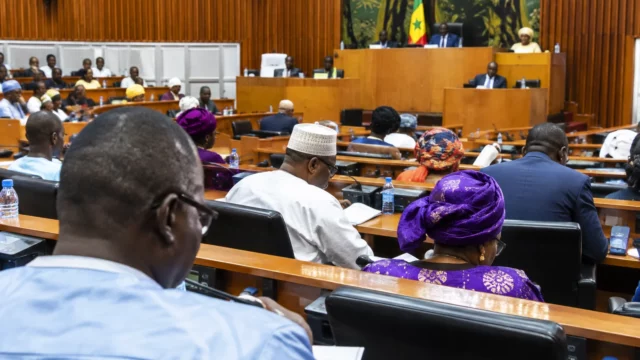
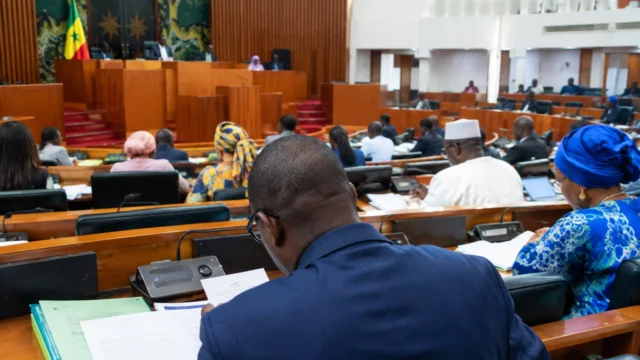
It was against this backdrop that Prime Minister Ahmadou Al Aminou Lô set out his general policy statement before the National Assembly on Tuesday 8 September 2026. He sought to reassure people about the government’s course while embracing the language of recovery. His goal remains a “sovereign, just and prosperous Senegal”, but with what he says is a different approach.
The move is significant. In Senegal, the general policy statement sets out the government’s roadmap before MPs. It takes on particular weight when the government is moving forward in a chamber where it cannot count on a majority. This year’s exercise is therefore institutional, economic and political all at once.
What the government says
The core message rests on one idea: restoring debt sustainability. The Prime Minister said the country’s debt stood at around 134% of GDP, with payment arrears reported at CFA francs 1,956 billion. These are very large sums for a state the size of Senegal, although the precise figure varies according to the methodologies and reference periods used.
The head of government also clarified that the programme agreed with the IMF does not constitute a restructuring, but a “reprofiling”: in other words, an adjustment to payment terms, particularly interest and the repayment schedule, to ease debt servicing. He stressed that this approach avoids a drastic treatment of public obligations.
This distinction is essential. Restructuring often implies a more direct loss for creditors and tougher negotiations. Reprofiling instead seeks to ease pressure in the short term. For a country such as Senegal, it could provide budgetary breathing space without erasing the underlying problem: public finances weakened by arrears, the volume of repayments and the need to restore the state’s credibility.
The issue is being closely monitored by the International Monetary Fund. On 1 September 2026, the institution announced a staff-level agreement with the Senegalese authorities on a new 36-month programme worth about $2.2 billion. The IMF says it aims to support macroeconomic stability, debt sustainability, social spending and private sector-led growth. The agreement remains subject to approval by its management and Executive Board.
Why debt has become the focus of debate
Senegal is not approaching this moment in an economic vacuum. Since 2024, the authorities have undertaken a series of reforms to restore a healthier budgetary framework, following a public finance audit that highlighted imbalances and data deemed inaccurate on debt and the deficit. The Ministry of Finance now refers to a Senegal Debt Treatment Plan, presented as a sovereign initiative.
The figures cited by institutions point to a common conclusion: Senegal’s public debt has reached an exceptionally high level. In a June 2026 press briefing, the IMF said total public debt was estimated at 132% of GDP at the end of 2024. In another regional document, it reported a revision to 132% of GDP for 2024 and 130% for 2025. The Senegalese authorities, for their part, have continued to argue for reprofiling rather than partial write-off.
This level of debt changes the nature of public policy. When a large share of revenue goes to creditors, less is left for roads, hospitals, schools, water or targeted support. The debate over debt then becomes a debate about national priorities. It also affects the cost of living, youth employment and the state’s ability to support productive sectors.
The government nevertheless wants to avoid a narrative of retreat. Ahmadou Al Aminou Lô announced a target of creating 1.5 million jobs by 2029 and transforming rural areas into hubs of permanent economic activity. He also called for greater mobilisation of domestic resources and rationalisation of public spending. The message is clear: budgetary recovery must fund a revival, not merely reassure lenders.
A Senegalese issue with West African implications
The Senegalese case extends beyond national borders. Within WAEMU, the budgetary constraints facing a large country such as Senegal affect perceptions of regional risk, financing conditions and market sentiment. The IMF notes that support for Dakar could also involve the World Bank, the African Development Bank and other partners. In other words, the treatment of Senegalese debt matters to the entire West African financial ecosystem.
For ECOWAS, the issue also has political significance. Senegal remains a major institutional and economic hub in West Africa. Its budgetary trajectory, credibility and political stability shape perceptions of the entire sub-region. If Dakar manages to restore confidence without stifling economic activity, the outcome will be watched closely in Abidjan, Cotonou, Lomé, Ouagadougou and Conakry.
A practical question remains: how will the adjustment be shared between the central government, state-owned companies, local authorities and households? The government’s statement promises to protect the most vulnerable, strengthen budget transparency and improve debt management. But implementation will show whether reprofiling genuinely frees up room for the real economy.
The next steps will unfold over several milestones: formal approval of the new IMF programme, the translation of reforms into the budget and the government’s ability to fulfil its promise of recovery without worsening social pressures. In a country where young people are waiting for jobs and public finances remain strained, the gamble is clear: restore the books without breaking economic momentum.