
 Algeria
 Egypt
 Libya
 Morocco
 Sudan
 Tunisia
 Benin
 Burkina Faso
 Cabo Verde
 Côte d'Ivoire
 Ghana
 Guinea
 Guinea-Bissau
 Liberia
 Mali
 Mauritania
 Niger
 Nigeria
 Sierra Leone
 The Gambia
 Togo
 Cameroon
 Central African Republic
 Chad
 DR Congo
 Equatorial Guinea
 Gabon
 Republic of the Congo
 São Tomé and Príncipe
 Burundi
 Comoros
 Djibouti
 Eritrea
 Ethiopia
 Kenya
 Madagascar
 Malawi
 Mauritius
 Mozambique
 Rwanda
 Seychelles
 Somalia
 South Sudan
 Tanzania
 Uganda
 Angola
 Botswana
 Eswatini
 Lesotho
 Namibia
 South Africa
 Zambia
 Zimbabwe
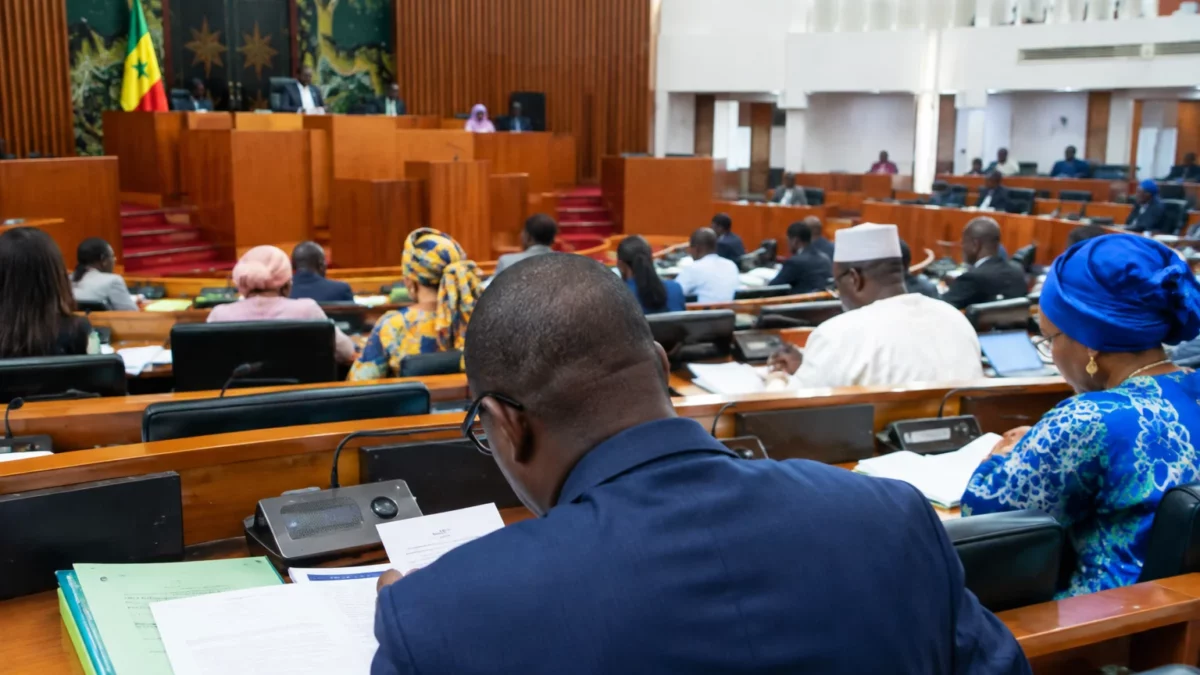
In Senegal, the split between the president and the party that brought him to power is no longer playing out only in public statements. It is now affecting parliamentary balances and the budget debate, with direct consequences for the running of the state.
A formalised break
On 17 November 2026, Pastef’s National Council announced that 32 individuals had lost their membership. The list includes President Bassirou Diomaye Faye and several members of his entourage. The decision formalises a split already signalled by the creation of Kiiraay, the political movement launched by the head of state in July.
The statement cites the party’s internal rules, which provide for the loss of membership in the event of resignation, expulsion or joining another political organisation. It is therefore not, in itself, a decision on Bassirou Diomaye Faye’s presidential mandate. The measure concerns his membership of Pastef, led by Ousmane Sonko.
Senegalese media reported the announcement and the number of people affected. The term “expulsion”, used in some reports, sums up the political effect of the decision, but the statement refers to loss of membership. The distinction matters: party rules are not the same as the institutions of the Republic.
The split is part of a rapid sequence of events. In March 2024, Bassirou Diomaye Faye won the presidential election after being chosen by Pastef as its candidate, with Ousmane Sonko barred from standing. After taking office, he appointed Sonko prime minister. The two men subsequently diverged over the conduct of government. Sonko left the premiership and is now speaker of the National Assembly, while the head of state is relying on Kiiraay and its allies.
The budget, an immediate flashpoint
The decision comes as relations between the executive and the parliamentary majority deteriorate over public finances. Senegalese reports say the National Assembly rejected the 2026 supplementary finance bill on 3 November. The finance committee then rejected the first part of the 2027 draft budget on 7 November. The Pastef majority challenged the credibility of the government’s forecasts.
These votes are not merely another episode in a rivalry between political leaders. The budget determines the resources available to ministries and public services, as well as the state’s spending timetable. A prolonged deadlock could delay projects and complicate planning, particularly for local authorities and sectors that depend on public funding. The effects are not evenly distributed: central government departments negotiate the trade-offs, while communities and businesses depend on services and investment continuing.
Senegal faces this confrontation in a constrained financial climate. Debates over revenue, debt and the reliability of the accounts make budget choices particularly sensitive. Pastef justifies its rejections by citing concerns about the forecasts; the government, for its part, must secure passage of the legislation needed to carry out its programme. Without access to sufficiently detailed, competing evidence on each disputed item, it would be unwise to reach a conclusion here on the substance of these allegations.
The episode is also part of an institutional realignment. Since Sonko left the government, the party has retained a strong presence in the National Assembly, while the president is seeking to build his own camp. The Associated Press described the risk of political deadlock in June 2026, after Pastef refused to join the new government. The current disagreement therefore extends an already visible governance crisis rather than creating one on its own.
Two political machines, one contest
For Pastef leaders, the announcement confirms a de facto situation and applies the party’s statutes. The individuals concerned have not all responded in the same way. The press has reported hostile remarks about the statement, a sign that the split is contested both in its wording and in its political reach.
For the president, the creation of Kiiraay provides a separate framework for his supporters. But building a presidential party does not automatically guarantee a parliamentary majority or a presence on a par with Pastef’s. Conversely, Pastef’s ability to influence the budget does not mean its choices will come without a political cost: voters will also judge the consequences of a standoff for the functioning of institutions.
People in Senegal’s big cities, residents of the regions and those working in the formal and informal economies do not experience the effects of a deadlock in the same way. Local projects, social spending and public contracts depend on concrete budget decisions. In the coming months, the challenge will therefore be not simply a contest between political machines, but their ability to ensure that public services continue to operate.
An issue that extends beyond Dakar
The crisis will also be watched across West Africa. Senegal is a member of ECOWAS, the Economic Community of West African States, where institutional stability and governments’ ability to function matter in a region already marked by severe political tensions. The rivalry between a president and the majority in his own camp presents a different case from the military transitions that often dominate regional news: here, the conflict is unfolding within civilian institutions and must be resolved through political and electoral mechanisms.
The next decisive milestones will be the continuation of the budget debate and preparations for the local elections announced for 2027. Ousmane Sonko has left the contest to the ballot box; Bassirou Diomaye Faye, for his part, will have to show that his new party can turn its presidential foothold into electoral support. Until then, the central question remains a practical one: can the executive and the National Assembly continue to govern despite the split between their main camps?
Sources consulted: SeneNews on the decision by Pastef’s National Council, SenePlus on the budget votes, Associated Press on institutional tensions in June 2026.



