Algeria
 Egypt
 Libya
 Morocco
 Sudan
 Tunisia
 Benin
 Cabo Verde
 Côte d'Ivoire
 Ghana
 Guinea
 Guinea-Bissau
 Liberia
 Mali
 Mauritania
 Niger
 Nigeria
 Senegal
 Sierra Leone
 The Gambia
 Togo
 Cameroon
 Central African Republic
 Chad
 DR Congo
 Equatorial Guinea
 Gabon
 Republic of the Congo
 São Tomé and Príncipe
 Burundi
 Comoros
 Djibouti
 Eritrea
 Ethiopia
 Kenya
 Madagascar
 Malawi
 Mauritius
 Mozambique
 Rwanda
 Seychelles
 Somalia
 South Sudan
 Tanzania
 Uganda
 Angola
 Botswana
 Eswatini
 Lesotho
 Namibia
 South Africa
 Zambia
 Zimbabwe
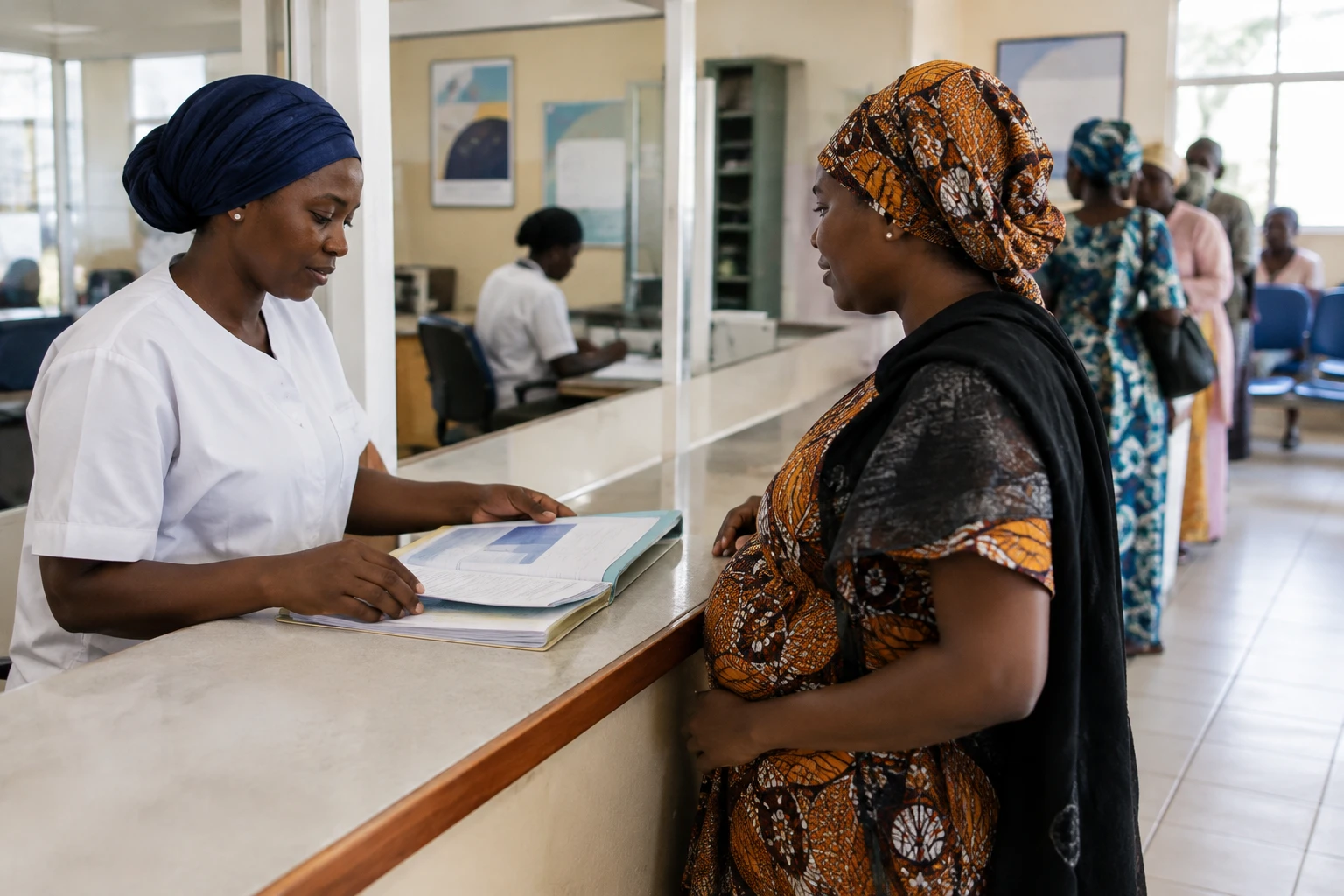
In some conflict zones, a maternity unit may have just one midwife for hundreds of kilometres. When roads are cut off, families flee and medicines run short, that distance becomes an immediate risk for pregnant women and newborns.
Midwives working in Cameroon, the Central African Republic, Burkina Faso, Chad, Mali and Niger shared their experiences at a meeting in Dakar. Their accounts describe different realities, but one common challenge: maintaining obstetric care where insecurity and a lack of resources are already weakening health services.
Care pathways disrupted by crises
In Cameroon, the Far North region, particularly around Maroua, is experiencing attacks by armed groups and population displacement. The arrival of displaced families is putting pressure on already stretched health facilities. Pregnant women are especially exposed when fleeing takes them away from antenatal appointments, assisted deliveries and postnatal care.
Yvette Ouédraogo, a midwife deployed in the region for the United Nations Population Fund (UNFPA), describes large-scale displacement and the violence that can accompany it. She stresses the need to remain alongside women despite the instability. Mobile clinics and midwives supported by the UN agency are helping to reach some remote communities.
In the Central African Republic, the obstacle also takes the form of long distances and unreliable supplies. In Bria, a north-eastern town about 580 kilometres from Bangui, Isabelle Gueweny is described as the only midwife on site. Poor roads delay the arrival of medicines. A complication normally treated in a well-equipped facility can then become an emergency without the necessary supplies.
Gueweny recounts the case of a woman at full term who arrived with high blood pressure. Despite the absence of the medicines they were seeking, the team was able to arrange a vaginal delivery. The mother and child survived. This happy outcome does not alter the underlying reality: safe care should not depend on an isolated team’s ability to make up for a lack of equipment.
Funding determines field presence
A midwife cannot manage every emergency alone. She needs medicines, equipment, transport, a referral system to a hospital and other professionals to manage complications. In hard-to-reach areas, the absence of any one of these links can limit care, even when qualified staff are present.
Humanitarian funding helps cover salaries and the deployment of teams, as well as mobile clinics and medical supplies. In Dakar, Sennen Hounton, UNFPA’s regional director for West and Central Africa, warned that budget cuts were threatening these services. According to figures presented at the meeting, only 30% of the agency’s funding needs were covered for midwives deployed in nine countries considered particularly vulnerable. This figure, attributed to UNFPA, describes the funding of its programme, not the overall national health budgets.
The agency also publicly warned in 2025 about the consequences of funding cuts in several crisis settings. In Cameroon, its March 2025 humanitarian report said that 35% of the agency’s humanitarian funding needs were then covered. These figures do not have exactly the same scope as the 30% rate cited in Dakar; they nevertheless confirm the financial pressure on operations, without making the two figures interchangeable.
The issue therefore involves several responsibilities. National authorities organise public services, staff allocation and health budgets. Humanitarian partners can support areas where capacity is overstretched, but their aid remains dependent on external contributions and cannot sustainably replace a health system funded and managed in each country.
A regional emergency, with responses to be built country by country
The countries concerned are not facing a single crisis. Cameroon, a Central African country, faces emergencies in its Far North, as well as in other regions affected by conflict or displacement. The Central African Republic, landlocked in the heart of the continent, must contend with access difficulties and a weakened healthcare network. Burkina Faso, Mali and Niger, in West Africa and the Sahel, face different patterns of insecurity and mobility. Chad lies at the crossroads of these regional spaces and also hosts displaced people.
This diversity matters: a mobile clinic suited to a community that is accessible may not meet the needs of one cut off by an impassable road. The responsibilities and capacities of health ministries also vary from country to country. Co-operation between neighbouring states, regional agencies and humanitarian organisations can facilitate training, equipment procurement and continuity of care during cross-border movements. It does not remove the need for national investment tailored to local realities.
The scale of the challenge is also reflected in global estimates. According to the World Health Organization and UNICEF, sub-Saharan Africa accounted for about 70% of maternal deaths worldwide in 2023. This regional figure does not capture progress or disparities between countries. It nonetheless highlights that access to a skilled professional, medicines and emergency care remains a major public health issue.
What happens next will depend both on the budgets mobilised and on the ability of national services to retain staff in remote areas. For women, the stakes are concrete: being able to attend antenatal appointments, reach a facility in time and receive safe care, without their place of residence or forced displacement determining the outcome.