Algeria
 Egypt
 Libya
 Morocco
 Sudan
 Tunisia
 Benin
 Burkina Faso
 Cabo Verde
 Côte d'Ivoire
 Ghana
 Guinea
 Guinea-Bissau
 Liberia
 Mali
 Mauritania
 Niger
 Nigeria
 Sierra Leone
 The Gambia
 Togo
 Cameroon
 Central African Republic
 Chad
 DR Congo
 Equatorial Guinea
 Gabon
 Republic of the Congo
 São Tomé and Príncipe
 Burundi
 Comoros
 Djibouti
 Eritrea
 Ethiopia
 Kenya
 Madagascar
 Malawi
 Mauritius
 Mozambique
 Rwanda
 Seychelles
 Somalia
 South Sudan
 Tanzania
 Uganda
 Angola
 Botswana
 Eswatini
 Lesotho
 Namibia
 South Africa
 Zambia
 Zimbabwe
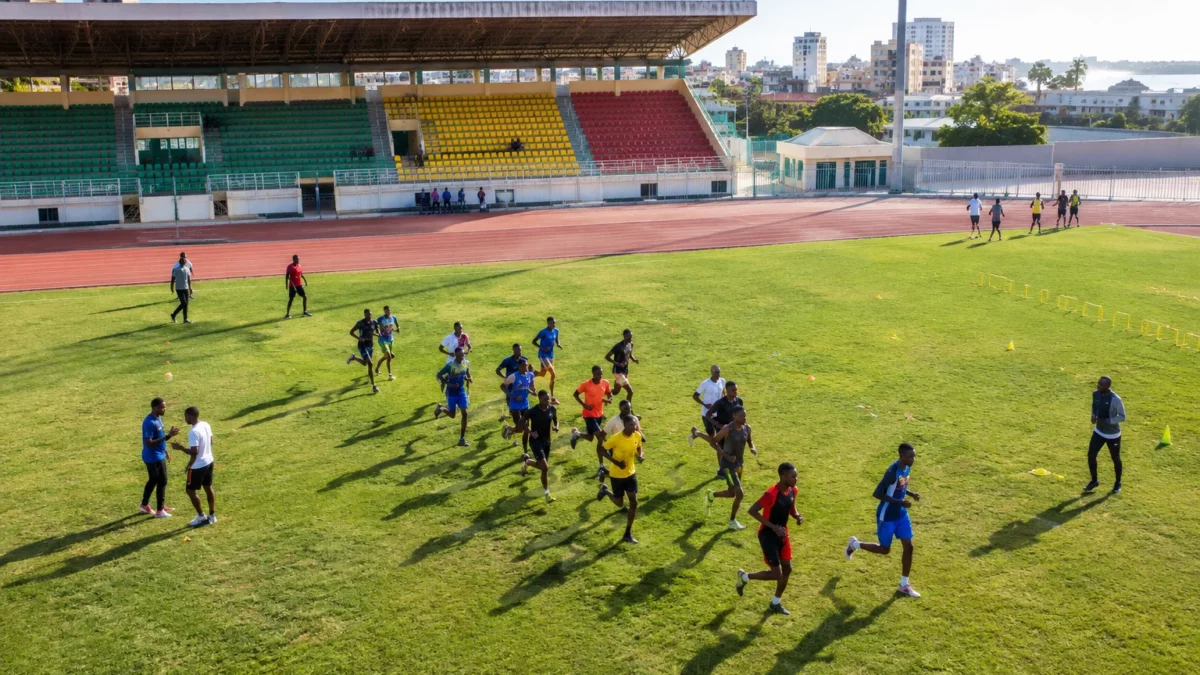
Once the stands have emptied and the flame has gone out, the legacy of the Youth Olympic Games is shaped far from the ceremonies. In Senegal, the challenge now is to keep the facilities in use, maintain public access to them and turn the experience gained by young people into lasting opportunities.
The first Youth Olympic Games held on the African continent ended on 13 November 2026. For two weeks, nearly 2,700 athletes competed in 25 sports in Dakar, Diamniadio and Saly. But the closing ceremony also marks the start of a transition: the organising committee’s resources must be transferred, while the facilities return to their everyday use.
Facilities to hand over and then maintain
In Dakar and neighbouring municipalities, the challenge is not just to preserve the renovated sports grounds. It is necessary to decide who will manage them, who will pay for their upkeep and how residents can use them. These decisions will have a particular impact on clubs, federations and young athletes who have so far relied on the facilities available.
The Dakar Youth Olympic Games Organising Committee (COJOJ) has drawn up an inventory of the acquisitions made for the event. A steering committee is preparing to allocate them among the organisations expected to operate them. This stage is crucial: a facility handed over without an operating budget, staff or access rules risks quickly losing its usefulness.
Ababacar Fall, president of the Senegalese Taekwondo Federation, has called for federations to be involved in decisions concerning equipment and infrastructure. Their participation could bring management closer to the needs of clubs and practitioners. It also raises the question of transparency: allocation criteria and maintenance responsibilities will have to be clearly defined.
In the municipalities involved in competitions and community activities, the Municipal Development Agency (ADM) is banking on community management. Under the proposed model, local committees would be entrusted with the facilities, tasked with operating them and mobilising resources for their maintenance.
According to the ADM, more than 2.2 billion CFA francs funded six synthetic-turf football pitches, two multi-purpose pitches, fitness trails and landscaping under the Rainwater Management and Climate Change Adaptation Project, known as PROGEP 2. The agency also points to the possibility of creating local jobs through the operation of the sites. This potential will nevertheless depend on visitor numbers, revenue and how costs are shared with local authorities.
Investment that must serve the public after the Games
The question of what would happen after the Youth Olympic Games was already part of renovation plans for Dakar’s main venues. The French Development Agency says it granted the Senegalese state €80 million in loans to renovate, in particular, Iba Mar Diop Stadium, the Olympic swimming pool and local sports facilities. The programme also includes management and maintenance arrangements to protect these investments and keep the facilities accessible.
In all, 11 local sports facilities have been renovated or modernised, in addition to the Iba Mar Diop and Tour de l’Œuf complexes. Their presence alone, however, does not guarantee equitable access. Opening hours, fees, the space set aside for schools and clubs, and routine maintenance will determine whether these sites benefit a wider public than delegations and competitors.
In Diamniadio, the Olympic Village set up on the campus of Amadou Mahtar Mbow University is to return to its university function after hosting the delegations. Making the spaces available again to students represents an immediate legacy, but will require arrangements suited to campus life.
This scrutiny is part of a broader debate about the cost and impact of the Games. During the event, some Senegalese questioned the spending at a time when the cost of living is weighing on households. Traders displaced by preparations also reported losses in business. The authorities, for their part, highlighted infrastructure, training and contracts secured by local companies. The post-Games period will allow these promises to be judged against tangible results.
Training is not enough: the employment challenge
The legacy is also professional. The Dakar 2026 Learning Academy trained more than 300 young people, including participants from 21 African National Olympic Committees, in jobs related to organising major events. This experience can strengthen the skills available in Senegal and other African countries. It does not, however, guarantee employment: roles linked to the committee were time-limited, and organisers present the professional network as a route to other opportunities.
The challenge, then, is to connect this training with jobs, internships or sustainable activities in sport, events and related services. Without pathways to employers and federations, some of these skills risk remaining tied to an exceptional event rather than benefiting local sectors.
Programmes aimed at younger children reached a wider audience. The International Olympic Committee says the Olympic, Civic and Sports Certificate involved more than one million pupils in around 11,000 schools. The Youth in Games programme, meanwhile, engaged nearly 300,000 young people in sports, cultural and educational activities. These figures document broad participation, but the continuation of these activities will depend on schools, associations and the resources available after the competitions.
A test for Senegal and African sport
Launched in September, the Dundal JOJ initiative sets a horizon extending to 2035, with a focus on sport, training, education, employment and inclusion. It also plans to mobilise private funding and monitor its use. For it to move beyond an announcement, those responsible, the budgets and the expected results will have to be made visible.
The implications extend beyond Senegal. The Dakar experience is of interest to African countries seeking to host major sporting events without building infrastructure designed for just a few weeks. The benefits will depend less on the prestige of the event than on the ability to share facilities, fund their maintenance and turn training into career pathways.
The next stage will therefore be less spectacular than the Games: organising the transfer of assets, setting out management rules and checking that the announced commitments translate into action in neighbourhoods, campuses and clubs. It is at this level that the legacy of Dakar 2026 will be measured.