Algeria
 Egypt
 Libya
 Morocco
 Sudan
 Tunisia
 Benin
 Burkina Faso
 Cabo Verde
 Côte d'Ivoire
 Ghana
 Guinea
 Guinea-Bissau
 Liberia
 Mali
 Mauritania
 Niger
 Nigeria
 Sierra Leone
 The Gambia
 Togo
 Cameroon
 Central African Republic
 Chad
 DR Congo
 Equatorial Guinea
 Gabon
 Republic of the Congo
 São Tomé and Príncipe
 Burundi
 Comoros
 Djibouti
 Eritrea
 Ethiopia
 Kenya
 Madagascar
 Malawi
 Mauritius
 Mozambique
 Rwanda
 Seychelles
 Somalia
 South Sudan
 Tanzania
 Uganda
 Angola
 Botswana
 Eswatini
 Lesotho
 Namibia
 South Africa
 Zambia
 Zimbabwe
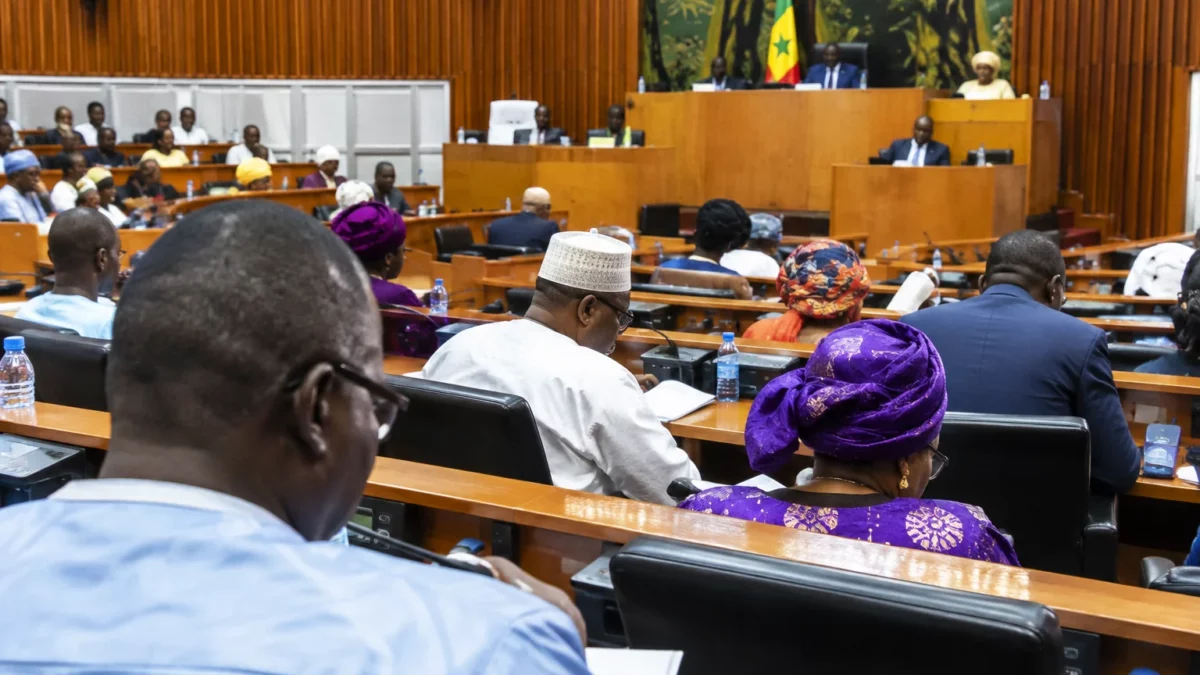
In Senegal, the budget has become the battleground in a power struggle between two branches of government from the same political camp. By bringing a supplementary finance law rejected by the National Assembly into force by decree, President Bassirou Diomaye Faye has responded to an urgent financial need. But he has also opened a controversy over the limits of executive power.
A revised budget amid high debt
A supplementary finance law adjusts the revenues and spending set out in the initial budget during the year. For the state, these decisions determine, among other things, the funding available to its services and the settlement of its obligations. For companies working with the administration, payment delays can directly affect their cash flow.
Senegal is navigating this period with public finances under pressure. The International Monetary Fund (IMF) estimated total public-sector debt at 132% of gross domestic product at the end of 2024. This level, which includes domestic arrears identified by the institution, comes amid a crisis of confidence triggered by the revision of public accounts for previous years.
On 1 September 2026, the IMF announced a preliminary agreement with the Senegalese authorities for a 36-month programme worth about $2.2bn. This staff-level agreement does not yet amount to final approval: its review by the institution’s executive board remains a separate step.
The budget debate therefore involves spending decisions in Dakar, the state’s ability to meet its payments and its relations with financial partners. It is also taking place in a regional context in which member states of the West African Economic and Monetary Union (WAEMU) are subject to common fiscal convergence rules.
Decree follows parliamentary rejection
On 3 November, the National Assembly rejected the draft supplementary finance law for 2026. MPs adopted a preliminary objection put forward by Amadou Ba, a Pastef representative, which prevented the text from being examined on its merits. The Senegalese Press Agency and Senegalese Radio and Television reported the episode.
On 19 November, the presidency announced that Bassirou Diomaye Faye was bringing the text into force by decree No. 2026-2416. It cited continuity of the state and Article 68 of the Constitution. The decision was confirmed by the Senegalese Press Agency and the Senegalese daily Le Soleil.
Article 68 provides that a finance bill not definitively passed within the constitutional 60-day period may be brought into force by decree. The government considers that the deadline, calculated from the submission of the text on 18 September, expired on 19 November. The disputed question is whether this provision applies to a supplementary finance bill rejected by a parliamentary vote before the deadline expires.
Pastef MPs dispute this interpretation. Their argument, as reported in public reactions cited in the available material, is that Article 68 concerns the annual finance bill and that an explicit rejection cannot be treated as an absence of a vote. These objections represent the parliamentary camp’s political and legal position, not a court ruling. The sources consulted do not report any definitive judicial decision on the decree.
Two interpretations of continuity of the state
For the executive, implementing the revised budget means administrative action will not be left without a financial framework as the year draws to a close. For the parliamentary majority, resorting to a decree after the text’s rejection risks diminishing the scope of MPs’ oversight. The disagreement is therefore about constitutional procedure as much as budget choices.
Tensions intensified the day after the decree. On 18 November, MPs also rejected the first part of the initial draft budget for 2027. The Senegalese Press Agency reported that the Senegalese press gave the vote extensive coverage. The timing thus brings together two disagreements: one over 2026 funding and the other over the following year’s revenues and spending.
The practical consequences will depend on the funding actually authorised and how it is executed. Public services and state suppliers are affected by the payment schedule. Households may be affected indirectly if decisions alter spending that supports services or economic activity. However, the public information consulted does not make it possible at this stage to measure the decree’s precise impact on each sector or population group.
The government argues that the accounts must be adjusted amid high debt and negotiations with the IMF. Pastef MPs, for their part, have challenged the text’s regularity and the procedure used. Setting out both positions makes it possible to understand the conflict without concluding, before any review by a competent authority, that the decree is legal or illegal.
An institutional test watched across the region
Senegal remains a member of ECOWAS, a political and economic integration organisation in West Africa, as well as WAEMU. The dispute does not in itself call these memberships into question. It nevertheless serves as a reminder that regional fiscal discipline rules operate within systems where parliamentary votes remain a central mechanism for overseeing public finances.
The immediate implications of the case are national: upcoming decisions on budget execution, the next stages in examining the 2027 budget and any challenge to the decree will clarify the balance between Senegal’s institutions. At regional level, the credibility of fiscal trajectories will also be at stake as Dakar seeks to conclude a new programme with the IMF.
The decree therefore settles a question of immediate implementation, but not the political and constitutional disagreement. The next steps to watch are the National Assembly’s formal response, any referral to a competent court and the IMF executive board’s decision on the programme announced in September.