Algeria
 Egypt
 Libya
 Morocco
 Sudan
 Tunisia
 Benin
 Burkina Faso
 Cabo Verde
 Côte d'Ivoire
 Ghana
 Guinea
 Guinea-Bissau
 Liberia
 Mali
 Mauritania
 Niger
 Nigeria
 Sierra Leone
 The Gambia
 Togo
 Cameroon
 Central African Republic
 Chad
 DR Congo
 Equatorial Guinea
 Gabon
 Republic of the Congo
 São Tomé and Príncipe
 Burundi
 Comoros
 Djibouti
 Eritrea
 Ethiopia
 Kenya
 Madagascar
 Malawi
 Mauritius
 Mozambique
 Rwanda
 Seychelles
 Somalia
 South Sudan
 Tanzania
 Uganda
 Angola
 Botswana
 Eswatini
 Lesotho
 Namibia
 South Africa
 Zambia
 Zimbabwe
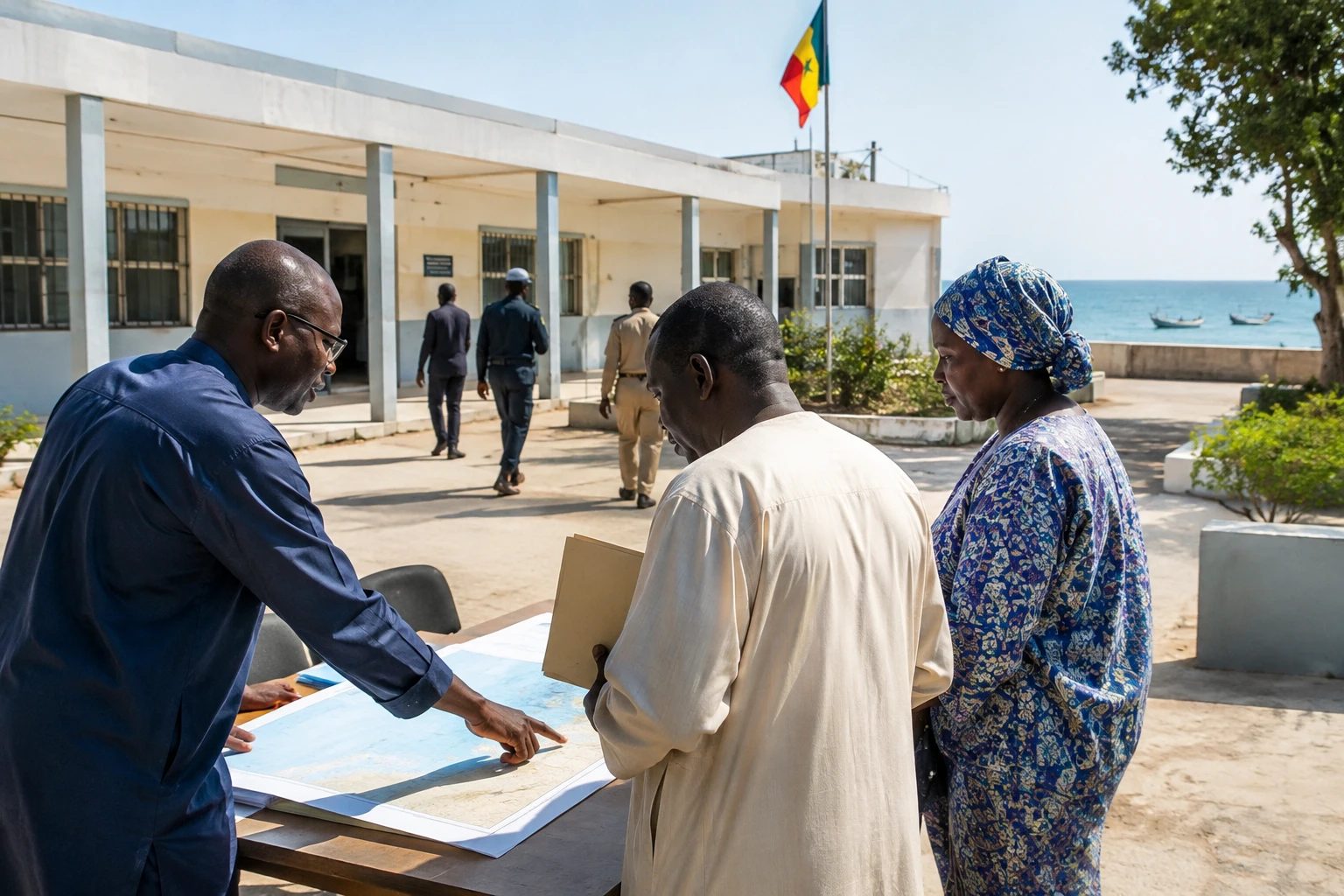
Off Lompoul, on Senegal’s northern coast, the search at sea has taken on a tragic dimension: 39 people have died and only one was rescued after a pirogue carrying people seeking to migrate sank. Behind this still provisional toll, one question remains: how many passengers were on board, and how many are still missing?
A toll that rose over three days
The disaster occurred in the Lompoul area, in the Kébémer department of Louga region. The first bodies were found on Saturday 7 November, after a report that a pirogue had apparently run aground offshore. At that stage, the exact circumstances and the number of people on board were not known.
Senegal’s Ministry of the Interior reported 21 deaths and one survivor in its first toll, released on the evening of 7 November. The Senegalese Press Agency (APS) subsequently reported 34 deaths on Sunday 8 November, then 39 on Monday 9 November, with only one survivor. The APS attributed the updated toll to an official briefing on the search operation. The Associated Press also reported a toll of 39 deaths announced by the authorities on Monday. The figures therefore rose as rescue teams found more victims.
Operations are continuing along a roughly 25-kilometre stretch of coastline that is difficult to access. Sea currents are hampering the teams’ work and carrying bodies southwards, according to rescuers quoted by the APS. At the time of the latest toll, 24 victims had been identified and handed over to their families; another 11 bodies were still awaiting identification. The APS also reported that an investigation had been opened to establish the circumstances of the shipwreck. Petrol cans were seized as part of the investigation, but this is not enough, at this stage, to explain what happened.
A sea route that extends beyond Senegal’s borders
Senegal’s coast lies on one of the Atlantic routes used to reach the Canary Islands, a Spanish territory. Crossings depart from several points in West Africa and pass through waters where distance, sea conditions and boats’ limited capacity increase the risks. This is a regional route: departures, networks and rescue operations can involve several countries, not just Senegal.
Senegal is a member of the Economic Community of West African States (ECOWAS), which brings the countries of the region together around economic and political cooperation. On migration, coordination with neighbouring countries matters as much as action along the coast: journeys may begin or pass through territory outside Senegal. The government has said it wants to strengthen cooperation with neighbouring countries and tackle smuggling networks. The interior minister visited the area on Monday 9 November, as searches and identification efforts continued.
The toll of 39 deaths has also been reported by the Associated Press. In an article published the previous day, the agency had already cited the Spanish organisation Walking Borders as saying that at least 635 people had died during the first five months of 2026 on the Atlantic route. That figure does not relate to Senegal alone. It gives an indication of the danger along the route, but does not replace a consolidated toll of the victims of the Lompoul shipwreck.
Beyond departures, understanding choices and risks
Senegalese authorities have condemned the networks organising these crossings and reaffirmed their commitment to the socio-economic integration of young people. These two strands do not address the same problem. Investigations can target organisers and the conditions under which people set off; employment, local prospects and opportunities for regular migration depend on longer-term policies. No verified information currently makes it possible to identify a single cause of this departure or shipwreck.
The immediate response is playing out first in the coastal communities of Louga region. Families are waiting for the bodies to be identified, while rescue teams contend with a difficult coastline. The consequences extend beyond the coast: the loss of relatives weighs on communities often connected through fishing, local trade and family networks linking towns and villages. But the available information does not yet make it possible to establish the origin of each victim or the exact composition of the group.
The government presents the fight against smugglers as one part of its response. Its effectiveness will have to be judged by verifiable results: identifying those responsible, preventing dangerous departures and being able to rescue boats in distress. Tighter controls alone do not explain why people take to the sea or what solutions are available to the families concerned.
An investigation and identifications to follow
For now, two steps are crucial: continuing the search and establishing the circumstances of the shipwreck. The investigation will need to clarify, in particular, the number of passengers, the point of departure and the course of the crossing. The authorities have not yet published a final toll. The figure of 39 deaths should therefore be understood as the latest official toll reported on Monday 9 November, not as the end of operations.
The shipwreck is a reminder that the Atlantic route connects local realities with a regional challenge. The response involves Senegalese services, neighbouring countries and West African cooperation institutions. For the families of Lompoul and Kébémer, however, the urgent need is more immediate: to find out who has died, locate any possible missing people and understand how the pirogue sank.