Egypt
 Libya
 Morocco
 Sudan
 Tunisia
 Benin
 Burkina Faso
 Cabo Verde
 Côte d'Ivoire
 Ghana
 Guinea
 Guinea-Bissau
 Liberia
 Mali
 Mauritania
 Niger
 Nigeria
 Senegal
 Sierra Leone
 The Gambia
 Togo
 Cameroon
 Central African Republic
 Chad
 DR Congo
 Equatorial Guinea
 Gabon
 Republic of the Congo
 São Tomé and Príncipe
 Burundi
 Comoros
 Djibouti
 Eritrea
 Ethiopia
 Kenya
 Madagascar
 Malawi
 Mauritius
 Mozambique
 Rwanda
 Seychelles
 Somalia
 South Sudan
 Tanzania
 Uganda
 Angola
 Botswana
 Eswatini
 Lesotho
 Namibia
 South Africa
 Zambia
 Zimbabwe
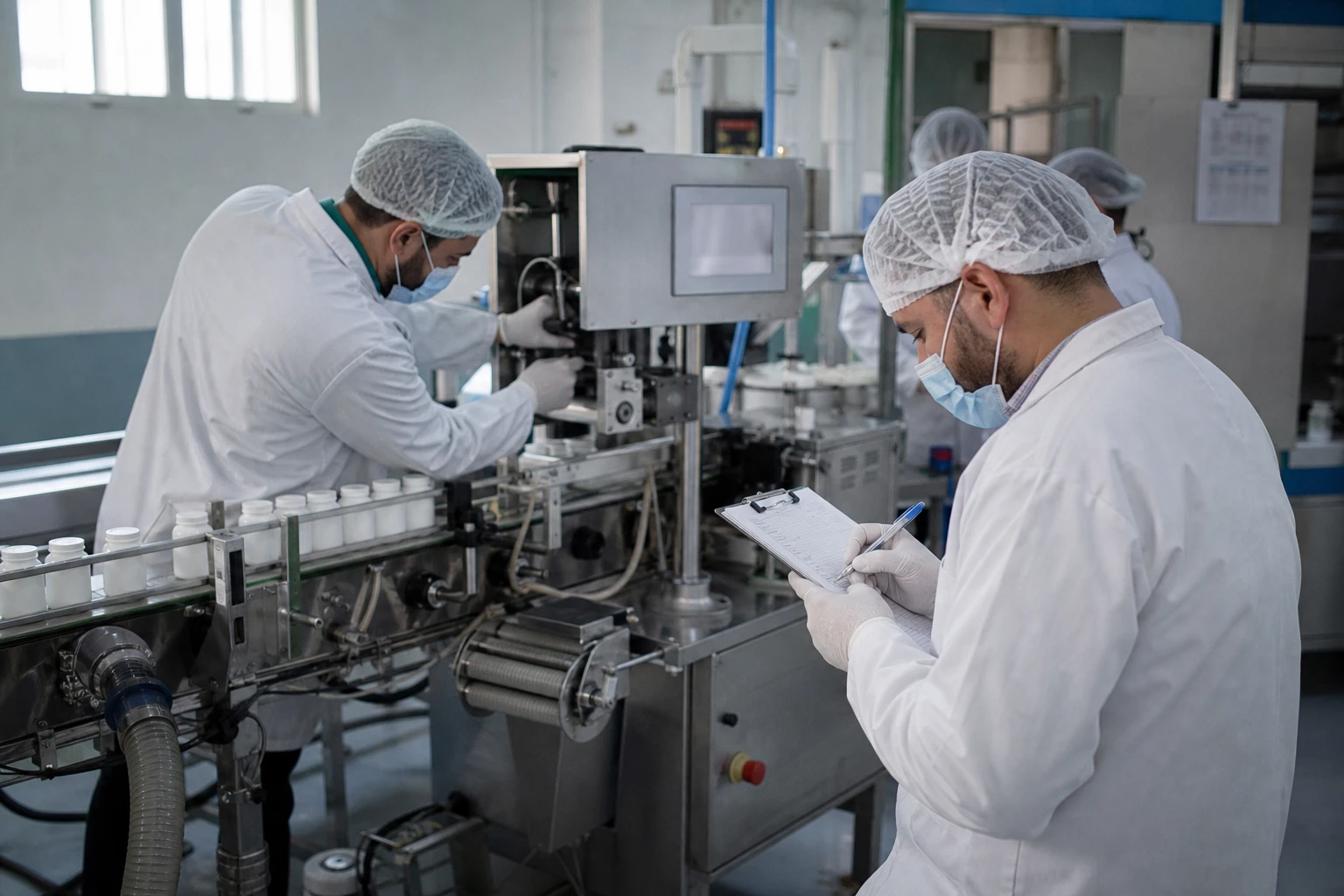
In Algiers, cooperation with Germany has opened a debate that goes beyond the simple manufacture of medicines. For Algeria, the challenge now is to retain a larger share of the knowledge, processes and industrial value generated by these partnerships.
The timing gives this ambition particular significance. On 1 October 2026, the Algerian capital hosted a meeting devoted to the SoutH2 corridor, a project intended to link North Africa with European green hydrogen markets. On the same day, health discussions placed the pharmaceutical industry at the centre of another strand of Algerian-German cooperation.
Cooperation aims to go beyond licensed production
At the Pharma 2026 conference, Algeria’s Minister of the Pharmaceutical Industry, Ouacim Kouidri, called for partnerships with German companies to include more knowledge, technology and skills transfer.
The call responds to a familiar limitation of localisation policies. Producing a medicine in Algeria does not always mean mastering its entire industrial chain. In some arrangements, the active ingredient is still imported. The local company then mainly handles final formulation, packaging or part of the quality control.
A more comprehensive transfer involves more. It can include process development, equipment validation, line maintenance, quality-control methods and staff training. It can also strengthen research, regulatory registration and pharmacovigilance capabilities.
Algerian authorities say domestic production already covers a large share of the market’s medicine needs. The figure of 82 % was cited at the Pharma 2026 conference. It should, however, be interpreted carefully: an overall coverage rate does not necessarily indicate the country’s self-sufficiency in innovative treatments, biological products or active ingredients.
Saidal-Boehringer partnership moves up a gear
On 8 June 2026, state-owned group Saidal and German pharmaceutical company Boehringer Ingelheim signed an agreement in El Harrach, Algiers, to manufacture a treatment for idiopathic pulmonary fibrosis in Algeria. The information was confirmed by the Algerian Radio Agency and the Algeria Press Service.
Idiopathic pulmonary fibrosis is a chronic respiratory disease. It causes progressive deterioration of lung tissue and requires specialist medical monitoring. Local production of a treatment for the condition would therefore represent a step forward in access to healthcare, provided the product is actually available, meets standards and is integrated into patients’ treatment pathways.
The agreement was signed at a Saidal facility in El Harrach. It forms part of a long-standing partnership between the Algerian state-owned group and Boehringer Ingelheim, which has been present in Algeria since 2012, according to information provided at the signing.
The detailed industrial scope of the transfer has not been fully disclosed. This is a crucial point. The partnership’s reach will depend on the share of operations carried out locally, access to technical documentation, the training of engineers and Saidal’s ability to reproduce the process with increasing autonomy.
Algeria’s minister also mentioned other possibilities involving innovative treatments, notably for breast cancer and biosimilar medicines. These projects should be followed with caution until their timelines, production sites and technical arrangements are specified.
From factory to hospital: the second agreement on 1 October
On the same day, Boehringer Ingelheim signed a separate agreement with Algeria’s Ministry of Health. It concerns the management of strokes and rare diseases. The APS and Algerian daily El Khabar reported the signing.
The agreement provides for strengthening healthcare professionals’ skills and supporting the digitisation of care pathways for stroke patients. It is also intended to help assess the resources available for rare diseases and identify priority needs.
This agreement is legally distinct from the industrial deal between Saidal and Boehringer Ingelheim. The two initiatives nevertheless complement each other in practice. A medicine produced locally will improve care only if the diagnosis is made quickly, doctors have the right tools and hospitals can ensure continuity of care.
The issue is particularly acute for strokes. The speed of diagnosis and intervention directly affects the risk of lasting effects. Digitisation can improve coordination between emergency departments, specialist services and facilities outside major urban centres. Its effectiveness will, however, depend on the quality of equipment, training and geographical coverage.
Regional ambition, subject to conditions
Saidal is also seeking to expand its African markets. Discussions have reportedly taken place in Benin on medicine exports, training and technology transfer. This direction could give investments made in Algeria a regional dimension.
The African market offers significant prospects, but it is not a single regulatory space. Each country retains its own marketing authorisation procedures, quality requirements and procurement rules. Exports will therefore depend as much on production as on the ability to guarantee regular deliveries, full traceability and sustainable prices.
For Algeria, the challenge thus extends beyond its bilateral relationship with Germany. It involves consolidating a domestic industry capable of meeting local needs and then serving some African markets. It also concerns the country’s place in Euro-Mediterranean value chains.
The comparison with the SoutH2 corridor is instructive. In energy as in pharmaceuticals, international agreements raise the same question: what share of the value remains in the producing country? For hydrogen, this concerns infrastructure, revenue and skills. For medicines, it concerns patents, processes, raw materials and skilled jobs.
The next steps will therefore be tangible. The timeline for starting production of the treatment for pulmonary fibrosis will need to be watched, along with the actual training provided to Algerian teams and Saidal’s ability to expand its production. The agreement’s effects on care pathways will also need to be assessed, particularly outside Algiers.
The success of this strategy will not be measured solely by the number of agreements signed. It will be demonstrated in factories, laboratories and hospitals: through skills firmly established in Algeria, treatments that are genuinely accessible and an increased capacity to cooperate with other African countries.