Egypt
 Libya
 Morocco
 Sudan
 Tunisia
 Benin
 Burkina Faso
 Cabo Verde
 Côte d'Ivoire
 Ghana
 Guinea
 Guinea-Bissau
 Liberia
 Mali
 Mauritania
 Niger
 Nigeria
 Senegal
 Sierra Leone
 The Gambia
 Togo
 Cameroon
 Central African Republic
 Chad
 DR Congo
 Equatorial Guinea
 Gabon
 Republic of the Congo
 São Tomé and Príncipe
 Burundi
 Comoros
 Djibouti
 Eritrea
 Ethiopia
 Kenya
 Madagascar
 Malawi
 Mauritius
 Mozambique
 Rwanda
 Seychelles
 Somalia
 South Sudan
 Tanzania
 Uganda
 Angola
 Botswana
 Eswatini
 Lesotho
 Namibia
 South Africa
 Zambia
 Zimbabwe
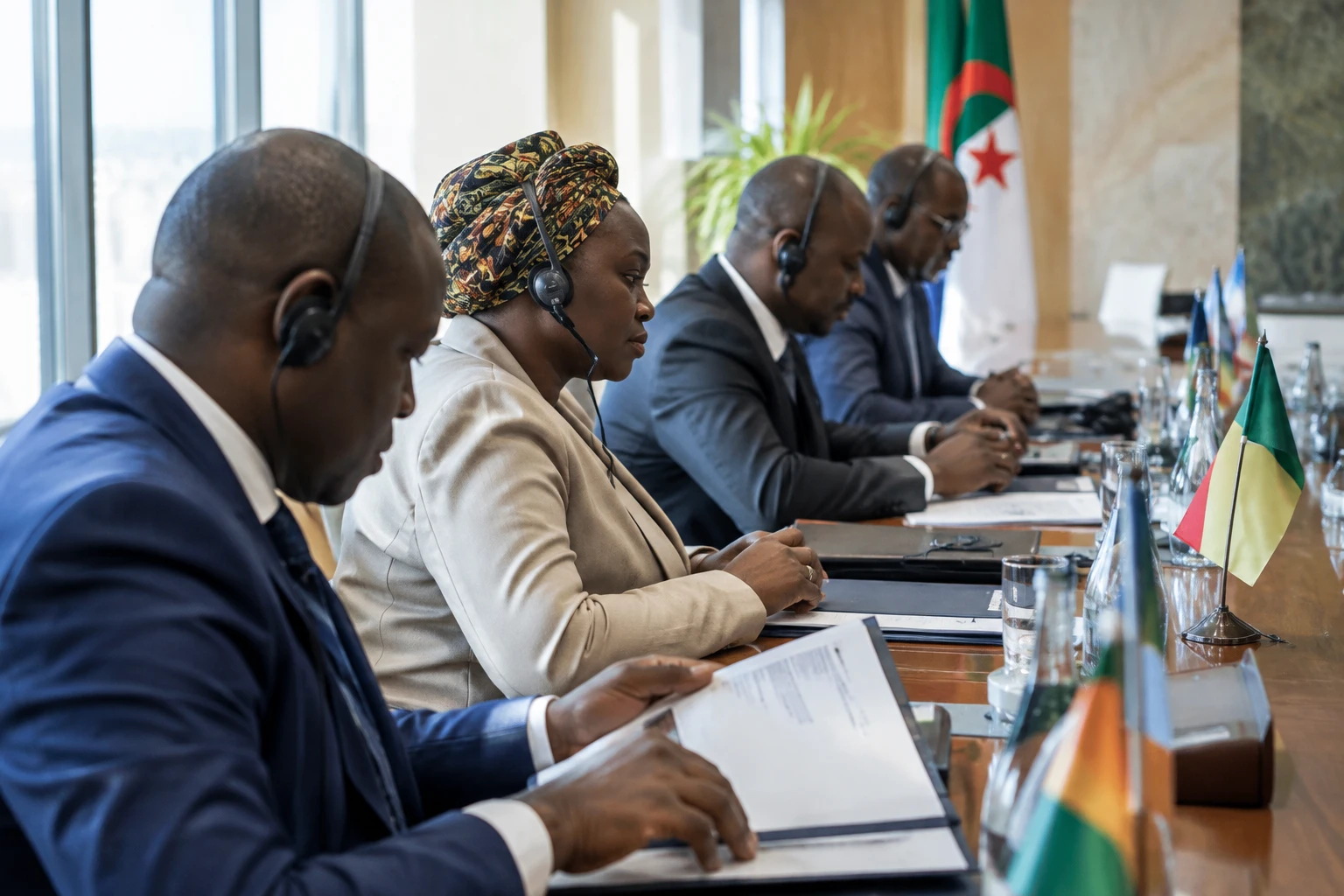
Sixty-one people have been arrested, but no target has been publicly identified. In Algeria, the announcement of an alleged sabotage plot in Oran raises an immediate question: what is actually known about the case, and what remains for the investigation to establish?
Case announced, details still limited
On 11 October 2026, the General Directorate of National Security (DGSN) announced the arrest of 61 Moroccan nationals. According to its statement, they had allegedly prepared acts harmful to public security and order. The public news agency Algeria Press Service (APS) relayed this account. Anadolu also reported the announcement, attributing it to the Algerian authorities.
Police place the arrests in Oran, in western Algeria, and say the operation took place at the beginning of the month. They claim the group entered via Tunisia before travelling to Oran. According to the account in the statement, Moroccan passports and money in euros and dirhams were seized. The arrested individuals were brought before the prosecutor at Oran’s specialised criminal court, which handles cases including organised crime.
These details describe the Algerian security services’ account, not a judicial finding. The public information consulted does not specify the planned acts, their targets or their timing. Nor does it report the seizure of weapons. The DGSN has not named an organiser. The reported presence of a former military officer among those arrested is not, on its own, enough to establish any link with the Moroccan state.
At this stage, the number of arrests and the date of the announcement have been confirmed by several publications. By contrast, details of the route, the evidence seized and the legal classification of the alleged acts are based on statements by the Algerian authorities. They should therefore remain attributed until the investigation and judicial proceedings provide further verifiable evidence.
A closed border and persistent regional rivalry
The case comes amid already severely strained relations between Algeria and Morocco. The two countries severed diplomatic relations in August 2021, and their land border has been closed since 1994. The status of Western Sahara remains at the heart of their rivalry: Rabat backs an autonomy plan under Moroccan sovereignty, while Algiers supports the Sahrawi people’s right to self-determination.
The breakdown also weighs on security co-operation in the Maghreb. Without normal diplomatic relations, direct exchanges between governments are limited, even as criminal networks and clandestine movements cross borders. The Arab Maghreb Union, which includes Algeria, Morocco, Tunisia, Libya and Mauritania, among others, does not currently provide an integrated regional framework capable of compensating for this mistrust.
The route via Tunisia described by the DGSN adds a cross-border dimension to the case. But as things stand, it does not allow the conclusion that the arrested individuals received institutional support. The investigation must clarify the circumstances of entry, movements, means of financing and any contacts made locally.
Do not confuse suspicion with political attribution
Media commentary has suggested that Rabat may have sought to test Algerian security measures or divert attention from domestic difficulties. Others have mentioned the United Arab Emirates, amid diplomatic tensions with Algiers. To date, no public evidence cited in the DGSN statement links the suspects to the Moroccan government, an intelligence service or Abu Dhabi.
The regional context explains why these hypotheses are circulating; it does not confirm them. Relations between Algiers and Abu Dhabi have also deteriorated. On 10 September 2026, Algeria’s defence ministry announced restrictions on its airspace linked to the diplomatic rupture between the two countries. However, the proximity in time between that crisis and the arrests does not constitute evidence of co-ordination.
Likewise, tensions over Western Sahara and disagreements between Maghreb states do not identify an organiser. Turning a geopolitical hypothesis into an accusation risks escalating a crisis without established facts. A credible attribution would require material evidence, documented communications or publicly released judicial findings.
Consequences beyond the legal case
For the Algerian authorities, the challenge is to demonstrate that the arrests are based on specific facts and that the proceedings respect the rights of those accused. Prudence is also essential for families and Moroccan nationals in Algeria: accusations against individuals must not become collective suspicion of a nationality.
Proceedings in Oran should shed light on the nature of the charges and the evidence being considered. The next decisive information will be the charges, the evidence presented to the prosecutor and, if made public, the judge’s decisions. It will also be necessary to distinguish what investigators establish from what political leaders or the media may claim.
Across Africa, the case is a reminder of the tangible cost of mistrust between neighbours: suspicions spread faster when diplomatic and security channels are limited. In 2021, the African Union had already expressed regret over the rupture between two countries it described as pillars of the organisation. The significance of the case will now depend less on speculation about who organised it than on the authorities’ ability to publish verifiable facts and avoid an unsupported diplomatic escalation.