Algeria
 Egypt
 Libya
 Morocco
 Sudan
 Tunisia
 Benin
 Burkina Faso
 Cabo Verde
 Côte d'Ivoire
 Ghana
 Guinea
 Guinea-Bissau
 Liberia
 Mali
 Mauritania
 Niger
 Nigeria
 Senegal
 Sierra Leone
 The Gambia
 Togo
 Cameroon
 Chad
 DR Congo
 Equatorial Guinea
 Gabon
 Republic of the Congo
 São Tomé and Príncipe
 Burundi
 Comoros
 Djibouti
 Eritrea
 Ethiopia
 Kenya
 Madagascar
 Malawi
 Mauritius
 Mozambique
 Rwanda
 Seychelles
 Somalia
 South Sudan
 Tanzania
 Uganda
 Angola
 Botswana
 Eswatini
 Lesotho
 Namibia
 South Africa
 Zambia
 Zimbabwe
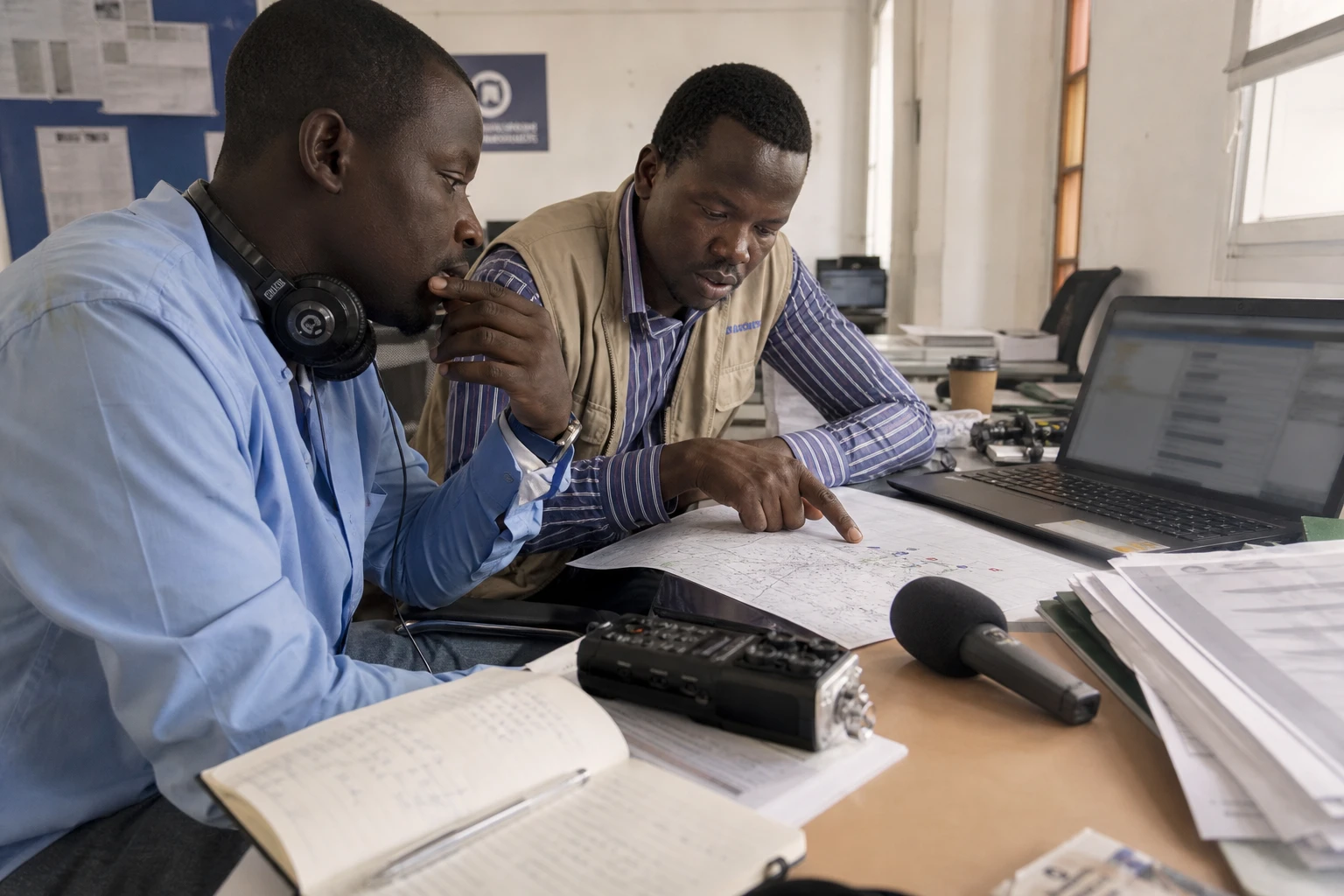
In Sibut, the return of prayer signals more than a simple religious revival
When a town starts hearing the call of the muezzin again, it is about more than worship. In Sibut, in Kémo prefecture in the centre of the Central African Republic, the signal also tells of the fragile return of families, traders and a community life long shattered by war. The town, located on the Bangui-Sibut-Bambari route, remains a strategic link for trade between the capital and the country’s interior.
This return is taking place in a country still marked by forced displacement. The United Nations High Commissioner for Refugees estimates that, at the end of 2024, 676,177 Central Africans were still taking refuge in neighbouring countries, while the Central African Republic was also hosting refugees from Sudan, Chad and the Democratic Republic of the Congo. The country’s total population was estimated at 5,330,690 in 2024 by the World Bank.
Against this backdrop, every sign of return matters. In Sibut, the rebuilding of a mosque, the reopening of small businesses and the return of Muslim residents show that local tensions are easing. But the process remains vulnerable, as it depends on security, access to housing and trust between neighbours.
A trading town, then the rupture of 2013
Before the crisis, Sibut was known as a lively trading town. Its position on the road linking Bangui to the north and east made it a useful stop for traders, herders and transporters. This economy, based on movement, was severely hit when the Central African crisis escalated in 2013, after the Séléka coalition, which was predominantly Muslim, seized Bangui, followed by a rise in reprisals by anti-balaka self-defence groups, drawn mainly from the Christian and animist majority.
The effects on Muslim communities in the centre of the country were immediate. In Sibut, the Adramane district was partly destroyed or abandoned, and the central mosque was looted and then demolished. Traders fled to Chad or other towns, while entire families left behind their homes, stalls and landmarks. This was not a mere wartime interlude: in several Central African towns, the return of Muslims has remained bound up with material reconstruction and the safety of travel.
The phenomenon extends beyond Sibut. Academic research on the Central African Republic shows that the return of Muslim communities has often faced obstacles linked to destroyed property, the redistribution of plots and the lack of land documents. In other words, peace is not enough: without a home, business premises and guarantees over land, return remains precarious.
Security, the local economy and the memory of conflict
Improved security was a prerequisite. MINUSCA, the UN mission deployed since 2014, has supported the stabilisation of several routes, including the one through Sibut, with escorts and security operations. The presence of the Central African Armed Forces, backed by external partners, has also enabled the state to re-establish a foothold in some areas. But the United Nations still stressed in 2026 that the transition to security fully managed by the state remains delicate.
For residents, the stakes are very tangible. When traders return, the market reopens, traffic picks up and income starts circulating again. When they do not return, streets empty, prices rise and families rely on a survival economy. In several local accounts of Sibut, the reopening of the Ndjoukou ferry and the resumption of some trade have shown how crucial road and river links remain to economic activity in Kémo.
The return of Muslims to Sibut therefore also has social significance. Religious leaders and Christian residents say they want to close the chapter of fear. That desire is real, but it runs up against a simple reality: many homes are still destroyed, people lack the means to rebuild and rumours continue to fuel mistrust. Here, return is negotiated case by case, street by street, neighbour by neighbour.
The regional dimension is clear. The Central African crisis displaced people to Chad, Cameroon, the Republic of the Congo, the Democratic Republic of the Congo and South Sudan. UNHCR has launched a solutions platform for displaced Central Africans with several of these countries, showing that the issue is no longer confined to Bangui. It affects all of Central Africa, where administrative borders cannot contain the effects of an internal war.
In CEMAC, the balance of transit towns, markets and road corridors remains essential to economic recovery. Sibut is a reminder that in the Central African Republic, reconstruction depends as much on institutions as on the everyday places where people live together. The return of a prayer, a business or a neighbour does not solve everything. But it signals that, despite the fractures, Central African society is still trying to hold its human geography together.