Algeria
 Egypt
 Libya
 Morocco
 Sudan
 Tunisia
 Benin
 Burkina Faso
 Cabo Verde
 Côte d'Ivoire
 Ghana
 Guinea
 Guinea-Bissau
 Liberia
 Mali
 Mauritania
 Niger
 Nigeria
 Senegal
 Sierra Leone
 The Gambia
 Togo
 Cameroon
 Chad
 DR Congo
 Equatorial Guinea
 Gabon
 Republic of the Congo
 São Tomé and Príncipe
 Burundi
 Comoros
 Djibouti
 Eritrea
 Ethiopia
 Kenya
 Madagascar
 Malawi
 Mauritius
 Mozambique
 Rwanda
 Seychelles
 Somalia
 South Sudan
 Tanzania
 Uganda
 Angola
 Botswana
 Eswatini
 Lesotho
 Namibia
 South Africa
 Zambia
 Zimbabwe
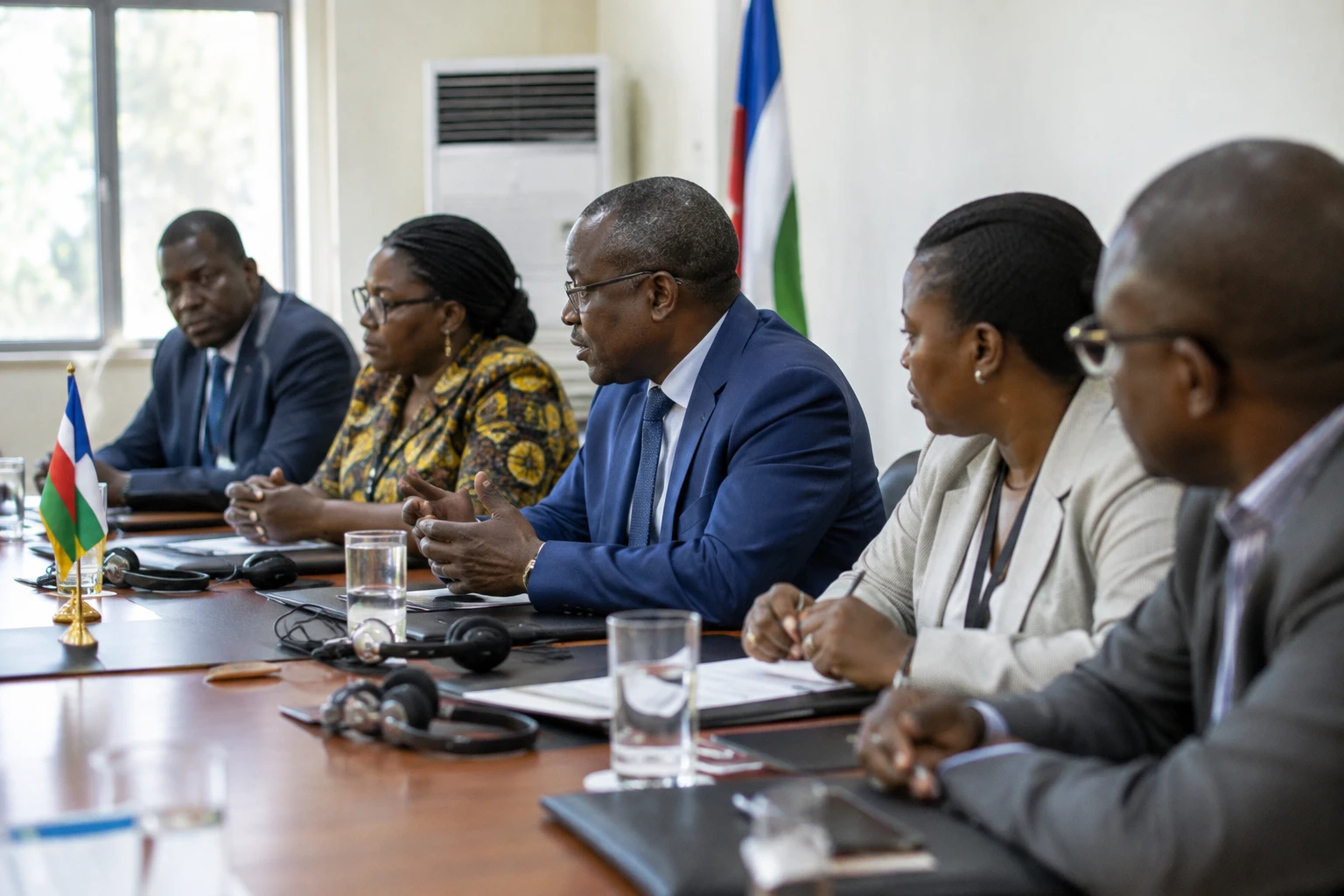
Reducing the military presence of a peacekeeping mission while asking it to protect civilians: this is the delicate balance the Central African Republic will have to strike until 2027. In Bangui as in border areas, the timing of the handover of responsibilities will matter as much as its announcement.
A transition to organise, not a simple withdrawal
In the Central African Republic, the United Nations Multidimensional Integrated Stabilization Mission (MINUSCA) has supported efforts to protect civilians, back the political process and restore security since 2014. Its presence is part of a national trajectory shaped by armed conflicts and the search for a lasting agreement between the authorities and armed groups.
The regional context is also important. The Central African Republic belongs to the Economic and Monetary Community of Central Africa (CEMAC), while the Economic Community of Central African States (ECCAS) addresses issues including regional cooperation and security. Tensions in border areas can spill beyond national frontiers. The situation in Sudan, in particular, is fuelling concerns about security in the east of the Central African Republic.
The transfer of some tasks has already begun. In June 2026, MINUSCA handed over seven of its bases to the Central African government. In August, it closed its electoral assistance division, after several years of support for elections. These steps show tangible change, but they do not mean that all responsibilities can be taken over immediately by national institutions.
Military ceiling lowered, priorities maintained
On 12 November 2026, the United Nations Security Council unanimously adopted resolution 2836. It extends MINUSCA’s mandate until 15 November 2027. The text sets the authorised military ceiling at 12,000, down from 14,046 under the previous mandate. It also provides for up to 2,265 police personnel and 40 prison officers.
The resolution does more than revise troop numbers. It provides for resources to be concentrated more heavily in areas deemed high-risk, particularly along the borders, while maintaining a rapid response capability. Protecting civilians, supporting the peace process, helping deploy national forces and facilitating humanitarian assistance remain among the mission’s priorities.
The Council has asked the Central African authorities and MINUSCA to organise a gradual, coordinated handover based on conditions on the ground. In other words, tasks should not pass automatically from one actor to another on a fixed date. Some can be transferred progressively; others first require national capacities to be strengthened, while the mission will retain those that cannot yet be taken on by other means.
The Central African Republic’s representative to the UN defended this approach of adaptation. He presented the mission as support that can make a political solution more attainable, without claiming that the crisis has been resolved. He also said he hoped the transition would leave behind institutions capable of preserving peace. This statement reflects the authorities’ position; the institutions’ actual ability to take over each function will need to be assessed over time.
Different effects across the country
For the central authorities, the handover could strengthen national responsibility for security and administration. But taking over a base or a mission is not enough to guarantee a lasting state presence. Trained personnel, logistical resources, funding and services accessible to residents are also needed. Without these capacities, a reduction in external support could leave areas that are difficult to secure.
The consequences will not be the same everywhere. In Bangui, national institutions and partners can coordinate the new responsibilities. In remote prefectures and border areas, distance, roads and the availability of forces carry greater weight. Civilians, humanitarian workers and traders often depend on local security conditions: a reorganised presence will therefore need to remain attentive to the specific needs of each region.
The new military ceiling is a maximum authorisation, not an announcement that 2,046 soldiers will leave the country immediately. The resolution sets the mission’s authorised capacity; its actual deployment also depends on operational needs. The Council has requested reports on implementation and progress in the transition in February, June and October 2027. These deadlines will make it possible to track decisions and the difficulties encountered.
A test for peacekeeping in Central Africa
For the African members of the Security Council and regional organisations, the issue goes beyond MINUSCA’s future alone. The transition raises a recurring question: how can an international operation be scaled back without creating a gap in civilian protection or interrupting essential services? The answer will depend as much on national resources as on coordination between Bangui, the United Nations and regional partners.
The resolution therefore renews the mandate, but also opens a period of scrutiny. It will be necessary to see where personnel are redeployed, which functions pass to Central African institutions and whether they have the necessary resources. The next concrete step will be the report expected in February 2027. It will provide an initial picture of the gap between the planned timetable and realities on the ground.
The Council says that a mission handed over must remain a mission successfully completed. For Central Africans, the test will be more direct: security and services must hold up in places where the international presence changes. The transition will be measured less by the troop numbers announced than by institutions’ ability to protect residents, including far from the capital.