Algeria
 Egypt
 Libya
 Sudan
 Tunisia
 Benin
 Burkina Faso
 Cabo Verde
 Côte d'Ivoire
 Ghana
 Guinea
 Guinea-Bissau
 Liberia
 Mali
 Mauritania
 Niger
 Nigeria
 Senegal
 Sierra Leone
 The Gambia
 Togo
 Cameroon
 Central African Republic
 Chad
 DR Congo
 Equatorial Guinea
 Gabon
 Republic of the Congo
 São Tomé and Príncipe
 Burundi
 Comoros
 Djibouti
 Eritrea
 Ethiopia
 Kenya
 Madagascar
 Malawi
 Mauritius
 Mozambique
 Rwanda
 Seychelles
 Somalia
 South Sudan
 Tanzania
 Uganda
 Angola
 Botswana
 Eswatini
 Lesotho
 Namibia
 South Africa
 Zambia
 Zimbabwe
In Casablanca, Meryem Aboulouafa learnt early on that art could be a shared pursuit: her father enrolled her and her brothers in classical dance classes at the conservatoire. Today, her music carries this intimate experience far beyond the city where she grew up. On 24 July 2026, the Moroccan singer met an international audience again at the Les Escales festival in Saint-Nazaire.
From Casablanca to international stages
Casablanca is not simply the artist’s birthplace. She describes it as a city open to difference, one that gave her a taste for the wider world. She describes herself as “Moroccan, casawia, Casablanca-born”: an embraced local identity that does not confine her to a single tradition.
Her career spans several disciplines. Trained at the conservatoire and the fine arts school, she first studied interior architecture before devoting herself to music. Her debut album, Meryem, was released in 2020. The record brings together acoustic and electronic compositions, with contributions from Keren Ann and producers Para One and Ojard. A second album, Family, came out at the end of 2025 and takes family as its starting point for exploring inheritance and social ties.
Her influences do not follow a single boundary. The singer names Fayrouz, a leading figure in Lebanese song, among the voices that have shaped her. Her musical world also makes room for traditional Arab sounds, rock and electro. She moves between several languages, including Arabic, English and French. This movement does not erase her Moroccan roots; it broadens their forms.
An intimate voice, without easy promises
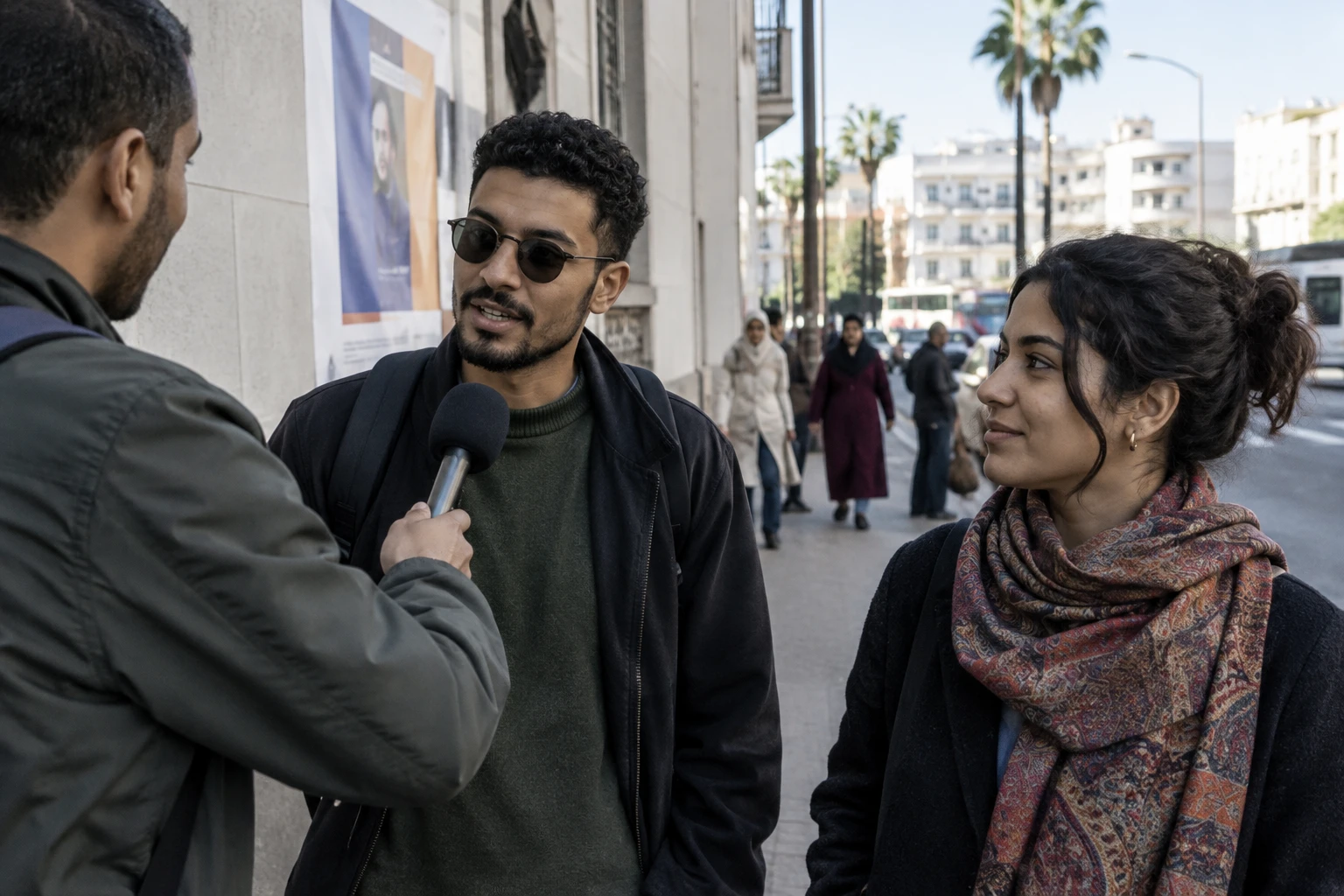
In comments gathered during her appearance at Les Escales, Aboulouafa links her work to a simple idea: enabling everyone to know themselves and exist fully. “What I stand for through my art is the freedom of individuals,” she says. She says she wishes for “peace, serenity, tranquillity and happiness”.
This message does not turn a song into a solution to conflicts. Rather, it places music in a space where people can meet in a different way. The voice, lyrics and arrangements open a conversation without claiming to abolish disagreements. In a cultural landscape often described through broad categories — world music, Oriental song — this approach is a reminder that an artist can carry several heritages without being reduced to a label.
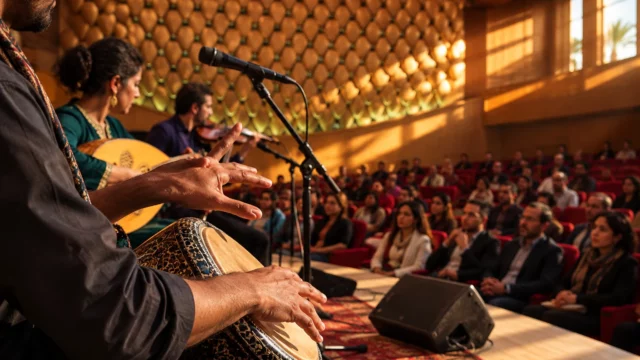
The Les Escales stage gave this career a tangible platform. The festival confirms her appearance on Friday 24 July at the Théâtre de Verdure. A local media outlet also reported that Meryem Aboulouafa was performing on that stage that evening, alongside Pahua and La Valentina, among others. The event was part of a programme bringing together artists from several backgrounds.
Creating in Morocco, taking music further
Her career is part of a sector in which artistic creation also depends on very practical conditions: producing an album, financing its distribution, gaining access to stages and ensuring artists’ rights are respected. Morocco has public support schemes for music production and participation in international festivals. In March 2026, the Ministry of Youth, Culture and Communication opened a call for applications for grants covering, among other things, music production, promotion and distribution.
These mechanisms alone cannot guarantee a lasting career. They do, however, show that the circulation of works is also a question of infrastructure and cultural policy, not just talent or online success. Artists based abroad, as well as those working from Morocco, must contend with different realities: access to professional networks, production costs and the ability to turn a stage invitation into regular income.
In Rabat, Visa For Music offers another perspective. Founded in 2014, this festival and professional marketplace connects artists with players in the music industries of Africa and the Middle East. Meryem Aboulouafa is included in its announced programme for November 2026. The event is a reminder that African musical exchanges do not take place only on European stages; they are also built from the continent’s capitals.
Moroccan roots in a wider musical landscape
The artist’s career gives voice to a living relationship between Casablanca, Rabat, European stages and the musical traditions of the Arab world. It does not represent the full diversity of Moroccan creativity, let alone that of North Africa. But it shows how an artist can start from a particular experience — a city, a family, a training — and develop work that travels without abandoning its bearings.
What comes next will depend as much on concerts as on the resources artists are given to produce, distribute and make a living from their work. The Rabat date at Visa For Music, from 18 to 21 November 2026, will be one of the next events on her calendar. For Morocco’s music scene, the stakes go beyond a programme: the challenge is to make international visibility a space for creation and exchange that also benefits the continent’s professional networks.