Egypt
 Libya
 Morocco
 Sudan
 Tunisia
 Benin
 Burkina Faso
 Cabo Verde
 Côte d'Ivoire
 Ghana
 Guinea
 Guinea-Bissau
 Liberia
 Mali
 Mauritania
 Niger
 Nigeria
 Senegal
 Sierra Leone
 The Gambia
 Togo
 Cameroon
 Central African Republic
 Chad
 DR Congo
 Equatorial Guinea
 Gabon
 Republic of the Congo
 São Tomé and Príncipe
 Burundi
 Comoros
 Djibouti
 Eritrea
 Ethiopia
 Kenya
 Madagascar
 Malawi
 Mauritius
 Mozambique
 Rwanda
 Seychelles
 Somalia
 South Sudan
 Tanzania
 Uganda
 Angola
 Botswana
 Eswatini
 Lesotho
 Namibia
 South Africa
 Zambia
 Zimbabwe
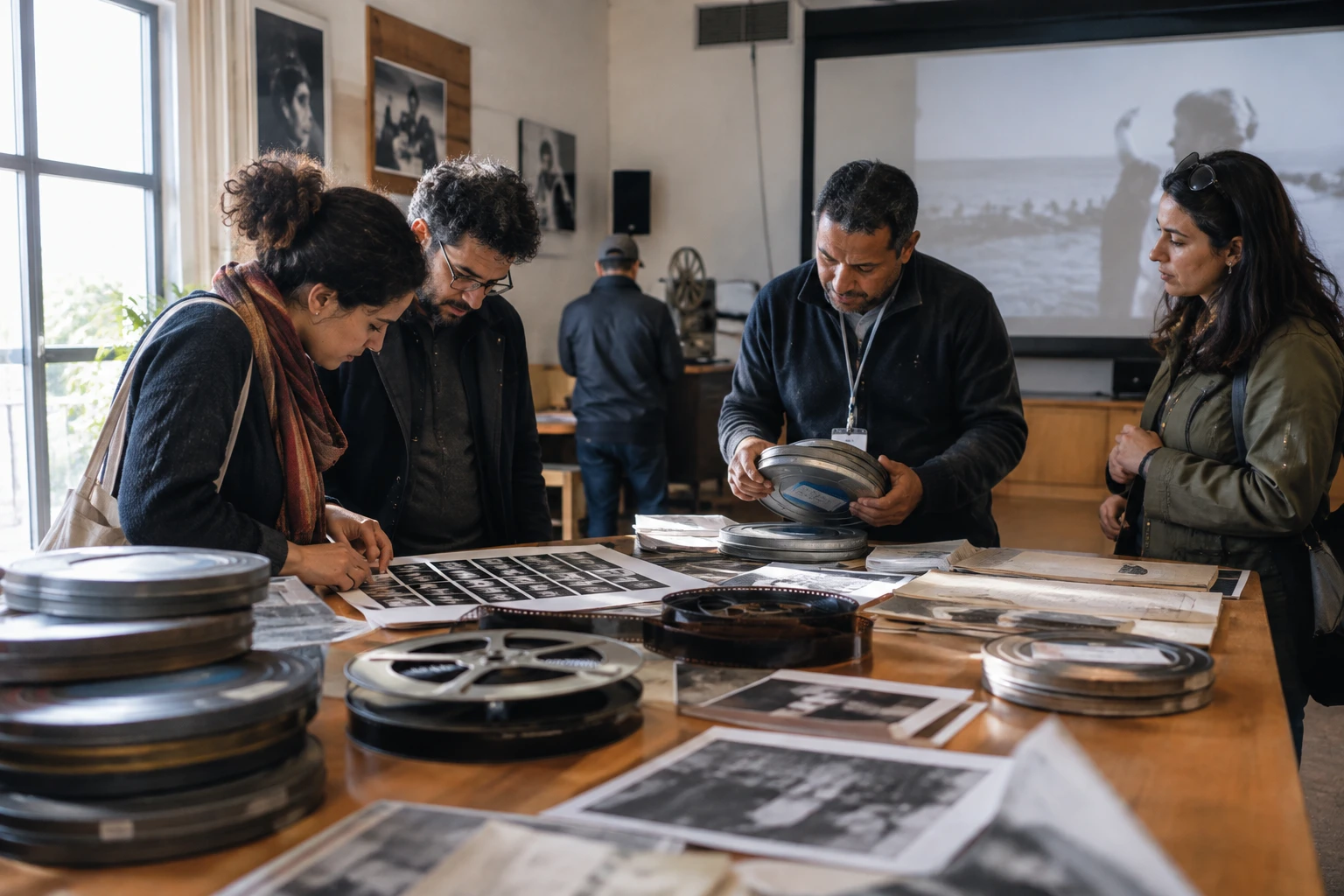
Who has the right to tell the story of France on screen? In Paris, an exhibition devoted to artists of Maghrebi origin shifts the focus: rather than viewing immigration as a film subject, it recognises the filmmakers and performers who have helped build French cinema.
Presented at the Palais de la Porte Dorée, the exhibition A History of French Cinema: Maghrebi Legacies opens on 30 October 2026 and runs until 21 March 2027. It is part of Mediterranean Season 2026, a cultural programme bringing creative work and stories between the two shores.
A history of cinema, not just immigration
The exhibition spans more than six decades, from the 1960s to the present day. It brings together film clips, posters, photographs, archives, objects and restored or digitised works. Its aim is to place these artists within the broader history of French cinema, rather than confining them to a separate category.
This distinction matters. For a long time, characters from immigrant backgrounds were often defined by their origins or social circumstances. The artists featured in the exhibition have also written, directed, acted in and produced works addressing history, family, social relations, humour and the changes in French society.
The subject connects France with Algeria, Morocco and Tunisia, three Maghreb countries with distinct historical trajectories. Migration experiences, family ties and cultural references cannot be reduced to a single experience. They have fostered different perspectives, sometimes shaped by colonial memories and exchanges between the two shores of the Mediterranean.
From pioneers to new generations
Among the early works featured is Mektoub, directed by Ali Ghalem in 1970. The film follows an Algerian worker in France and shows the difficulties he faces with housing and employment. It puts at the centre a character who rarely had control over his own image in the mainstream cinema of the time.
The exhibition then turns to artists with differing approaches and subjects. In Inch’Allah dimanche, Franco-Algerian director Yamina Benguigui tells the story of a woman who arrives in France in 1974 with her children to join her husband. The film centres the experience of a wife and mother, rather than reducing migrant women to secondary roles.
Rachid Bouchareb, a French director from an Algerian family, explores the links between national history and the memory of North African soldiers. His film Indigènes, released in 2006, follows men who served in the French army during the Second World War. At the Cannes Film Festival, its cast jointly received the Best Actor award.
Actors have also shaped this history. Jamel Debbouze, Roschdy Zem, Rachida Brakni, Sami Bouajila and Samir Guesmi have built careers across a range of genres. Their screen presence has helped broaden the faces and roles available in French cinema, without limiting them to characters defined by their origins.
Hafsia Herzi and Lina Soualem represent a more recent generation, renewing forms and narratives. Their films move between intimate stories, family memory and contemporary issues. Creation is therefore not simply a legacy passed down in one direction: it changes with each generation and with the artistic choices of those who carry it forward.
Representation and the passing on of stories
Recognising this contribution changes the national cultural narrative. It is not a matter of adding a few names to the margins of a history already written, but of looking at how these works have transformed its themes, characters and forms. Films can make under-represented experiences visible while reaching audiences far wider than the communities to which their creators are sometimes assigned.
This recognition, however, guarantees neither lasting diversity in productions nor equal access to funding, roles and decision-making positions. The exhibition documents artistic careers; on its own, it cannot measure working conditions or current inequalities in the industry. It nevertheless opens up space to examine these questions through specific works.
The exhibition’s reach extends beyond Paris. Screenings and events linked to it are planned in several French cities, including La Courneuve, Bondy, Créteil, Montreuil and Marseille. This circulation is a reminder that cinema histories are also built in cinemas, neighbourhoods and cultural networks, not only in national institutions.
Across the Mediterranean, the initiative is part of a season connecting artistic scenes from several countries without erasing their differences. The question to follow, then, is how the works will circulate and how the artists will be presented beyond the exhibition: solely as witnesses to immigration, or as full-fledged creators of a shared cinema.