Egypt
 Libya
 Morocco
 Sudan
 Tunisia
 Benin
 Burkina Faso
 Cabo Verde
 Côte d'Ivoire
 Ghana
 Guinea
 Guinea-Bissau
 Liberia
 Mali
 Mauritania
 Niger
 Nigeria
 Senegal
 Sierra Leone
 The Gambia
 Togo
 Cameroon
 Central African Republic
 Chad
 DR Congo
 Equatorial Guinea
 Gabon
 Republic of the Congo
 São Tomé and Príncipe
 Burundi
 Comoros
 Djibouti
 Eritrea
 Ethiopia
 Kenya
 Madagascar
 Malawi
 Mauritius
 Mozambique
 Rwanda
 Seychelles
 Somalia
 South Sudan
 Tanzania
 Uganda
 Angola
 Botswana
 Eswatini
 Lesotho
 Namibia
 South Africa
 Zambia
 Zimbabwe
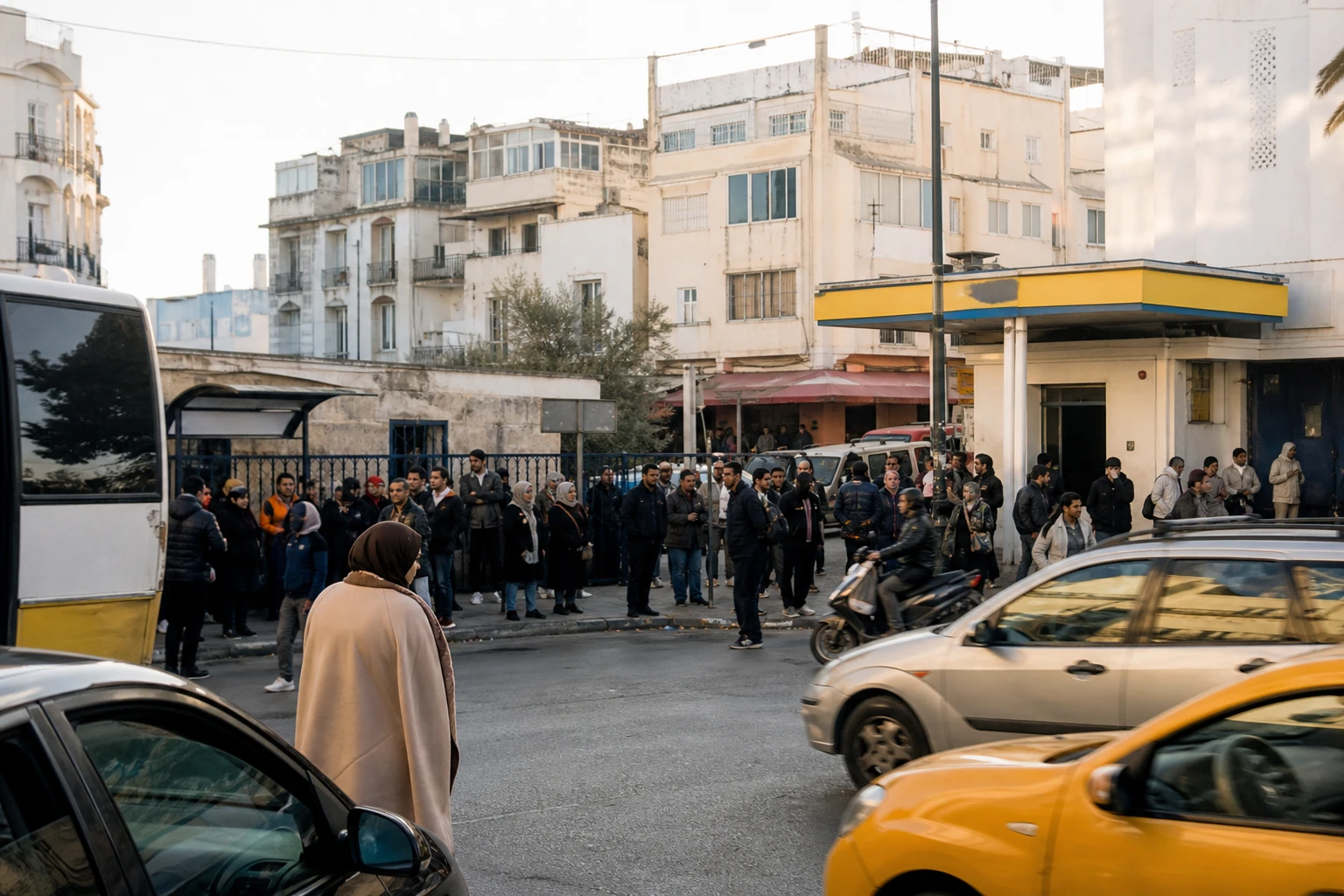
When Gulf oil catches a cold, the Maghreb feels it
A shock originating in the Strait of Hormuz never remains confined to the Middle East. This maritime passage, through which a decisive share of the world’s oil flows, amplifies prices for importing countries and exposes the dependence of North African economies. The impact is first felt in energy bills, then in transport, food, budget balances and, ultimately, the social climate.
Across the Maghreb, exposure varies from one country to another. Algeria, a hydrocarbons producer, benefits in principle from higher prices. Morocco and Tunisia, by contrast, feel rising oil prices sooner because they import most of their energy. This structural difference explains why an incident in the Gulf can become, thousands of kilometres away, an issue of purchasing power and public finances.
The strategic role of the Strait of Hormuz
The Strait of Hormuz remains one of the most sensitive chokepoints in global energy trade. The US Energy Information Administration says that in the first half of 2025, about 20% of global oil consumption passed through this maritime corridor, along with a major share of liquefied natural gas. Even a brief disruption is enough to unsettle markets and drive up maritime freight costs.
This vulnerability goes beyond crude oil. When marine insurers raise their rates and shipping routes are diverted, the cost of imports also rises in the Mediterranean. For North Africa, this affects fuels, fertilisers, some industrial raw materials and, in turn, everyday consumer goods. The impact is therefore not limited to large companies: it reaches local markets and household budgets.
Algeria, Morocco and Tunisia: three levels of exposure, three sets of options
Algeria occupies a distinctive position. According to the World Bank, its economy remains heavily dependent on oil and gas, which accounted for 13% of GDP, 83% of exports and 46% of budget revenue between 2020 and 2024. Higher prices can therefore improve foreign earnings and public finances, even if they do not resolve either the challenge of productive diversification or domestic social pressures.
The country also benefits from a domestic market cushioned to some extent by administered prices and subsidies. This protection limits the immediate pass-through of international shocks to households. But it comes at a cost: when the state offsets higher prices, it bears the budgetary burden. In other words, the global shock is less visible at the pump, but it has not disappeared from public finances.
Morocco is on the other side of the equation. Available data indicate that the kingdom imports about 90% of its energy needs, with imported fuels covering most of its consumption. A sustained rise in oil prices increases its external bill, weighs on transport, industry and agri-food, and then reduces the government’s room for manoeuvre in tackling inflation.
This pressure comes as Rabat is already seeking to secure supplies through renewables, interconnectors and new logistics arrangements. The strategy is clear: reduce dependence, diversify sources and smooth prices. But this takes time. In the meantime, every surge in crude prices becomes an additional cost for businesses and, ultimately, households.
Tunisia is the most exposed of the three to an imported shock. The World Bank estimates that in 2022, about 48% of the country’s energy needs depended on imports, and that this dependence increased both the trade deficit and the cost of subsidies. Tunisia’s Finance Ministry, for its part, published the 2026 Finance Law against a backdrop in which external balances remain under pressure.
For Tunis, the question is immediate: absorb the shock or pass it on. Absorbing it temporarily protects households but weakens the budget. Passing it on eases pressure on public finances but fuels inflation and social tensions. In a country where growth remains fragile and foreign trade is heavily dependent on energy, even a small jolt in oil prices can reopen a sensitive debate about subsidies, administered prices and social protection.
What this says about the Maghreb beyond the current situation
The central issue is not only the price of oil. It is the structure of the economies. While Algeria still derives a significant share of its revenue from hydrocarbons, Morocco and Tunisia pay more for their energy dependence. This asymmetry creates two types of vulnerability: dependence on export revenue on the one hand, and dependence on imports and financial markets on the other.
The issue also affects public policy. When oil prices rise, importing countries must strike a balance between protecting purchasing power, containing the deficit and maintaining monetary stability. In practice, these trade-offs are rarely neutral. They translate into targeted subsidies, deferred investment, indirect tax increases or greater borrowing. The cost is often delayed, not eliminated.
For businesses, the shock means more expensive inputs and less predictable supply times. In cities, higher fuel prices quickly feed through to transport and food prices. In rural areas, they increase the cost of fertilisers, pumping and freight. The same global crisis therefore has different effects depending on the sector and the region.
A regional warning for African policymakers
At the continental level, an episode of this kind is a reminder of an obvious point: energy security is not just about producing more. It requires networks, storage, interconnectors, flexible contracts and credible substitution policies. The African Development Bank’s regional analysis also notes that disruptions in the Strait of Hormuz can weigh on exports to the Middle East and increase the cost of energy inputs for North African importing countries.
The issue therefore remains open on several fronts. First, the course of oil markets and maritime routes. Next, how Algiers, Rabat and Tunis protect—or do not protect—their budgets against a new cycle of volatility. Finally, the continent’s ability to reduce its dependence on an external shock that once again reveals not so much a passing emergency as a deep-rooted vulnerability.