Algeria
 Egypt
 Libya
 Morocco
 Sudan
 Tunisia
 Benin
 Burkina Faso
 Cabo Verde
 Côte d'Ivoire
 Ghana
 Guinea
 Guinea-Bissau
 Liberia
 Mali
 Mauritania
 Niger
 Nigeria
 Senegal
 Sierra Leone
 The Gambia
 Togo
 Cameroon
 Central African Republic
 Chad
 Equatorial Guinea
 Gabon
 Republic of the Congo
 São Tomé and Príncipe
 Burundi
 Comoros
 Djibouti
 Eritrea
 Ethiopia
 Kenya
 Madagascar
 Malawi
 Mauritius
 Mozambique
 Rwanda
 Seychelles
 Somalia
 South Sudan
 Tanzania
 Uganda
 Angola
 Botswana
 Eswatini
 Lesotho
 Namibia
 South Africa
 Zambia
 Zimbabwe
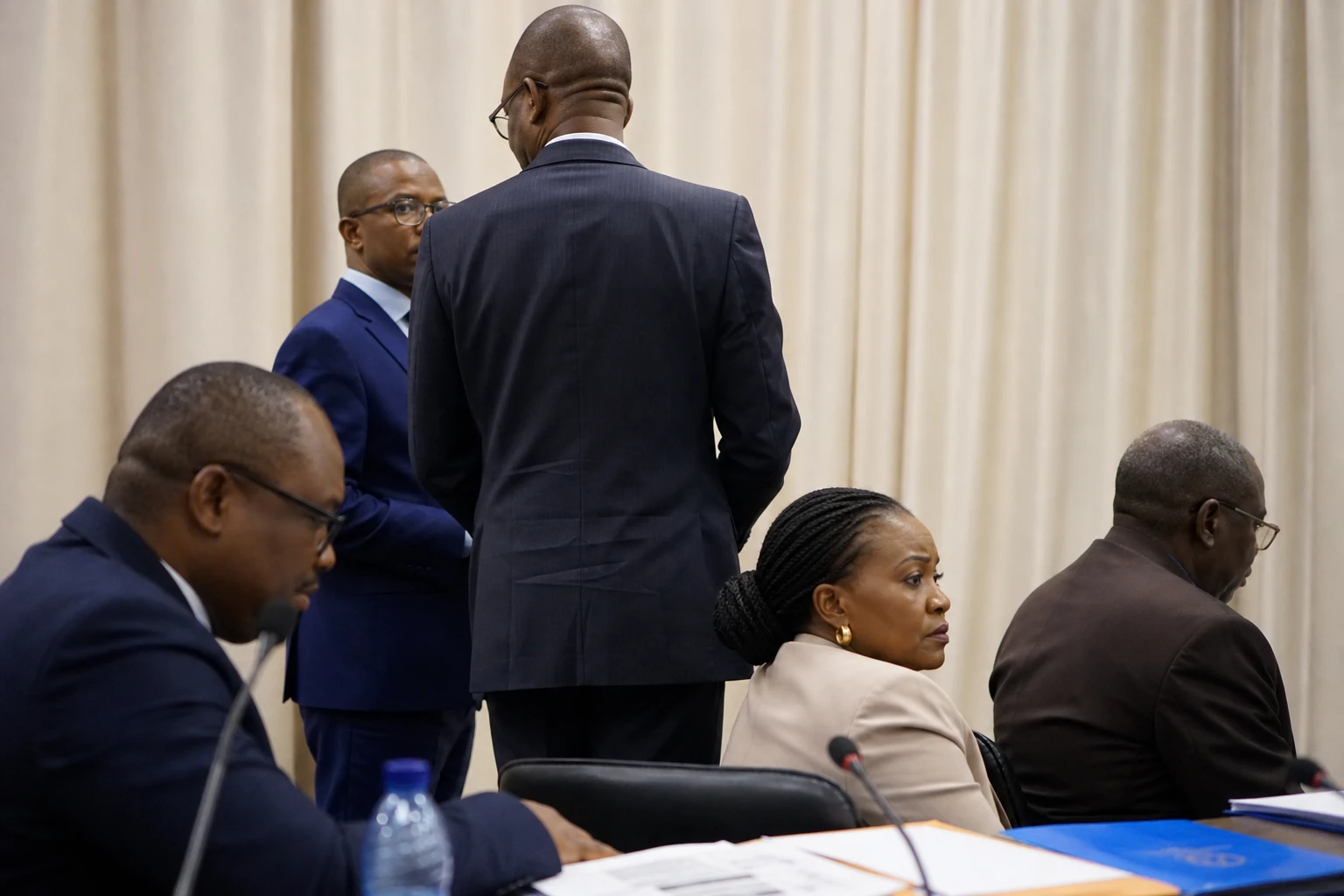
A passport is more than a piece of paper. In the Democratic Republic of the Congo, it has long been a test of governance.
When a travel document becomes expensive, slow and opaque, it is not just an administrative issue. It is also a question of public trust, people’s freedom of movement and the state’s position in relation to private interests. In the Democratic Republic of the Congo, the biometric passport crystallised these tensions for years, becoming a high-profile case far beyond Kinshasa.
The issue took on a regional dimension because the DRC, a Central African country and member of SADC, depends on credible institutions to run a service as sensitive as mobile civil registration. Across the continent, the case points to a wider problem: the way poorly monitored public contracts can directly affect citizens while fuelling cross-border financial networks. In Belgium, the case has also taken on particular significance, as Brussels faces pressure to demonstrate more effectively its ability to prosecute the corruption of foreign public officials.
The heart of the case: payments, intermediaries and a long legal battle
On 31 August 2026, the Brussels council chamber referred 14 defendants to the criminal court in the Semlex case. They will face allegations of corruption, money laundering and tax fraud linked to the contract for Congolese biometric passports. The referral does not yet address the substance of the case, but it finally opens the stage at which the facts will be debated publicly and adversarially before a trial judge.
The referral is the culmination of a long-running legal dispute. In May 2020, 51 Congolese citizens joined the proceedings as civil parties in Belgium, with the support of human rights and anti-corruption organisations. For them, the issue is not only the possible punishment of individuals or a company. It is also about obtaining a judicial account of a system alleged to have taken too much money from an essential public service.
The most sensitive allegations will nevertheless have to be proved. Information cited since 2017 points to a passport costing Congolese users $185, of which $60 was allegedly channelled to a company linked, according to documents and sources cited at the time, to an associate of former president Joseph Kabila. Another account of the case suggests that the arrangement may have caused alleged losses of nearly $60 million. That figure, like individual responsibility, remains to be established by the courts.
For Congolese citizens, the immediate issue is the price. The political issue is transparency.
The cost of the passport has since changed. In May 2025, the Congolese foreign ministry announced the launch of a new biometric passport priced at $75, with the online application process opening on 5 June 2025. The government also said that the old document would remain valid until 2030. The reduction is tangible for households in a country where a passport remains a means of mobility, as well as a key to work, study and administrative procedures abroad.
The move to $75 cannot be presented as a direct consequence of the Belgian trial. The Congolese authorities began the reform before any ruling on the substance of the case. They also changed service provider: the ministry announced that the contract with Germany’s Dermalog for issuing the new passports had come into force, while the company confirmed it had installed the new document system in Kinshasa. At the same time, investigations published in the DRC reported that the old system had not disappeared overnight, showing that the administrative transition took longer than official communications suggested.
For the Congolese state, the real issue is therefore not just the price displayed at the counter. It is the entire chain: tendering, service provider, monitoring of financial flows, traceability of revenue and the ability to explain to citizens why a document costs what it does. When that chain is opaque, the bill is paid several times over: first by the user, then by the public finances, and finally in the credibility of the administration. Conversely, if the Belgian courts document the financial flows precisely and Kinshasa publishes clear rules on new contracts, the case could set a useful precedent for other public services in the DRC and the region.
A Congolese case, but a continental signal
The Semlex case extends beyond the DRC because it touches on a familiar problem across the continent: the outsourcing of sovereign functions to private operators, sometimes under conditions that are poorly monitored. Passports, identity cards, registers and biometric systems have become strategic markets. When they are poorly regulated, they can fuel hidden rents and lengthy legal disputes. When they are properly regulated, they instead strengthen the state, mobility and public trust.
For Belgium, the trial could also serve as a test of credibility. In 2025, the OECD noted that the country had made legal progress in tackling international corruption, but that prosecutions remained too limited in relation to the goals set by the Convention on Combating Bribery of Foreign Public Officials. If the Semlex case runs its course, it will say something about Europe’s ability to try cases involving conduct far from its territory but linked to business interests based there.
In Kinshasa, the case will remain above all a test of governance. The question is no longer whether the passport costs less than before. That is settled. The question is whether the Congolese state can now prove, with figures, that citizens are paying a fair price for a reliable document in a system where responsibilities are identifiable and revenue is traceable. That is where the case’s real significance lies, in the DRC and in African capitals watching the same contest between public service and private rent-seeking.