Algeria
 Egypt
 Libya
 Morocco
 Sudan
 Tunisia
 Benin
 Burkina Faso
 Cabo Verde
 Côte d'Ivoire
 Ghana
 Guinea
 Guinea-Bissau
 Liberia
 Mali
 Mauritania
 Niger
 Nigeria
 Senegal
 Sierra Leone
 The Gambia
 Togo
 Cameroon
 Central African Republic
 Chad
 Equatorial Guinea
 Gabon
 Republic of the Congo
 São Tomé and Príncipe
 Burundi
 Comoros
 Djibouti
 Eritrea
 Ethiopia
 Kenya
 Madagascar
 Malawi
 Mauritius
 Mozambique
 Rwanda
 Seychelles
 Somalia
 South Sudan
 Tanzania
 Uganda
 Angola
 Botswana
 Eswatini
 Lesotho
 Namibia
 South Africa
 Zambia
 Zimbabwe
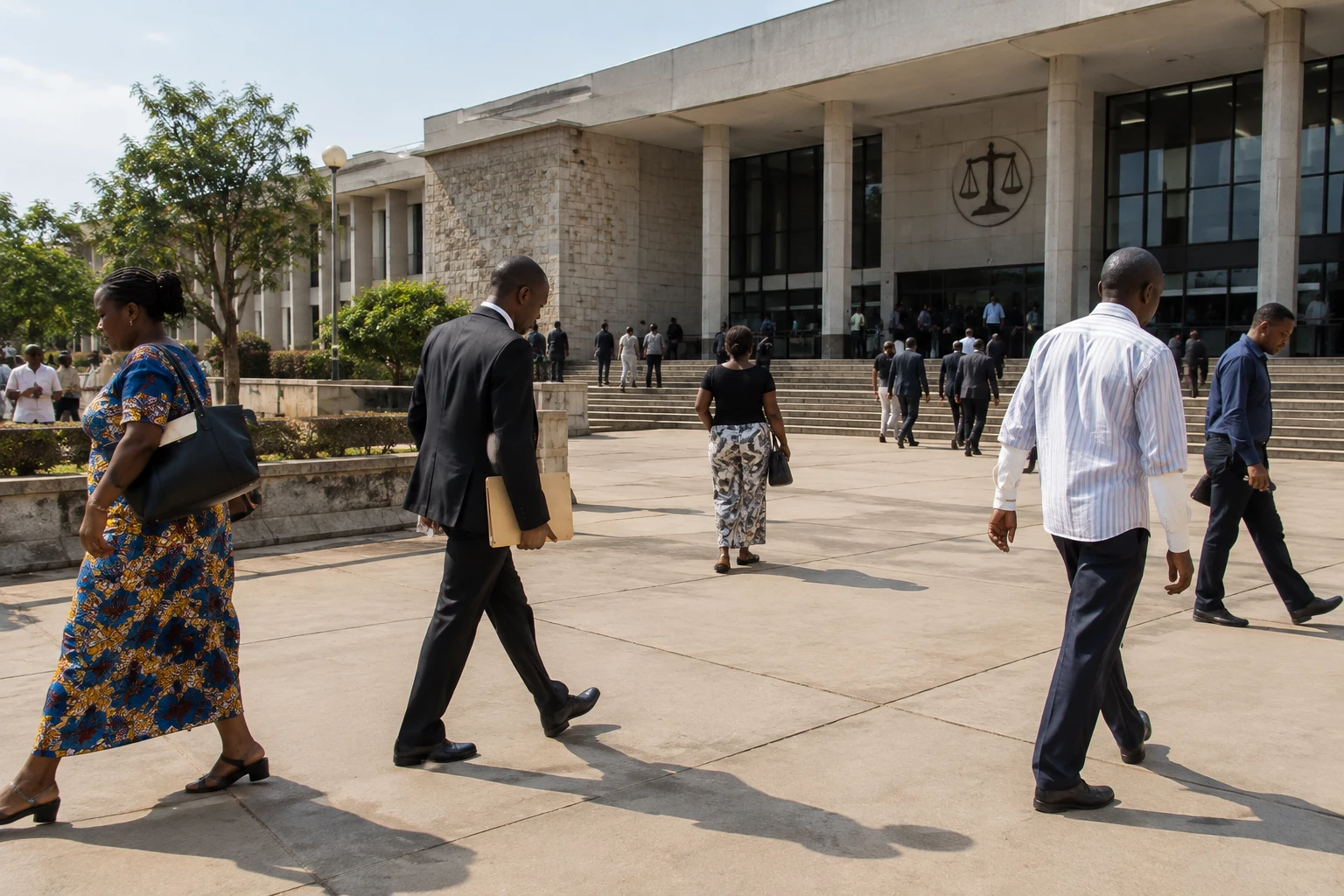
In a property dispute that has become a political affair, a private expert report may weigh in the debate without settling the central question: who owns the properties in dispute? In the Democratic Republic of the Congo (DRC), the Court of Cassation must assess the evidence and the regularity of the proceedings pitting Moïse Katumbi against his half-brother Raphaël Katebe Katoto.
Disputed properties, opposing accounts
The dispute concerns several properties in Haut-Katanga. The documents cited by Katumbi’s defence include a villa in Lubumbashi, buildings in Kashobwe and a facility in Kalemie. The opposition leader’s lawyers argue that old documents establish sales. Katebe Katoto denies signing some of the documents and claims several properties.
The case therefore goes beyond the question of signatures alone. It is also necessary to establish the legal scope of the documents, their link to the properties being claimed and the validity of the transactions. The decision rests with the judges, after they have examined the evidence presented by both sides in adversarial proceedings.
The Court of Cassation is the highest court in the Congolese judicial system. The defence has challenged the case being brought before it, however, disputing the Court’s jurisdiction and the regularity of the proceedings. At the hearing on 26 October 2026, the cases were taken under advisement, according to several Congolese media outlets. A few days later, Katumbi’s lawyers requested that the hearings be reopened, citing irregularities. These remain allegations by the defence: no published decision consulted here establishes them as fact.
What the expert report says — and what it does not decide
According to information reported in the material behind this story, a Belgian court-appointed expert, Françoise Coenraets, is said to have compared seven documents with three reference documents. She is said to have attributed the signatures and handwritten texts examined, without reservation, to Raphaël Katebe Katoto. This is the conclusion of an expert report presented by Moïse Katumbi’s lawyers; it is not a ruling on ownership of the properties or on the guilt of either brother.
Independent research did not make it possible to consult the full report or separately confirm its methodology, the reference documents used or the reported level of certainty. These details should therefore remain attributed to the account given by the defence, rather than being reported as facts established by a court.
The defence also cites an extract from Belgium’s national register concerning Katebe Katoto’s nationality. Here, too, the significance of this document depends on its authenticity, its relevance to the proceedings and the judges’ assessment. According to the account provided, Katebe Katoto, asked about the signatures, declined to comment before the Court’s decision.
Another Congolese report dates the proceedings to 2024 and says Katebe Katoto denies any link between the case and his stay in Lubumbashi. He says the case should be decided by the courts. This account underscores that both sides dispute the facts and that documents presented by one side do not replace judicial scrutiny.
A family dispute amid political tensions
The timing gives the case political resonance. Moïse Katumbi, a former governor of Katanga and a 2023 presidential candidate, is a prominent opposition figure. Raphaël Katebe Katoto advocates different political positions, notably on the possibility of Félix Tshisekedi remaining in power for an extended period, according to recent reports on the case.
The overlap between a property dispute and political rivalry makes it important to distinguish verifiable facts from interpretations. Katumbi’s defence alleges that the proceedings are irregular and fears political consequences. These allegations are not judicial findings. Katebe Katoto, for his part, presents the dispute as a matter to be settled by the judges. The Court must therefore examine the evidence without treating the sides’ public statements as proof.
The stakes are not abstract for Congolese people affected by land or inheritance disputes. In Lubumbashi, a major mining city and economic centre in the south-east, property titles and sale documents can determine access to a home or a commercial asset. In rural areas of Haut-Katanga, claims can also concern land and productive facilities. This particular case does not allow conclusions to be generalised to such disputes, but it highlights the importance of verifiable documents and transparent procedures.
What to watch next
The next step is judicial: the Court of Cassation must issue a ruling after taking the case under advisement, or consider the defence’s request to reopen the hearings if it accepts it. As of 9 November 2026, the sources consulted report the lawyers’ request but do not indicate a final decision on the merits.
For Congolese observers, the key issue will be the reasoning behind any decision: which documents will be accepted, what weight will the Court give the expert report, and how will it address the procedural challenges? These points will help distinguish a finding on the authenticity of the documents from a ruling on property rights or criminal liability.
At regional level, the case falls first and foremost under national jurisdiction; it is not in itself a matter for the Southern African Development Community (SADC). But the credibility of Congolese courts matters beyond the country’s borders, in a region where secure property rights and predictable laws are important to citizens and economic activity alike. What happens next will depend on the Court’s actions, not solely on the parties’ claims.