
 Algeria
 Egypt
 Libya
 Morocco
 Sudan
 Tunisia
 Benin
 Burkina Faso
 Cabo Verde
 Côte d'Ivoire
 Ghana
 Guinea
 Guinea-Bissau
 Liberia
 Mali
 Mauritania
 Niger
 Nigeria
 Senegal
 Sierra Leone
 The Gambia
 Togo
 Cameroon
 Central African Republic
 Chad
 Equatorial Guinea
 Gabon
 Republic of the Congo
 São Tomé and Príncipe
 Burundi
 Comoros
 Djibouti
 Eritrea
 Ethiopia
 Kenya
 Madagascar
 Malawi
 Mauritius
 Mozambique
 Rwanda
 Seychelles
 Somalia
 South Sudan
 Tanzania
 Uganda
 Angola
 Botswana
 Eswatini
 Lesotho
 Namibia
 South Africa
 Zambia
 Zimbabwe
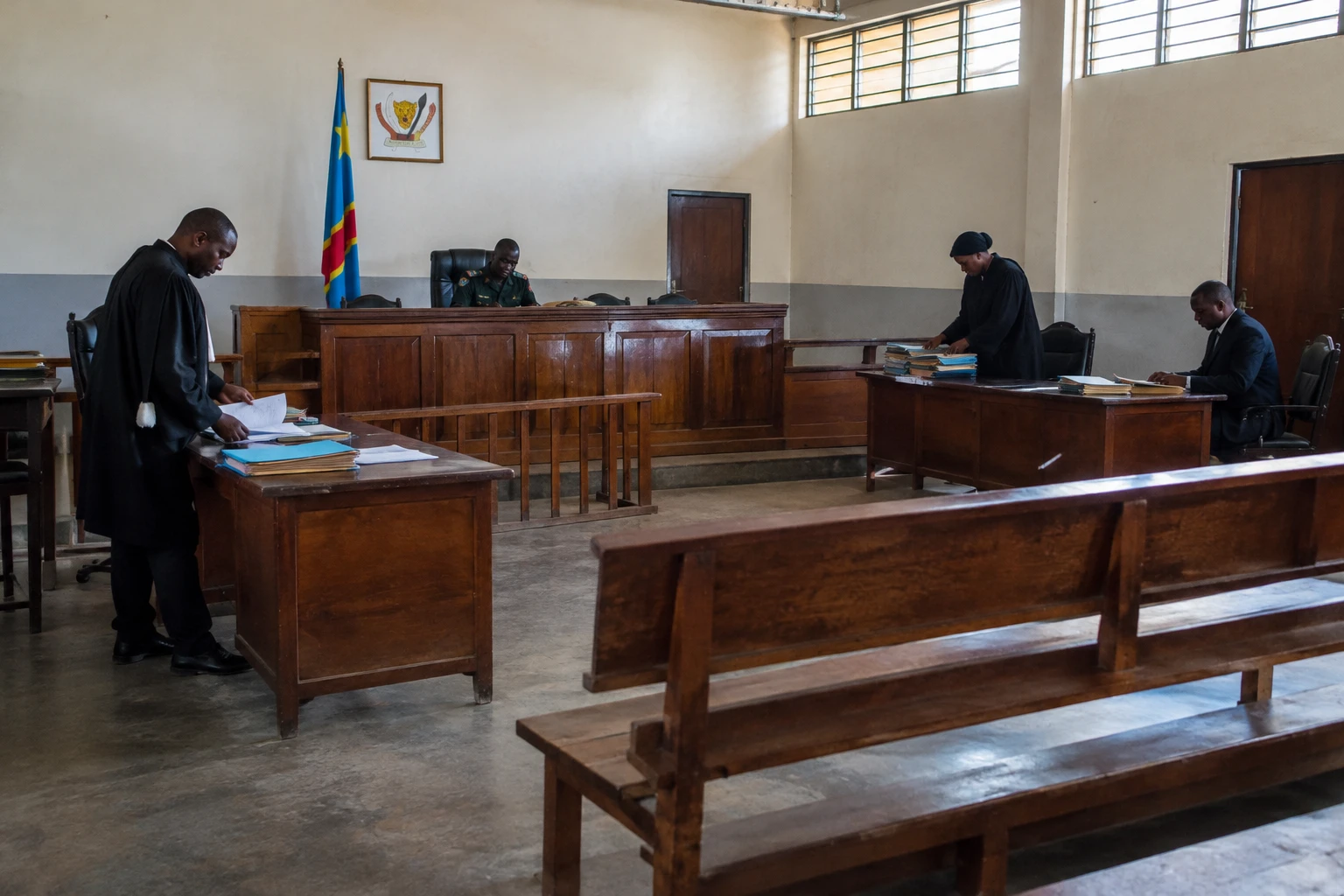
In the east of the Democratic Republic of the Congo (DRC), where units of the Armed Forces are engaged on several fronts, military discipline has become a central issue. But the growing number of death sentences raises a broader question: how far can military justice address failings in the army without turning capital punishment into an ordinary instrument of command?
A trial linked to violence in Ntoto
On 6 November 2026, a military court sitting in Walikale, in North Kivu province, sentenced 66 Congolese soldiers to death. The judgment, handed down after 12 days of hearings, concerned charges of cowardice in the face of the enemy, military revolt and refusal to obey orders. The Congolese news agency ACP and news outlet Actualite.cd reported the verdict and charges.
The case dates back to 20 October. According to information presented by the military authorities and reported in the Congolese press, a confrontation broke out in Ntoto when the military police tried to arrest soldiers returning from the front. Shots were reportedly fired. A soldier and a civilian were reportedly killed. This toll and account of events were reported by the authorities; they are not presented here as having been established by an independent investigation.
The court also sentenced a sergeant to 10 years in prison. Four other soldiers were acquitted. All the defendants belonged to the 3415th regiment, according to Actualite.cd. The distinction between the convictions, the sentence imposed and the acquittals is a reminder that the trial ruled on individual responsibility, even as the severity of the sentences raises questions.
A series of trials in an army under pressure
The Walikale judgment is part of a longer sequence. A compilation of eight military trials recorded since the start of 2025 puts the number of convictions at at least 507, including 381 death sentences. For 2026, this count lists 237 soldiers convicted, 114 of them sentenced to death. These totals are estimates based on a count of publicly reported trials, not a comprehensive official tally. They could not be verified against an independent national judicial database.
The cases cited include verdicts in Uvira, in South Kivu, and Beni, in North Kivu. Available information refers to 45 death sentences in two trials in Uvira and three officers sentenced to death in Beni. In Kisangani, 58 soldiers reportedly received sentences of three years. These figures, too, are based on a count of reported trials and should be read with that caveat.
The 2025 precedents give an idea of the scale of this judicial policy. In February, a military court in Bukavu sentenced 212 soldiers to death in a case involving, among other things, violence against civilians and fleeing in the face of the enemy. This figure, reported by Actualite.cd, does not exactly match the 267 death sentences attributed to two 2025 trials in the compilation mentioned above: the periods and cases included may differ. The public sources consulted therefore provide no consolidated total that would resolve this discrepancy.
Capital punishment is once again applicable
This increase comes after a major decision by Kinshasa. On 13 March 2024, the Justice Ministry lifted the moratorium on executions, which had been in effect in practice since 2003. The death penalty had not been removed from Congolese law, but executions had ceased. The African Commission on Human and Peoples’ Rights expressed concern after the moratorium was lifted. Amnesty International has also documented a sharp rise in death sentences handed down by military courts.
A sentence must be distinguished from an execution. The World Coalition Against the Death Penalty says no executions were recorded in the DRC in 2025. An investigative report published in 2026 by the French organisation ECPM also says that no execution had been officially confirmed at the time of publication. The penalty nevertheless remains a real threat to those sentenced, since the moratorium has been lifted.
In the context of eastern Congo, the authorities present prosecutions for desertion, disobedience or abandoning one’s post as a response to operational difficulties and the need to maintain troop cohesion. Death sentences do not, however, in themselves resolve problems of command, logistics and trust within units. They directly affect soldiers and their families; incidents involving soldiers also affect civilian populations, particularly when clashes occur in inhabited areas.
An issue that extends beyond Congo’s borders
The DRC belongs both to the East African Community (EAC), a regional integration bloc, and to the Southern African Development Community (SADC). The security crisis in its eastern provinces therefore involves regional frameworks, while the conduct of the armed forces and respect for fundamental rights remain matters of national policy.
The Walikale case brings two requirements into tension: punishing acts that endanger troops and civilians, and ensuring fair trials, proportionate sentences and effective oversight of military decisions. The next developments to watch are any appeals by those sentenced, the publication of consolidated official data on these trials and any decision by the authorities on the application of capital punishment. At continental level, the issue echoes the African Commission’s calls to safeguard fundamental protections, including during periods of conflict.



