Algeria
 Egypt
 Libya
 Morocco
 Sudan
 Tunisia
 Benin
 Burkina Faso
 Cabo Verde
 Côte d'Ivoire
 Ghana
 Guinea
 Guinea-Bissau
 Liberia
 Mali
 Mauritania
 Niger
 Nigeria
 Senegal
 Sierra Leone
 The Gambia
 Togo
 Cameroon
 Central African Republic
 Chad
 Equatorial Guinea
 Gabon
 Republic of the Congo
 São Tomé and Príncipe
 Burundi
 Comoros
 Djibouti
 Eritrea
 Ethiopia
 Kenya
 Madagascar
 Malawi
 Mauritius
 Mozambique
 Rwanda
 Seychelles
 Somalia
 South Sudan
 Tanzania
 Uganda
 Angola
 Botswana
 Eswatini
 Lesotho
 Namibia
 South Africa
 Zambia
 Zimbabwe
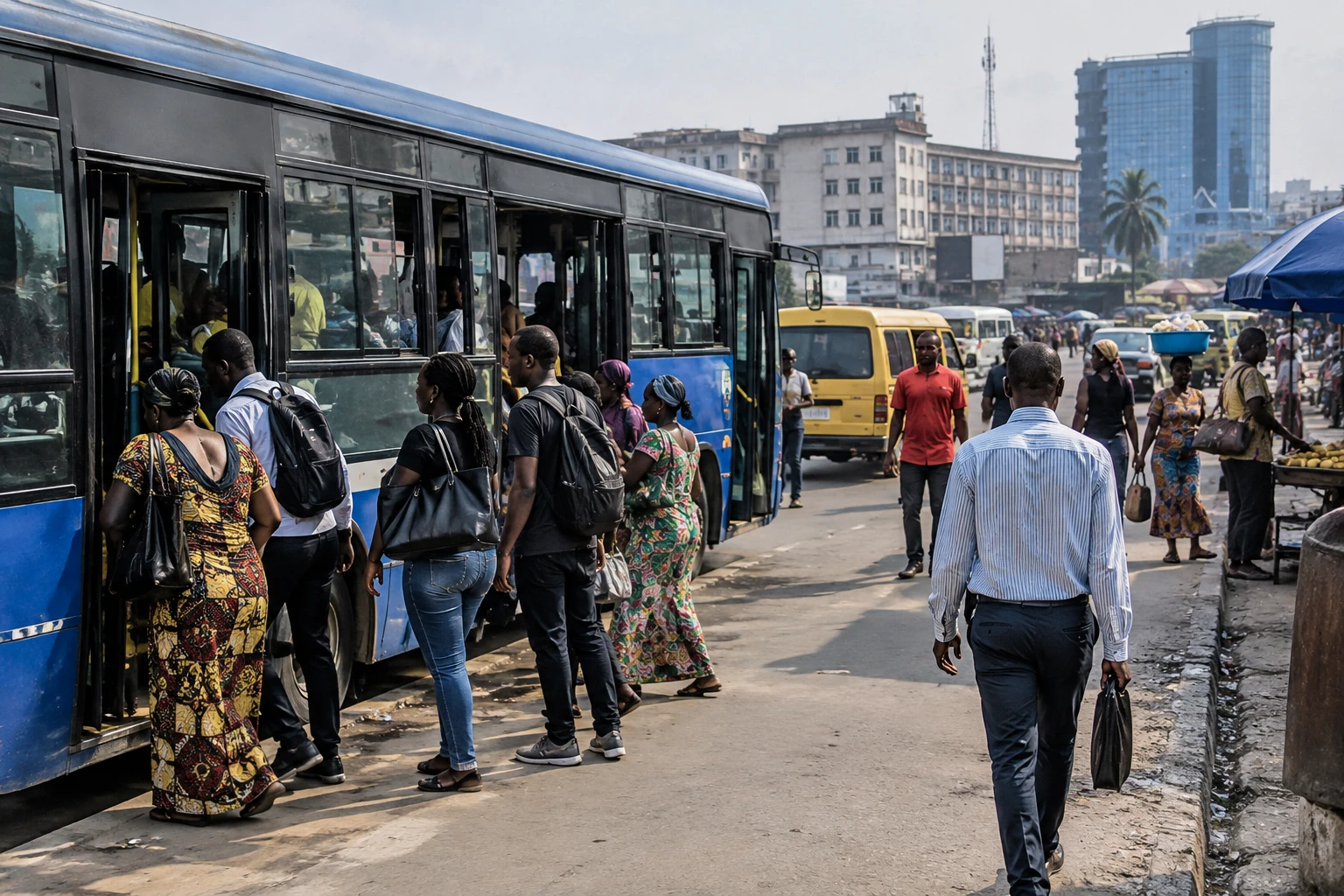
In the Democratic Republic of the Congo, holding a referendum is now less a theoretical question than a debate about the limits of constitutional power. In Kinshasa, MPs have taken a further legislative step, but disagreement has already emerged over what the future framework could allow — and what safeguards would surround its implementation.
A bill revised after judicial review
On 23 October 2026, the National Assembly adopted the law setting out the conditions for holding a referendum, after redrafting 13 articles at the request of the Constitutional Court. According to the parliamentary record published by Actualite.cd, 346 of the 347 MPs who took part in the vote supported the bill. One MP abstained.
The vote follows an initial approval of the bill by both chambers in June, followed by its review by the Constitutional Court. On 28 July, the court ruled that the law complied with the Constitution, subject to amendments to 13 articles. These reservations are intended to guide the interpretation and application of the text, reports the Congolese outlet Ouragan.
The parliamentary process is not over: the bill must still be examined by the Senate. Its adoption therefore does not mean that a referendum has been called. It establishes a legal framework for holding one, if the competent authorities take the initiative and the prescribed steps are followed.
Why Article 220 is at the heart of the debate
The controversy centres on the possible scope of a vote on the Constitution. Article 220 protects, among other things, the republican form of the state, political pluralism, and the number and length of presidential terms from any revision. The constitutional text is available on the website of the Independent National Electoral Commission.
The distinction matters: a law regulating the organisation of a referendum does not, by itself, remove the limits set by Article 220. But opposition figures fear that the possibility of a vote on a new Constitution could allow those safeguards to be circumvented. This is a political concern voiced by opponents, not a consequence already established by the 23 October vote.
The debate also concerns the practical rules for the vote. The law covers, among other things, the calling of a referendum, campaigning and the counting of ballots. According to Ouragan, it provides for a single question in each referendum and prior public communication of the proposal in French and the four national languages. The quality of information, access to debate in the provinces and trust in the process will therefore matter as much as the legal text.
Opposition challenges the timing and approach
In the National Assembly, the Ensemble group denounced the initiative as ill-timed and described the procedure as a forced measure. Its president, Christian Mwando, believes the process undermines the prospects for national dialogue. Some opposition MPs walked out; Nicolas Iracan abstained, according to Congolese accounts of the vote.
The opposition extends beyond the chamber. Opponents organised protests in June and July. Jean-Claude Katende, of the African Association for the Defence of Human Rights (ASADHO), has also criticised the course taken by the government. These positions reflect fears that the constitutional debate may proceed without sufficiently broad political agreement.
For the majority, reconsidering the bill responds to the Court’s observations and is part of the parliamentary process. The Speaker of the National Assembly presented the vote as a contribution to strengthening institutions. These two interpretations differ over the legitimacy and appropriateness of the initiative; they do not alter the fact that the Senate must still vote.
Beyond Kinshasa, the stakes are institutional
The national context shapes how the bill is received. In the east of the country, war and the state of siege in some provinces fuel objections from those who believe institutional reform is the wrong priority. In Kinshasa, the debate is playing out mainly in institutions and political parties. In provinces affected by insecurity, the conditions for voter participation and access to information take on practical importance: a national referendum would need to be understood and accessible beyond the capital.
The DRC is a member of the Southern African Development Community (SADC) and the East African Community (EAC). How its institutions handle presidential limits, constitutional review and public participation resonates across both regional blocs, where political stability also depends on rules that are accepted and predictable.
The next immediate step is the Senate’s examination of the bill, followed, if applicable, by its promulgation. Any proposal for a vote would then have to be assessed against constitutional safeguards, the Court’s reservations and voters’ ability to participate on an informed basis. That is the stage at which the gap between an available legal mechanism and a political process recognised as legitimate will be measured.