Algeria
 Egypt
 Libya
 Morocco
 Sudan
 Tunisia
 Benin
 Burkina Faso
 Cabo Verde
 Côte d'Ivoire
 Ghana
 Guinea
 Guinea-Bissau
 Liberia
 Mali
 Mauritania
 Niger
 Nigeria
 Senegal
 Sierra Leone
 The Gambia
 Togo
 Cameroon
 Central African Republic
 Chad
 Equatorial Guinea
 Gabon
 Republic of the Congo
 São Tomé and Príncipe
 Burundi
 Comoros
 Djibouti
 Eritrea
 Ethiopia
 Kenya
 Madagascar
 Malawi
 Mauritius
 Mozambique
 Rwanda
 Seychelles
 Somalia
 South Sudan
 Tanzania
 Uganda
 Angola
 Botswana
 Eswatini
 Lesotho
 Namibia
 South Africa
 Zambia
 Zimbabwe
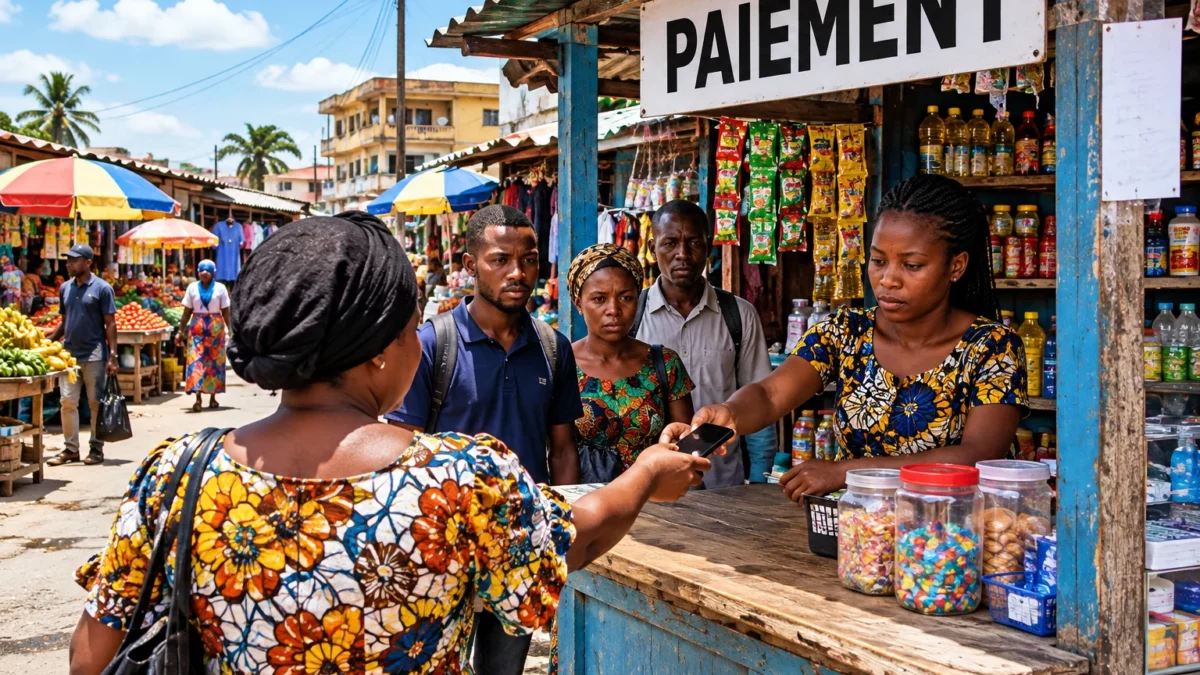
In Kinshasa and secondary cities alike, sending money by phone is already part of everyday life. But the arrival of a new operator does not in itself guarantee lower fees or better access: everything will depend on the payment network, the agents available and customers’ trust.
An approval that reopens the market
On 18 November 2026, the Central Bank of Congo (BCC) announced that Wave had been authorised as an electronic money institution in the Democratic Republic of the Congo. The authorisation allows the company to issue and manage electronic money within the framework set by the regulator. Wave also confirmed that it had received the authorisation, which the company had announced the previous day, on 17 November.
The decision marks a new entrant in a category where authorisations have remained rare. The BCC register had so far listed four institutions: Airtel Money, authorised in February 2012; Orange Money, in March 2012; Vodacash, in July 2012; and Afrimobile Money, in September 2015. The dates in the official register confirm that none of these four approvals was granted after 2015. Wave’s addition therefore brings the number of authorised players to five, subject to the register being fully updated.
An electronic money institution can offer payment transactions and hold funds in digital form, according to the terms of its authorisation. This regulated status sets it apart from a simple app or technical service provider. It also places the activity under the supervision of the central bank, which monitors compliance with the rules governing payments, among other things.
Competition is decided in everyday use
For individuals, the appeal of a new operator will depend first on very practical conditions: the cost of a transfer, how easy it is to withdraw cash, the number of cash-in points and the ability to send funds to other networks. Small traders and businesses could also benefit from additional payment or collection tools. These are possibilities created by the authorisation, not yet proof of lower fees or effective coverage.
The distinction between authorisation and a service that is genuinely accessible is essential. In a large country, the offering can vary considerably between Kinshasa, major urban centres and less well-served areas. A digital wallet is useful only if users can top it up, make payments or withdraw their funds without disproportionate fees or difficult journeys. Network quality, agent availability and complaints handling will matter as much as the app itself.
The effects of competition will therefore not be the same for everyone. Customers who already have a phone and live near a service point may find it easier to compare offers. For small businesses, an additional payment tool could simplify collections, but adoption will depend on costs and on the ability to convert takings into cash quickly. The approval opens the market; it does not by itself remove these constraints.
Regional experience, but no automatic model
Wave has experience in West African markets. The 2025 annual report of the Banking Commission of the West African Monetary Union (UMOA), published in August 2026, lists 18 authorised electronic money institutions in the Union at the end of 2025. It also reports growth in the sector’s activity. These figures provide a regional point of comparison, but they do not make it possible to predict Wave’s results directly in DR Congo: rules, networks and payment habits differ from country to country.
Cameroon offers another point of reference, but under a different regulatory arrangement. In June 2025, the Central African Banking Commission (COBAC), the banking regulator of the Economic and Monetary Community of Central Africa (CEMAC), authorised Commercial Bank Cameroon to provide a payment service under the Wave brand, in partnership with Wave Transfer SA. In that case, the bank bears responsibility for the authorised service. In DR Congo, the authorisation granted to Wave relates directly to its status as an electronic money institution.
This difference is a reminder that a brand operating in several countries does not necessarily operate under the same framework in each one. DR Congo is in Central Africa, but is not part of CEMAC: the relevant authority for this authorisation is the BCC. The Cameroonian experience may shed light on partnership and distribution issues, but it is not an identical regulatory precedent.
The next test: the service’s actual reach
The BCC’s decision comes amid a Congolese payments sector where several operators are already established and digital transfers serve a range of needs. For the authorities, the challenge will be to maintain effective oversight while allowing innovation. For users, results will be measured instead by fees, interoperability — that is, transfers between networks —, the security of funds and coverage beyond the main urban centres.
At the regional level, this entry adds to the diversity of digital payment providers in Central Africa. It also highlights the need to watch how national rules govern companies operating in several markets. The next steps will be decisive: the actual launch of the service, the spread of its agent network, published fees and any agreements enabling transfers between services. That is where regulatory approval may — or may not — translate into tangible change for people in DR Congo.