Algeria
 Egypt
 Libya
 Morocco
 Sudan
 Tunisia
 Benin
 Burkina Faso
 Cabo Verde
 Côte d'Ivoire
 Ghana
 Guinea
 Guinea-Bissau
 Liberia
 Mali
 Mauritania
 Niger
 Nigeria
 Senegal
 Sierra Leone
 The Gambia
 Togo
 Cameroon
 Central African Republic
 Chad
 Equatorial Guinea
 Gabon
 Republic of the Congo
 São Tomé and Príncipe
 Burundi
 Comoros
 Djibouti
 Eritrea
 Ethiopia
 Kenya
 Madagascar
 Malawi
 Mauritius
 Mozambique
 Rwanda
 Seychelles
 Somalia
 South Sudan
 Tanzania
 Uganda
 Angola
 Botswana
 Eswatini
 Lesotho
 Namibia
 South Africa
 Zambia
 Zimbabwe
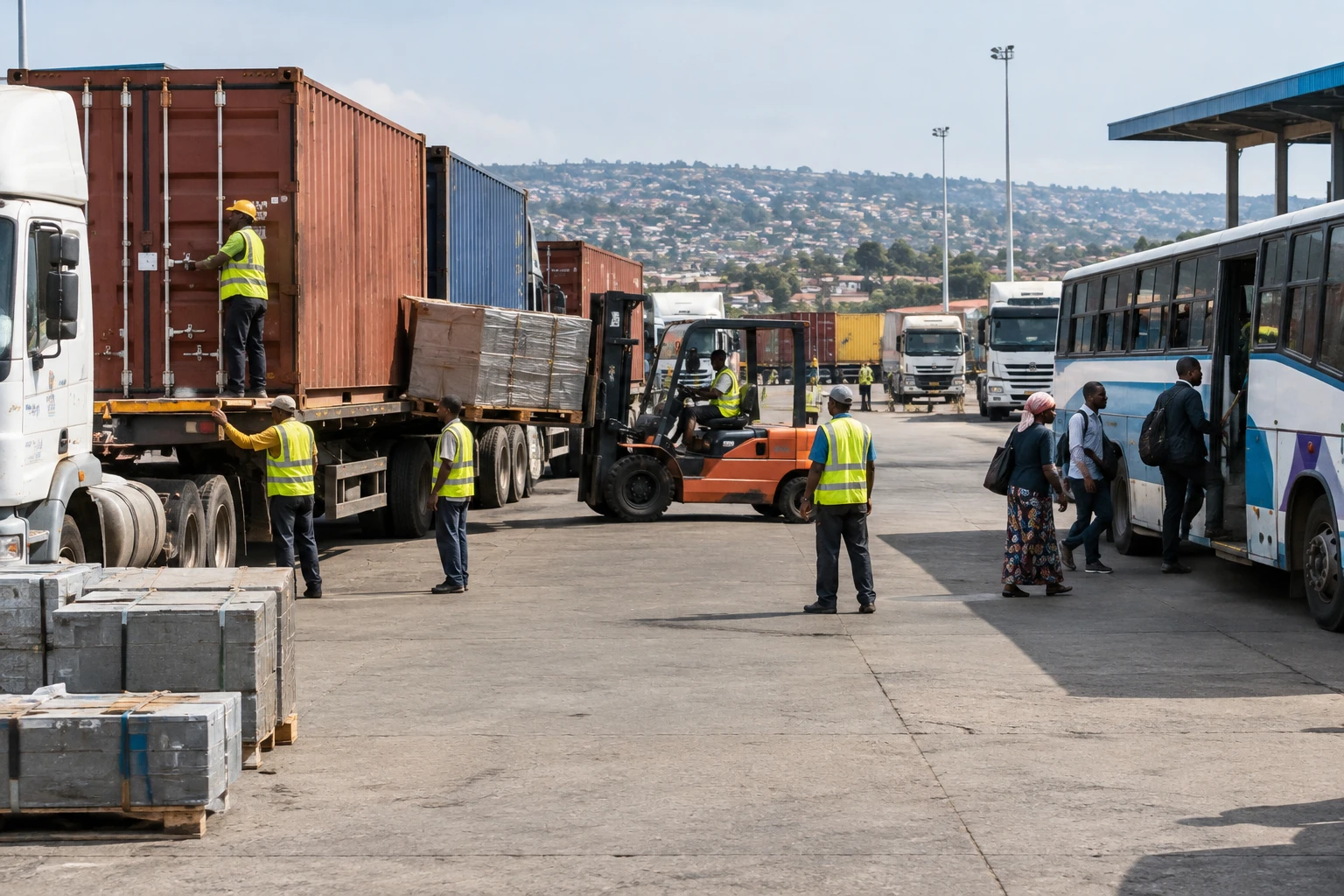
Congolese cobalt is selling for less even as Kinshasa limits the quantities authorised for export. The paradox is partly explained by the timing of deliveries: some of the ore held back in 2025 is now arriving in China, the world’s leading centre for refining and consumption.
Congolese quotas face a global market
The Democratic Republic of the Congo (DRC) holds a decisive position in this supply chain. The US Geological Survey estimates its mine production at 230,000 tonnes in 2025, out of a global total of 310,000 tonnes. Indonesia, the second-largest producer, supplied 44,000 tonnes. China, meanwhile, dominates refining and remains the largest consumer, particularly for lithium-ion batteries.
This concentration gives Kinshasa leverage over global supply, but not direct control of prices. These also depend on stocks, manufacturers’ demand, refiners’ purchases and volumes from other countries. The Congolese market is therefore part of an industrial chain in which decisions taken in the DRC and China interact.
In February 2025, the DRC suspended cobalt exports to stem a fall in prices caused by excess supply. On 16 October that year, it replaced the ban with a quota system administered by ARECOMS, the Congolese authority responsible for regulating strategic minerals. The annual ceiling is 96,600 tonnes for 2026 and 2027, including a strategic reserve.
Delayed shipments ease price pressure
The quotas did not stop shipments already under way. Cargoes leaving the DRC took time to reach Chinese ports. Their gradual arrival replenished raw-material supplies held by buyers and refiners. In June 2026, Chinese imports of Congolese cobalt hydroxide exceeded 10,000 tonnes, compared with about 2,000 tonnes in May, according to Benchmark Mineral Intelligence.
The decline has affected several products. According to Benchmark’s assessment, between the beginning and the end of the third quarter of 2026, cobalt hydroxide delivered in Asia fell by 31% to $17.25 per pound. Cobalt sulphate sold in China fell by nearly 30% to 58,000 yuan a tonne. Cobalt metal in Europe declined more moderately, by about 11%.
These benchmarks differ according to the form of cobalt, delivery location and pricing method. They nevertheless confirm a general downward trend in the third quarter. The trend continued in October: on 23 October, specialist Chinese outlet Shanghai Metals Market reported further weekly declines in refined metal and cobalt salts. It described cautious buying, replenished bonded stocks and the arrival of Congolese cargoes shipped earlier.
The return of these volumes also temporarily shields buyers from a possible future reduction in quotas. But this is no guarantee: ARECOMS said in August that it did not then plan to change the ceilings, while retaining the option of lowering them if the imbalance between supply and demand persisted or worsened.
Recycling and cautious demand also weigh
Arrivals are not the only factor. Demand from battery manufacturers and their suppliers remains hesitant. When buyers already have sufficient stocks, they can defer orders rather than buy more in a market they consider uncertain. In China, weak buying is affecting, in particular, some materials used in lithium- and cobalt-based batteries.
Recycling provides an additional source of supply. Materials recovered from used batteries or industrial scrap can be processed into products that compete with mined cobalt. Benchmark says Chinese recyclers cut their prices during the third quarter. However, the data reviewed do not independently confirm the estimate of 20,000 to 25,000 tonnes of recycled cobalt a year in China, so this figure should be treated with caution.
Over the longer term, battery chemistry also matters. The USGS notes that manufacturers are reducing the amount of cobalt used in some lithium-ion batteries, and that lithium iron phosphate technologies, which contain no cobalt, hold a significant share of the Chinese market. This shift does not eliminate uses for cobalt, but it limits demand growth in some segments.
Kinshasa balances revenue and control
Falling prices affect different players in different ways. For mining companies, they reduce the value of sales and can make some projects less profitable. For the Congolese state, restrictions can help support the unit price, but they also limit export volumes and the associated revenue. The outcome therefore depends on price levels, compliance with quotas and operators’ ability to ship their production.
Producers are not all in the same position. They have different quotas and must adjust production, stocks and shipping schedules. ARECOMS’s decision at the end of the first half of 2026 to withdraw unused rights added to this pressure. Market participants estimate that the annual rights affected amount to between 15,000 and 20,000 tonnes, but this is not an officially consolidated figure.
For communities in mining provinces, particularly in the country’s south-east, global prices do not automatically translate into local benefits. Employment, procurement from Congolese suppliers, public revenue and investment in processing also depend on companies’ decisions and national policies. Limiting exports can strengthen the state’s bargaining power, but does not in itself guarantee that more ore will be processed in the DRC.
The next step depends on shipments
Comparison with Indonesia is a reminder that global supply can change outside the DRC. Cobalt there is mainly produced as a by-product of nickel mining. The USGS estimates that Indonesian production rose from 35,000 tonnes in 2024 to 44,000 tonnes in 2025. This increase can weigh on prices, although the volumes actually available for export depend on producers’ decisions and industrial conditions.
At regional level, the issue concerns the Southern African Development Community (SADC), of which the DRC is a member, as well as neighbours linked to the Copperbelt mining corridor. But the question goes beyond regional coordination: the DRC is seeking greater influence in a global supply chain where refining and much of demand are concentrated in Asia.
The next indicator will therefore not be only the volume extracted, but the amount actually shipped and taken up by buyers. ARECOMS’s next decisions, changes in Chinese stocks and the pace of manufacturers’ purchases will show whether the price decline marks a lasting easing or a pause in a market still dependent on the choices of a few major producers.