
 Egypt
 Libya
 Morocco
 Sudan
 Tunisia
 Benin
 Burkina Faso
 Cabo Verde
 Côte d'Ivoire
 Ghana
 Guinea
 Guinea-Bissau
 Liberia
 Mali
 Mauritania
 Niger
 Nigeria
 Senegal
 Sierra Leone
 The Gambia
 Togo
 Cameroon
 Central African Republic
 Chad
 DR Congo
 Equatorial Guinea
 Gabon
 Republic of the Congo
 São Tomé and Príncipe
 Burundi
 Comoros
 Djibouti
 Eritrea
 Ethiopia
 Kenya
 Madagascar
 Malawi
 Mauritius
 Mozambique
 Rwanda
 Seychelles
 Somalia
 South Sudan
 Tanzania
 Uganda
 Angola
 Botswana
 Eswatini
 Lesotho
 Namibia
 South Africa
 Zambia
 Zimbabwe
An energy partnership that means more than a diplomatic exchange
When a country seeks to secure its electricity supply, it looks beyond its immediate neighbours. It also looks to industrial companies able to provide fast solutions, from cables and transformers to training for technicians. This is where Algeria is seeking to establish a presence in Benin, with an offer combining expertise, equipment and technical support.
For Benin, the issue is a practical one. Urban growth, the expansion of services and the electrification of rural areas require a stronger grid. The country has already launched projects to improve access to electricity, but significant gaps remain between cities and the rest of the country. In this context, any partnership promising to cut costs, speed up projects or train local workers deserves close attention.
Porto-Novo faces the imperative of access and energy sovereignty
Benin’s capital is Porto-Novo, but its economic centre of gravity is strongly shaped by Cotonou and its port corridor. This geography matters. It concentrates industrial, logistics and commercial demand on an electricity grid that is already under considerable strain. According to the World Bank, access to electricity in Benin stood at 41.4% in 2020, with a sharp divide between urban and rural areas. The same dataset puts rural access at 18.2% that year.
This shortfall is not merely a social issue. It weighs on SMEs, craft businesses, neighbourhood shops and agro-processing. It also slows the electrification of remote municipalities, where demand often calls for hybrid solutions: the main grid, mini-grids, decentralised solar power and local maintenance. This is precisely where technical cooperation can be valuable, provided it includes a transfer of know-how rather than simply the sale of equipment.
Benin is also part of the ECOWAS region, where energy integration has become a strategic priority. The West African Power Pool, the body responsible for linking West African electricity grids, marked its 20th anniversary in July 2026. Its ambition remains clear: to increase electricity flows between member countries, reduce local shortages and make better use of available capacity.
Algeria puts forward an industrial offer, not just a political one
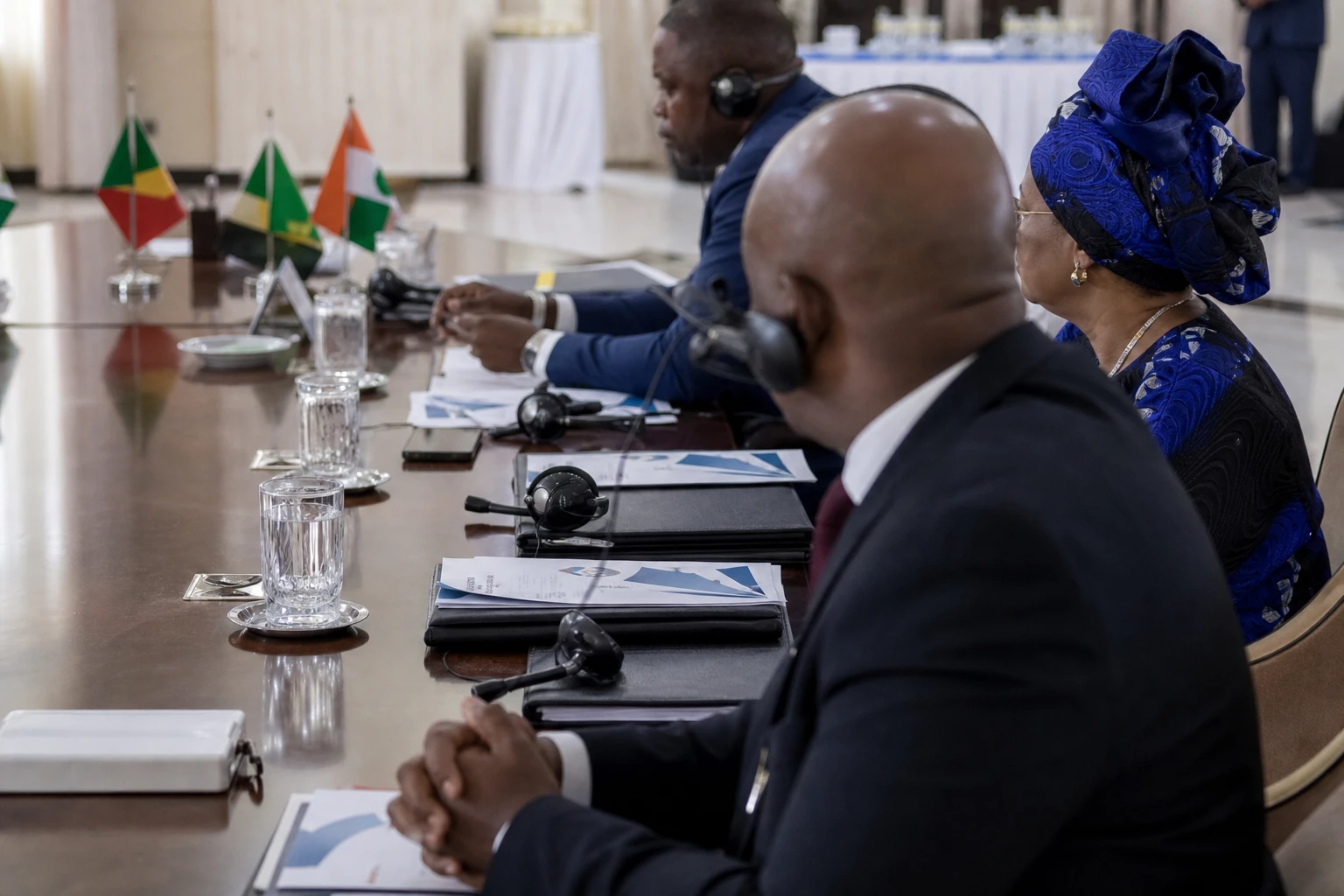
On 22 July 2026, Mourad Adjal, Algeria’s Minister of Energy and Renewable Energies, held a videoconference with Édouard Dahome, Benin’s Minister of Energy, Water and Mines. The two officials examined ways to strengthen bilateral cooperation, with a focus on electricity, the manufacture of energy equipment and skills training. The talks were reported by the Algerian news agency.
The key point is the industrial focus of Algeria’s offer. Algiers is not limiting itself to proposing political support. It is presenting Sonelgaz, its state-owned electricity and gas group, as a company able to supply equipment, support projects and take part in building infrastructure. The approach is part of an explicit economic diplomacy: exporting domestic production capacity while also selling integrated solutions.
This strategy is not new. On 3 June 2026, Sonelgaz inaugurated a 40 MW power plant at Gorou Banda, in Niamey, built entirely as part of an Algerian-Nigerien project. In June, Algeria also stepped up contacts with Côte d’Ivoire on the same issues. And in May, Algiers and N’Djamena signed an agreement for a 40 MW power plant in N’Djamena. The talks with Benin therefore confirm a broader trend: Algeria is seeking to position itself as an African supplier of energy engineering.
What this means for Beninese people and the West African market
For the Beninese government, the benefits are twofold. First, it can diversify its partners. Second, it can speed up the upgrading of a sector where substantial needs remain. Cooperation with a state-owned industrial group could shorten delivery times, provided funding is available and contracts include requirements for maintenance, training and local content.
For users, the impact is more immediate. More reliable electricity improves everyday life, but above all it changes the cost structure. Fewer outages, fewer generators, fewer losses for small businesses, and more reliable operations for workshops and processing companies. In rural areas, the effects are even more visible: lighting, product storage, water pumping, connectivity and economic activity in the evening.
The regional dimension also matters. In West Africa, the ECOWAS Parliament said in June 2026 that fewer than 12% of the region’s rural households have regular access to electricity, according to figures presented during its proceedings in Dakar. This figure reflects a structural challenge. It also shows why states are now seeking partnerships able to combine generation, transmission, distribution and decentralised solutions.
Meanwhile, the WAPP master plan for 2019-2033 remains on course, focusing on interconnections, additional capacity and a regional electricity market. The scale of the needs remains immense, with colossal investment required across West Africa. Benin is not an isolated case in this landscape. It is becoming a testing ground for South-South cooperation models seeking to take root in industry, not just in declarations.
A process to follow from Cotonou to Abomey-Calavi
The continental significance of the issue goes beyond the Algiers-Cotonou axis. It raises questions about the role of African industrial companies in the infrastructure drive. For a long time, the continent’s major energy projects depended on external players, complex financing arrangements and imported solutions. The emergence of African companies able to provide grids, substations, transformers and technical training is gradually changing the balance of power.
Benin is at the crossroads of this shift. With the WAPP headquarters in Abomey-Calavi, the country already hosts an important part of West Africa’s energy architecture. Stronger cooperation with Algeria could therefore go beyond the bilateral framework. It could feed into a broader approach: a continent seeking to produce, transmit and manage a greater share of its own energy.
What happens next will depend on turning the videoconference into concrete agreements: a protocol, a timetable, financing, site selection and a division of responsibilities. That is where the credibility of the initiative will be tested. The distance between a political announcement and equipment actually connected to the grid is often considerable. But in a sector where every megawatt counts, that distance is already an issue of economic sovereignty.



