
 Egypt
 Libya
 Morocco
 Sudan
 Tunisia
 Benin
 Burkina Faso
 Cabo Verde
 Côte d'Ivoire
 Ghana
 Guinea
 Guinea-Bissau
 Liberia
 Mali
 Mauritania
 Niger
 Nigeria
 Senegal
 Sierra Leone
 The Gambia
 Togo
 Cameroon
 Central African Republic
 Chad
 DR Congo
 Equatorial Guinea
 Gabon
 Republic of the Congo
 São Tomé and Príncipe
 Burundi
 Comoros
 Djibouti
 Eritrea
 Ethiopia
 Kenya
 Madagascar
 Malawi
 Mauritius
 Mozambique
 Rwanda
 Seychelles
 Somalia
 South Sudan
 Tanzania
 Uganda
 Angola
 Botswana
 Eswatini
 Lesotho
 Namibia
 South Africa
 Zambia
 Zimbabwe
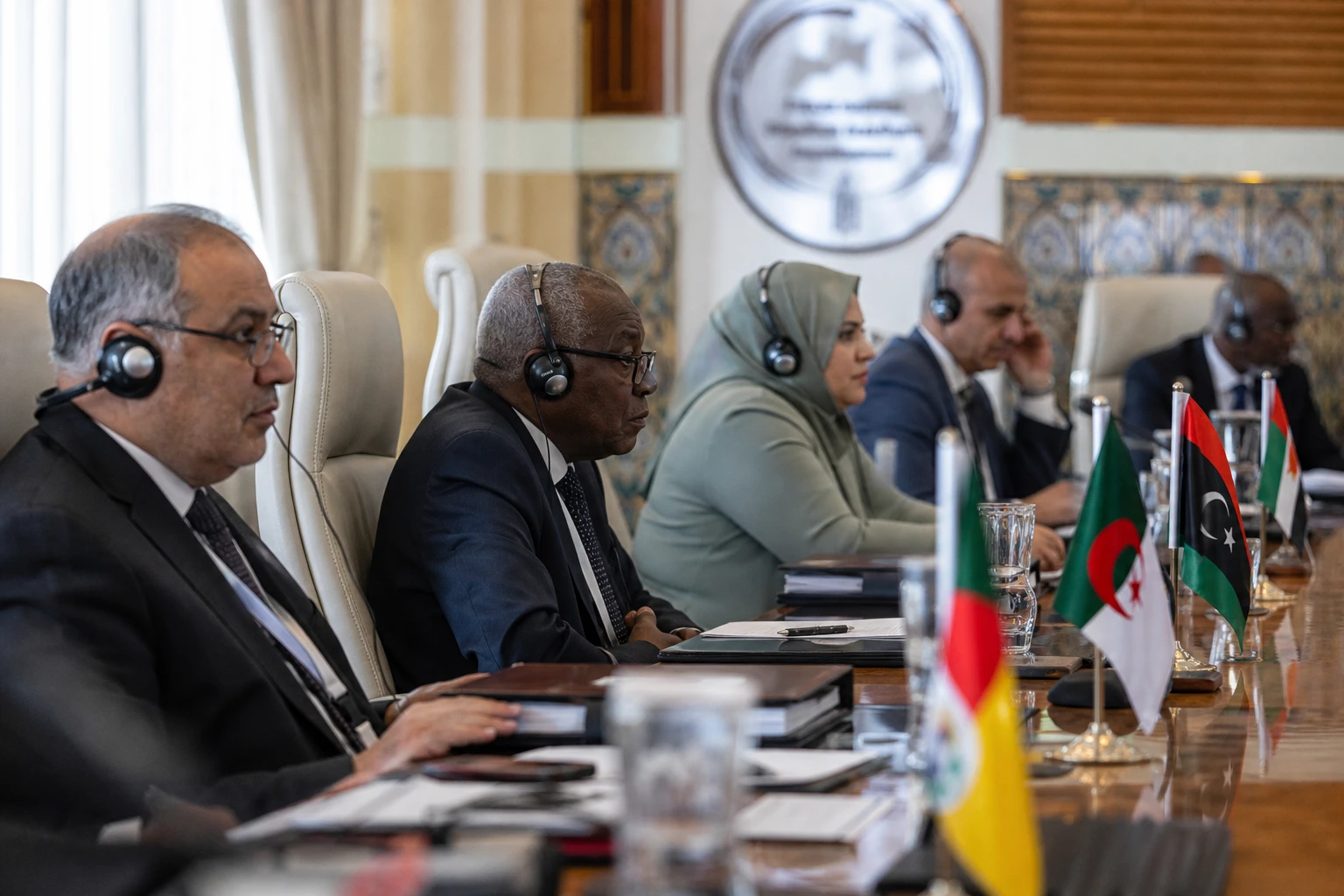
When an Algerian researcher discusses the future of science, the question reaches beyond the laboratory
At a time when the United States is tightening controls on its funding, partnerships and foreign access to campuses, the voice of an Algerian scientist carries particular weight. It speaks both to the precariousness of research careers and to the strength of paths built between Algiers, Europe and North America. It is also a very practical question for Algeria: how can it maintain ties with its talent when the scientific diaspora remains one of its strongest assets?
This question goes beyond the individual case. In a globalised scientific system, mobility, visas, research grants and co-publications count as much as degrees. The African continent knows this well. The movement of researchers plays an essential role there, especially when local universities are seeking to expand but do not always have the necessary resources. Noureddine Melikechi’s case illustrates precisely this tension between national roots and an international career.
An Algerian career that became a reference in applied research
Noureddine Melikechi is now dean of the Kennedy College of Sciences at the University of Massachusetts Lowell. The institution says he was appointed to the post in October 2016, after holding several leadership roles at Delaware State University, where he also founded a research centre in optics. His work is in the physical sciences, with a particular interest in laser spectroscopy.
His research has spanned space exploration and medicine. The University of Lowell says he contributes to the use of lasers to diagnose serious diseases, including several cancers, COVID-19 and Gulf War syndrome. A university publication also notes that he took part in work related to Nasa’s Mars programme, explaining his image as a scientist able to connect the red planet with medical needs on Earth.
In Algeria, his name remains associated with national expertise that went abroad to train and then returned to the scientific debate. Algeria welcomed Professor Melikechi in Algiers in recent days, where the Minister of Higher Education and Scientific Research received him as a founding member of the High Council of the National Scientific Community Abroad. This kind of body is specifically intended to maintain ties between the state and its researchers based outside the country.
In the United States, research remains open, but is under closer scrutiny
The heart of his message is set against a climate of tightening controls in the United States. The White House published several texts in 2025 that strengthen transparency requirements on foreign funding for universities and restrict certain arrangements involving international students. At the same time, the National Science Foundation strengthened its research security policies, introducing new requirements on training, financial disclosures and foreign recruitment programmes deemed sensitive.
This shift does not mean foreign researchers are disappearing from the American landscape. On the contrary, the NSF continues to emphasise the important role of international students and researchers in the scientific ecosystem. But the framework is becoming tighter. Universities now have to contend with more checks, while federal agencies say they want to protect public funds and strategic expertise. The Associated Press has also described this, reporting cuts and funding freezes in 2025 affecting several institutions, including the NSF, the NIH and Nasa.
What this debate means for Algeria and North Africa
For Algeria, the stakes are twofold. On the one hand, talents such as Melikechi give international visibility to Algerian research, which is often underestimated. On the other, their presence abroad highlights the importance of policies supporting return, cooperation and the movement of expertise. Algiers is seeking to structure its relationship with researchers in the diaspora, notably through the High Council of the National Scientific Community Abroad.
The regional significance is clear. In North Africa, competition is not played out only in hydrocarbons, trade or infrastructure. It also hinges on the ability to produce useful science, retain young researchers and connect universities to global networks. The Arab Maghreb Union remains politically paralysed, but researchers continue to work in networks, sometimes beyond diplomatic deadlock. In this region, scientific mobility is both a resource and a vulnerability.
Melikechi’s case is also a reminder of a reality that is often underestimated: African research advances through bridges too. When an Algerian scientist speaks from an American university, he does not thereby leave his country of origin behind. He carries knowledge, experience and a scientific memory that can still benefit Algerian institutions. In the short term, the main question will be whether the new US restrictions durably curb mobility, or prompt more African universities to offer credible alternatives to diaspora researchers.



