
 Egypt
 Libya
 Morocco
 Sudan
 Tunisia
 Benin
 Burkina Faso
 Cabo Verde
 Côte d'Ivoire
 Ghana
 Guinea
 Guinea-Bissau
 Liberia
 Mali
 Mauritania
 Niger
 Nigeria
 Senegal
 Sierra Leone
 The Gambia
 Togo
 Cameroon
 Central African Republic
 Chad
 DR Congo
 Equatorial Guinea
 Gabon
 Republic of the Congo
 São Tomé and Príncipe
 Burundi
 Comoros
 Djibouti
 Eritrea
 Ethiopia
 Kenya
 Madagascar
 Malawi
 Mauritius
 Mozambique
 Rwanda
 Seychelles
 Somalia
 South Sudan
 Tanzania
 Uganda
 Angola
 Botswana
 Eswatini
 Lesotho
 Namibia
 South Africa
 Zambia
 Zimbabwe
A World Cup that reaches beyond the stadiums
In football, some encounters leave a more lasting mark than a scoreline. In Lawrence, Kansas, the welcome extended to the Algerian national team during the 2026 World Cup reached beyond the training ground to touch residents, students and the diaspora. In Algeria, that momentum found an unexpected continuation: two twinning projects emerged, one led by the state involving Tipaza and Kansas City, the other built by citizens around Lawrence and Biskra.
The issue goes beyond sporting emotion. It raises the question of how a popular moment can become a tool for local diplomacy, university exchanges and practical cooperation between very different territories. For Algeria, the gesture also forms part of a relationship with the United States that is not limited to sensitive issues, but also runs through cities, campuses and the diaspora.
Tipaza and Kansas City: an initiative from the top
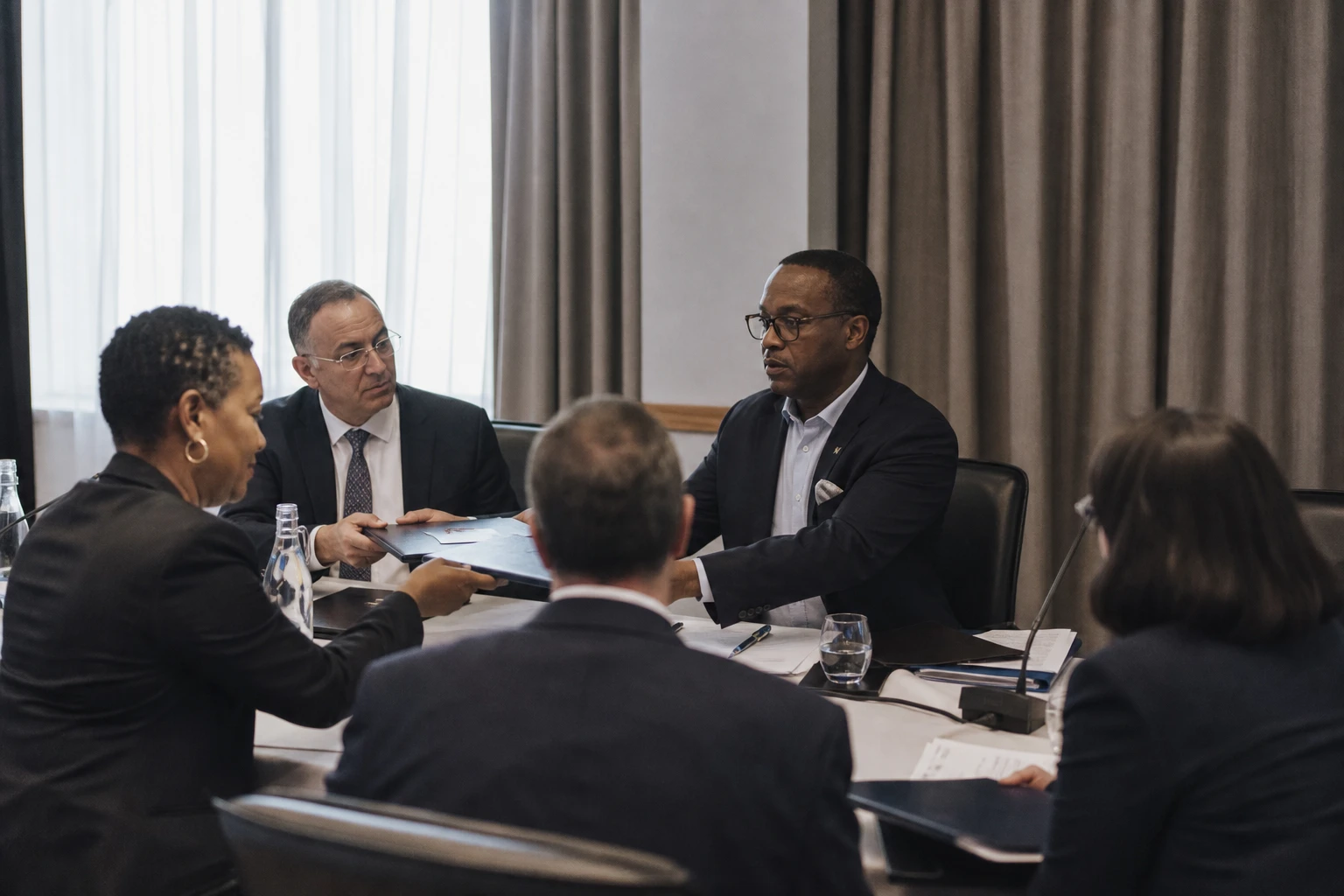
On 12 July 2026, President Abdelmadjid Tebboune tasked Ahmed Attaf, Saïd Sayoud and Walid Sadi with preparing the signing of a twinning agreement between Tipaza and Kansas City. The Council of Ministers presented the decision as recognition of the welcome extended to the official delegation and Algerian supporters during the 2026 World Cup. The announcement was reported by Algeria Press Service and Algerian Radio.
The choice of Tipaza is no accident. This coastal wilaya, west of Algiers, has significant heritage and tourism appeal. By placing it at the centre of a link with a major American city, Algiers is signalling that a twinning arrangement can also help project an image of stability, culture and openness, beyond conventional diplomatic networks alone.
Washington, for its part, has not shut the door on local cooperation. Algerian-American relations have continued across a range of areas, while the US embassy has highlighted new programmes in higher education, heritage and economic exchanges. In this context, municipal twinning is a flexible tool that can operate even when political issues remain more difficult.
Lawrence and Biskra: an initiative from the ground up
In Lawrence, the story took a different form. The Kansas university city was named in February 2026 as the Algerian national team’s base camp during the World Cup. The municipality then followed the team’s training sessions at Rock Chalk Park, the delegation’s arrival and the curiosity of a local public that embraced the Algerian colours with unusual spontaneity.
On 8 July 2026, Sister Cities Lawrence considered a possible twinning arrangement with Biskra. The project came from an Algerian citizen based in California, Saadi El Mehdi Zemmouri, and rested on a strong academic foundation: his father, Noureddine Zemmouri, teaches at the University of Mohamed Khider in Biskra and heads a laboratory there focused on urban and architectural issues. This initiative therefore comes from the grassroots, civil society and universities, rather than the central government.
This difference matters. In Lawrence, the exchanges are intended to be practical: hosting students, links between teachers, and cooperation on water, urban planning or agriculture in arid areas. The proposed citizens’ group, called “Friends of Biskra”, reflects a commitment to the long term. A twinning arrangement does not thrive through a decree, but through host families, volunteers, associations and campuses.
Biskra, an Algerian laboratory for arid regions
The choice of Biskra immediately resonates with researchers and farmers. The wilaya is a major agricultural hub, but remains exposed to water scarcity and soil salinisation. The Scientific and Technical Research Centre on Arid Regions, based in Biskra, makes the point clearly: water stress and land degradation threaten agriculture that is nevertheless essential to national food security.
The FAO also launched an initiative on agricultural water scarcity in Algeria in May 2026. The organisation named Biskra among the country’s most vulnerable areas, alongside Adrar and large irrigated areas in the north-west. This creates a very practical basis for closer ties with Lawrence: both territories must deal with aquifers, soils and irrigation, even if their climates and economies differ.
In western Kansas, water is also a concern. Falling levels in the Ogallala, a major aquifer beneath the Great Plains, have fuelled debate for years about the future of local agriculture. On both sides of the Atlantic, the same question arises: how can production be increased without exhausting the resource that makes it possible?
A symbolic gesture, but also a political one
Twinning arrangements are never neutral. The one between Tipaza and Kansas City is primarily an Algerian political decision. The one between Biskra and Lawrence, if confirmed, would look more like a civic pact, backed by the diaspora, academics and local American networks. Yet both initiatives convey the same message: Algeria wants to turn a moment of international visibility into lasting relationships.
The diplomatic context adds another dimension. On 1 August 2026, Donald Trump reaffirmed US recognition of Moroccan sovereignty over Western Sahara. This does not erase cooperation between Algiers and Washington, but it is a reminder that the bilateral relationship is shaped by sensitive issues. Against this backdrop, cities offer a more flexible space, less exposed to political deadlock.
For Algeria, this sequence is also a way to highlight its diaspora. In Kansas, Algerian women’s associations continued to sustain the connection after the team left, through food, music and shared memories. This social fabric matters as much as official announcements. It shows that a successful twinning arrangement is not decreed in Algiers alone; it is also built in neighbourhoods, universities and associations.
What to watch next
What happens next depends on two milestones. First, the concrete response from Kansas authorities to Algeria’s invitation concerning Tipaza and Kansas City. Second, the organisation of the “Friends of Biskra” group in Lawrence, followed by the possible formalisation of a university agreement or statement of intent. In both cases, the 2026 World Cup has already produced a rare outcome: building bridges between North Africa and the American Midwest through football.



