
 Egypt
 Libya
 Morocco
 Sudan
 Tunisia
 Benin
 Burkina Faso
 Cabo Verde
 Côte d'Ivoire
 Ghana
 Guinea
 Guinea-Bissau
 Liberia
 Mali
 Mauritania
 Niger
 Nigeria
 Senegal
 Sierra Leone
 The Gambia
 Togo
 Cameroon
 Central African Republic
 Chad
 DR Congo
 Equatorial Guinea
 Gabon
 Republic of the Congo
 São Tomé and Príncipe
 Burundi
 Comoros
 Djibouti
 Eritrea
 Ethiopia
 Kenya
 Madagascar
 Malawi
 Mauritius
 Mozambique
 Rwanda
 Seychelles
 Somalia
 South Sudan
 Tanzania
 Uganda
 Angola
 Botswana
 Eswatini
 Lesotho
 Namibia
 South Africa
 Zambia
 Zimbabwe
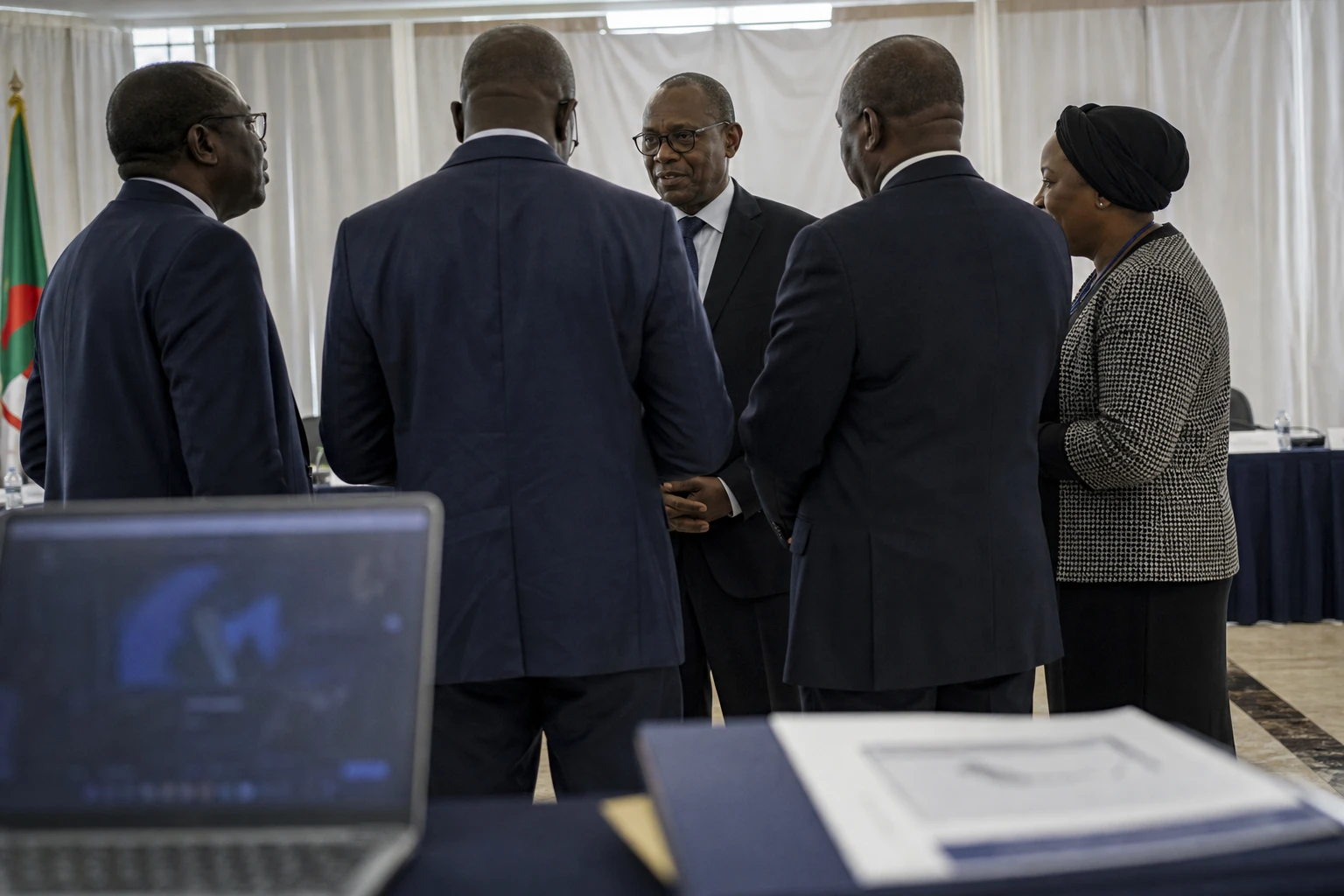
When AI governance leaves the technical salons
In Riyadh, Algeria chose to shift the debate on artificial intelligence from principles to power relations. Behind the language of ethics, one more concrete question dominates: who controls the infrastructure, data, models and energy needed to run AI? It was on this ground that Algiers called on 15 September 2026 for an international agency dedicated to AI governance.
This position comes as the African Union has already set a continental course. In 2024, African ministers adopted a Continental Artificial Intelligence Strategy, intended to guide the responsible and inclusive use of these technologies, while the AU Peace and Security Council in April 2026 called on member states to accelerate their national strategies in line with Agenda 2063. Algeria is therefore not speaking from an institutional vacuum; it is part of an African architecture seeking to influence global digital governance.
What Algeria proposed in Riyadh
Algeria’s Minister of Post and Telecommunications, Sid Ali Zerrouki, called for the creation of an international agency capable of ensuring more equitable cooperation on AI. According to the statement circulated by the Algerian authorities, he also stressed a point rarely raised in public debate: for many countries, the real obstacle is not only the rules, but access to data centres, computing power, energy, skills, models and funding. The argument is political, but it is also material.
UNESCO’s Global Forum on the Ethics of AI, held from 14 to 17 September 2026 in Riyadh, was specifically focused on transforming global cooperation around the ethical governance of AI. UNESCO said on the occasion that it had supported 77 countries in developing national AI strategies and policies, and 58 in assessing their readiness through its RAM methodology, which measures a country’s capacity to develop, deploy and govern these technologies. Algeria’s proposal is therefore part of a movement already under way, but one that remains highly uneven.
The idea of an international agency is not a mere turn of phrase. It suggests that AI can no longer be addressed solely through codes of conduct or declarations of principle. It calls for a more stable, clearer and more representative framework for coordination. For Algeria, this structure should prevent the rules from being written by those who already control most of the infrastructure. This is where the technological sovereignty invoked by Algiers is at stake.
An African perspective on digital sovereignty
For several months, Algiers has been advancing this issue in African and multilateral forums. In January 2026, Sid Ali Zerrouki was named as a member of the African Artificial Intelligence Council, an initiative linked to the Smart Africa Alliance, with a remit covering public policy, digital infrastructure, innovation and capacity-building. This regular presence confirms a clear line: Algeria wants a say in continental digital decision-making, not merely to comment on standards set elsewhere.
This position also resonates with developments at home. In May 2026, the Algerian government examined a draft national artificial intelligence strategy. In September 2026, the Ministry of Higher Education held an initial coordination meeting to turn the strategy into practical programmes. In other words, the AI diplomacy Algiers is pursuing in Riyadh also extends work at home that is still taking shape.
For the Algerian authorities, the challenge is twofold. On the one hand, they want to avoid technical dependence that would confine African countries to the role of users. On the other, they need to build local capacity to understand, test and regulate AI systems. This perspective aligns with the African Union’s strategy, which calls for unified national approaches compatible with a shared continental ambition.
For the public, the practical impact will be judged outside official statements. In public services, AI can speed up some procedures if databases are reliable and administrations know how to protect them. In the economy, it can support start-ups, research and digital services, but only if talent and infrastructure keep pace. Without them, the gap between well-equipped capitals and poorly connected areas risks widening. The issue is therefore not abstract: it affects jobs, training and the quality of services.
What this signal means for the continent
The significance of these remarks goes beyond Algeria. They show that Africa is no longer content simply to be invited to global debates on AI; it is arriving with its own priorities. The African Union has already laid out a policy framework. Algeria is now arguing that this framework should be linked to more balanced international governance, to prevent capabilities from remaining concentrated among a handful of players. This is an important shift in a negotiation that is still under way.
The next test will be political. It remains to be seen whether multilateral forums turn the statements made in Riyadh into concrete mechanisms: data-sharing, access to infrastructure, funding for skills, and a genuine role for African countries in governing bodies. If not, the promise of ethical AI will remain largely steered from the already dominant decision-making centres. If the current momentum bears fruit, Africa could have a greater influence on setting the rules of the global game.



