Egypt
 Libya
 Morocco
 Sudan
 Tunisia
 Benin
 Burkina Faso
 Cabo Verde
 Côte d'Ivoire
 Ghana
 Guinea
 Guinea-Bissau
 Liberia
 Mali
 Mauritania
 Niger
 Nigeria
 Senegal
 Sierra Leone
 The Gambia
 Togo
 Cameroon
 Central African Republic
 Chad
 DR Congo
 Equatorial Guinea
 Gabon
 Republic of the Congo
 São Tomé and Príncipe
 Burundi
 Comoros
 Djibouti
 Eritrea
 Ethiopia
 Kenya
 Madagascar
 Malawi
 Mauritius
 Mozambique
 Rwanda
 Seychelles
 Somalia
 South Sudan
 Tanzania
 Uganda
 Angola
 Botswana
 Eswatini
 Lesotho
 Namibia
 South Africa
 Zambia
 Zimbabwe
A sector that can no longer afford to waste time
In Algeria, tourism is no longer shaped solely by beaches, archaeological sites and hotels. It is also shaped by forms, delays and the administration’s ability to keep pace with industry professionals. In Algiers, the Ministry of Tourism and Handicrafts has recently put digitisation back at the heart of its agenda, with a simple aim: to make the sector clearer, faster and more useful for operators and visitors alike.
This shift is part of a broader trajectory. For several months, the Algerian authorities have been pressing ahead with public digital service projects, from the government portal Dzair Digital Services to the integration of sector-specific platforms, in a country where administrative simplification has become an economic issue in its own right. For tourism, the challenge is twofold: to attract more visitors and give businesses in the sector more reliable tools to work with.
Digital tools for administration and promotion
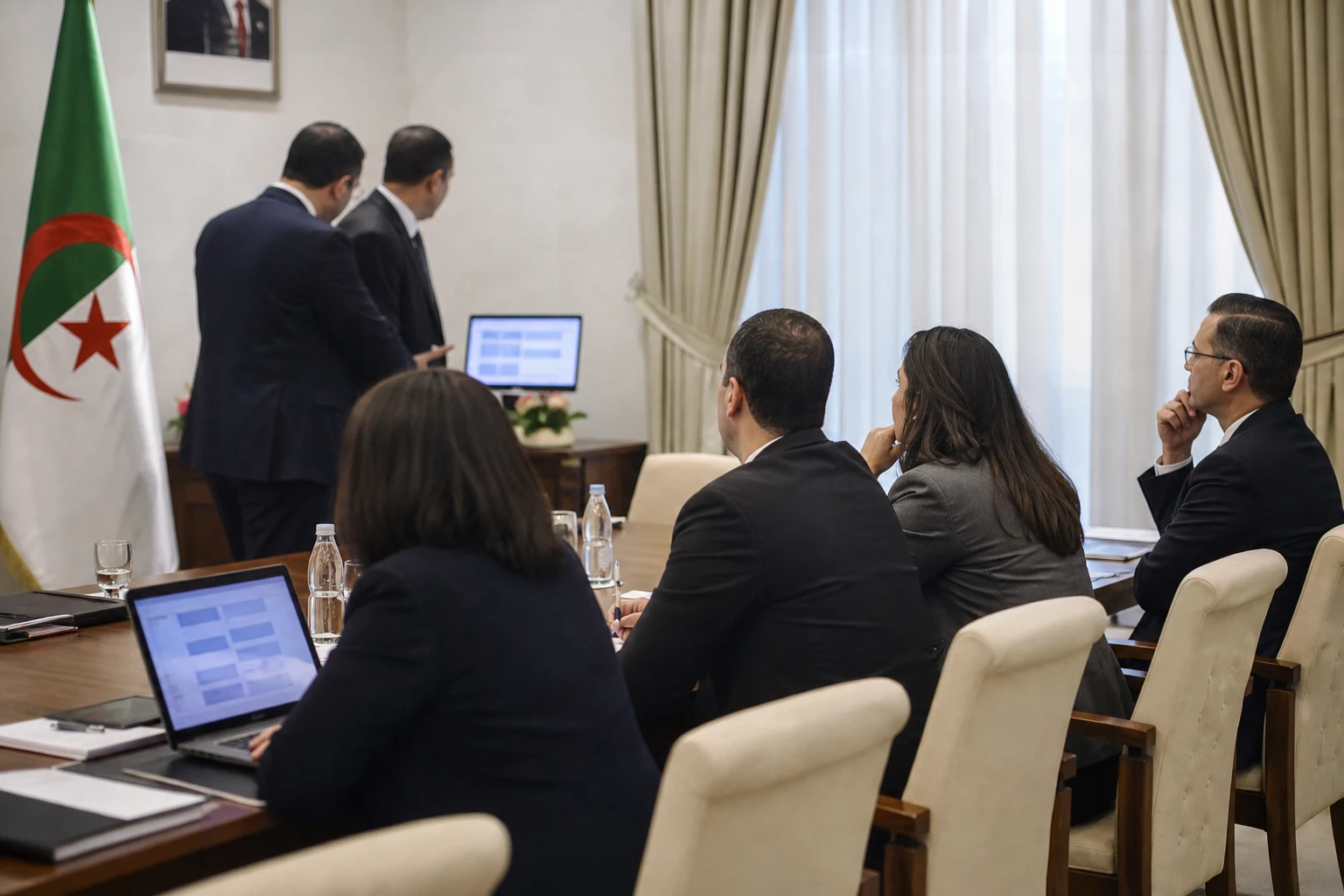
On 11 September 2026, Algeria’s Minister of Tourism and Handicrafts, Houria Meddahi, chaired a co-ordination meeting on progress with the sector’s digitisation. The ministry says the project aims to move procedures online in central and local services, reducing processing times and making it easier for industry professionals to complete formalities.
Several projects are under way. The ministry is working on public service platforms, systems for managing tourism activities, and tools for the establishments and organisations under its supervision. A platform for processing applications for regularisation visas was also among the projects discussed. The stated aim is clear: to enable more procedures to be completed remotely and give the administration a better ability to monitor the sector.
The shift also extends to destination marketing. The ministry plans to strengthen its tourism communications platforms and add an interactive map of Algeria, allowing users to explore tourist sites and access practical information more easily. In a market where travellers plan their trips online long before buying a ticket, this is no cosmetic change. It will determine the country’s visibility.
Artificial intelligence enters the strategy
Algeria is not starting from scratch. On 19 May 2026, Houria Meddahi had already announced in Algiers the launch of the first edition of the national competition “IA Tour Algérie 2026”, presented as an innovation contest to promote Algerian tourism intelligently. Its aim was to develop AI-based solutions to showcase the country’s destinations more effectively.
The competition sends an important signal. The ministry is no longer talking only about computerising services. It is also seeking to bring Algerian tourism into a new phase of application, in which data, AI and digital interfaces help guide marketing, personalise information and manage the tourism offering more effectively. This is still a recent development, but it reflects a broader trend seen in other African administrations and in the policies promoted by UN Tourism, which champions digital transformation as a lever for governance, accessibility and competitiveness.
The shift is also regional. In Kenya, the Ministry of Tourism and Google Kenya announced a partnership in 2026 on an AI-driven tourism strategy, with the aim of better understanding demand, personalising travel planning and raising the destination’s profile. Algeria is therefore part of an African trend in which digital tools are no longer used merely to showcase destinations, but to structure the relationship between visitors, data and public services.
What this means for professionals and regions
For Algerian tourism professionals, the promise is tangible. Faster procedures can reduce administrative back-and-forth, limit delays in permits and improve the visibility of applications. For small businesses, agencies, accommodation providers and local operators, the benefits could be immediate if the platforms work as intended. In this highly fragmented sector, administrative simplicity can be worth as much as a communications campaign.
For the state, the stakes are broader. A digital administration makes it possible to measure activity more effectively, monitor establishments, identify bottlenecks and co-ordinate public policies. It is also a way to improve the investment climate, an objective explicitly mentioned by the ministry at its meeting on 11 September 2026. In short, tourism is becoming a testing ground for the modernisation of public administration.
The decisive question remains how the tools will be rolled out in practice. In many African countries, platforms emerge faster than their use. Without links to other public systems, staff training, maintenance and reliable data, digitisation becomes an extra layer rather than a simplification. Algeria will therefore have to prove that its tools work as well in the tourist regions, or wilayas, as they do in Algiers, in central services as well as on the ground. The difference between the capital and the regions will say a great deal about the practical outcome.
A signal to watch in North Africa and across the continent
The Algerian initiative extends beyond the national arena. In North Africa, where economies are seeking to diversify their revenues beyond traditional sectors, digital tourism has become a marker of competitiveness. Algeria, which is seeking to make better use of its cultural, natural and heritage assets, is testing an approach that combines appeal, administrative organisation and local innovation.
The continental significance is just as clear. The African Union has for several years supported ambitions for digital sovereignty and a knowledge economy, while travel platforms, data and AI are increasingly shaping how African destinations are discovered and booked. For Algeria, the challenge is therefore not just to modernise a ministry. It is to show that a country can transform its tourism sector without relinquishing public control of its tools or the promotion of its own destination narratives.
The next test will be operational: the rollout timetable, the degree of integration between platforms, the ability to feed in data from the ground and the real role of solutions developed through “IA Tour Algérie 2026”. Only then will it become clear whether the digitisation of Algerian tourism is a strategic showpiece or a lasting change in how the sector is governed.