Algeria
 Egypt
 Libya
 Morocco
 Sudan
 Tunisia
 Benin
 Burkina Faso
 Cabo Verde
 Côte d'Ivoire
 Ghana
 Guinea
 Guinea-Bissau
 Liberia
 Mali
 Mauritania
 Niger
 Nigeria
 Sierra Leone
 The Gambia
 Togo
 Cameroon
 Central African Republic
 Chad
 DR Congo
 Equatorial Guinea
 Gabon
 Republic of the Congo
 São Tomé and Príncipe
 Burundi
 Comoros
 Djibouti
 Eritrea
 Ethiopia
 Kenya
 Madagascar
 Malawi
 Mauritius
 Mozambique
 Rwanda
 Seychelles
 Somalia
 South Sudan
 Tanzania
 Uganda
 Angola
 Botswana
 Eswatini
 Lesotho
 Namibia
 South Africa
 Zambia
 Zimbabwe
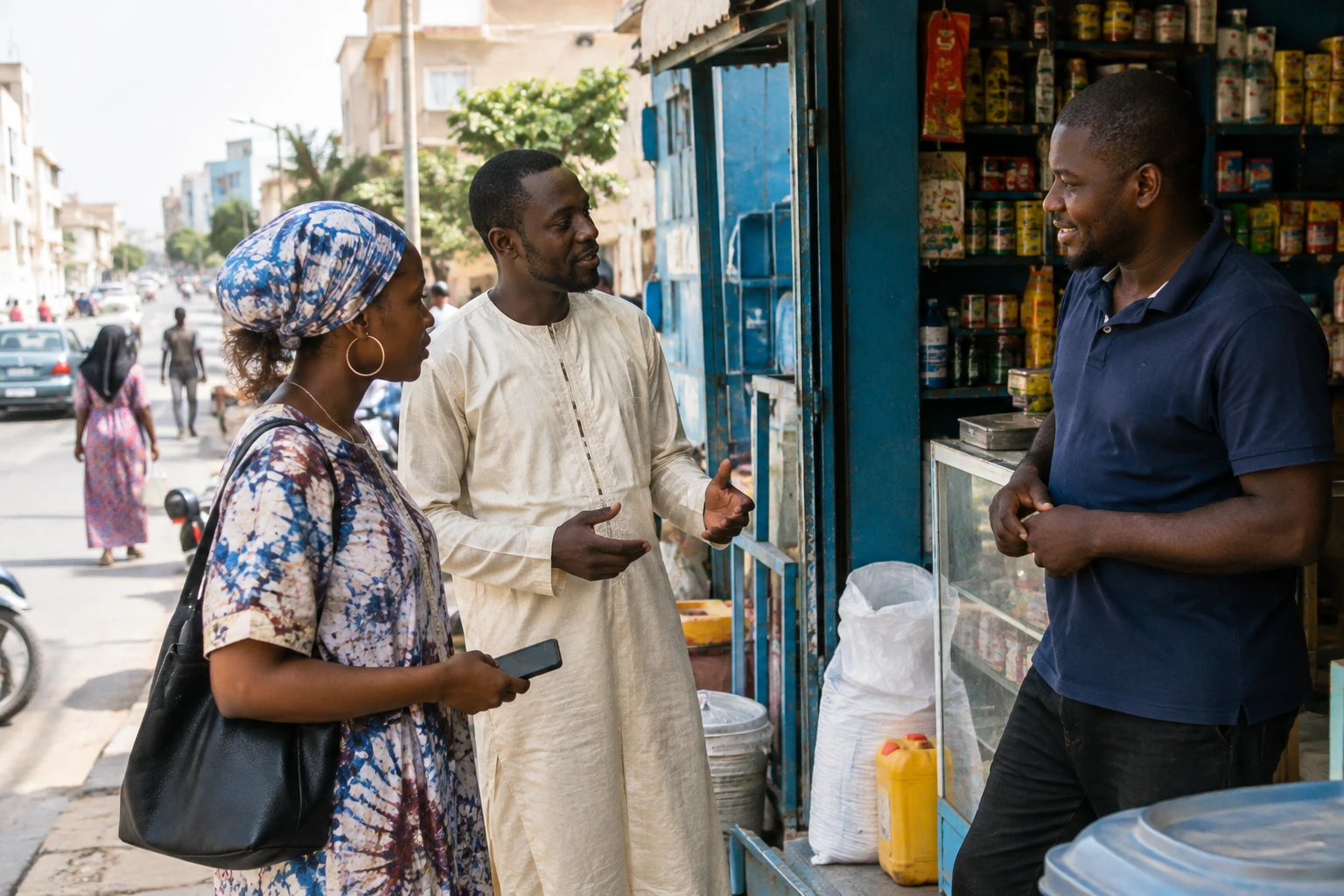
In Dakar, debates about immigration and neighbourhood commerce are also playing out on social media. When criticism targets an entire community rather than specific actions, it can quickly fuel exclusion. Three civic organisations have asked Senegal’s justice system to examine such speech.
A complaint to document online speech
The Naw-Lé Collective Against Racism, the No to Xenophobia initiative and the FRAPP movement announced that they had filed a complaint against persons unknown at the Dakar Regional Court on Wednesday 28 October 2026. A complaint against persons unknown targets individuals who have not yet been identified in the proceedings.
The organisations say they monitored posts from 25 accounts over three months, which they link to 18 people. They have gathered evidence of insults targeting communities and calls for violence. These allegations remain to be examined: the complaint is neither a judicial finding nor an accusation against specifically named individuals.
Thierno Sokha Ndiaye, head of Naw-Lé, describes the initiative as a Senegalese mobilisation against speech that, he says, dehumanises foreigners. Souleymane Guèye, a member of FRAPP, says the files submitted document calls for hatred and urges the public prosecutor to act. It is now for the prosecution service to assess the facts and decide what action to take.
The initiative follows a complaint filed on 28 August by the National Federation of Shopkeepers for Modernisation in Senegal. It targeted videos calling for a boycott of businesses run by Guineans. In that separate case, an influencer was remanded in custody, according to reports at the time. The two initiatives are part of the same climate, but their proceedings should not be conflated.
Local tensions, a regional issue
Neighbourhood shops play an important role in supplying the everyday needs of residents in Dakar and other cities. They connect suppliers, retailers and customers in an economy where formal and informal activities coexist. A boycott campaign targeting shopkeepers’ origins therefore risks turning a debate about prices, products or trading rules into collective suspicion of individuals.
Concerns about compliance with standards, competition or the regularity of business activities can be debated and checked. But national origin alone cannot establish a shopkeeper’s responsibility. This distinction matters for the targeted shops, their employees, their customers and the neighbourhoods where these businesses are part of daily life.
The issue extends beyond relations between Senegalese people and Guinean nationals. ECOWAS, the Economic Community of West African States, organises regional co-operation and the free movement of people and goods. Movement between neighbouring countries shapes trade, work and family ties. Remarks targeting a nationality can therefore reverberate beyond Senegal, even if their practical effects vary according to the places and people concerned.
Senegalese human rights organisations had already raised the alarm in 2024 over discriminatory speech in the media and online. This continuity invites us to view the phenomenon as an issue of social cohesion and public responsibility, without equating all Senegalese people with the remarks of a few internet users. Civil society, shopkeepers and the authorities have different roles to play in the response.
Justice, freedom of expression and responsibility
The complaint poses a concrete question for the judicial authorities: how should posts be classified when, depending on their content and context, they may constitute insult, incitement to hatred or other offences? Senegal’s Criminal Code includes provisions on discrimination and calls directed against groups. The investigation will have to establish the facts, who was responsible for them and their scope, while respecting the safeguards provided by law.
Freedom of expression protects criticism and debate, including when they are heated. But it does not make calls for violence innocuous. Conversely, combating hate speech does not remove the need to verify evidence and respect the rights of those accused. This requirement is particularly important online, where a post can circulate rapidly, be shared out of context or be wrongly attributed.
For residents, the immediate concern is also the safety of people and businesses, without fuelling reprisals or further stigmatisation. For the complainant organisations, the proceedings should enable an institutional response. For the prosecution service and investigators, they open the way to checks on the accounts, content and alleged responsibilities.
A case to watch across West Africa
Filing the complaint does not prejudge an investigation, possible prosecutions or a court ruling. The next step will depend on the prosecution service’s review of the case. It will be necessary, in particular, to distinguish between remarks that were actually published, the people who control the accounts and the offences that the evidence may support.
Across West Africa, the case is a reminder that regional free movement comes with a political challenge: preserving exchange and coexistence without denying disagreements over employment, trade or the application of rules. Senegalese institutions’ response will be watched across the region, but its impact will depend as much on the rigour of the proceedings as on the ability to avoid holding an entire community responsible for acts attributed to certain individuals.