Algeria
 Egypt
 Libya
 Morocco
 Sudan
 Tunisia
 Benin
 Burkina Faso
 Cabo Verde
 Côte d'Ivoire
 Ghana
 Guinea
 Guinea-Bissau
 Liberia
 Mali
 Mauritania
 Niger
 Nigeria
 Sierra Leone
 The Gambia
 Togo
 Cameroon
 Central African Republic
 Chad
 DR Congo
 Equatorial Guinea
 Gabon
 Republic of the Congo
 São Tomé and Príncipe
 Burundi
 Comoros
 Djibouti
 Eritrea
 Ethiopia
 Kenya
 Madagascar
 Malawi
 Mauritius
 Mozambique
 Rwanda
 Seychelles
 Somalia
 South Sudan
 Tanzania
 Uganda
 Angola
 Botswana
 Eswatini
 Lesotho
 Namibia
 South Africa
 Zambia
 Zimbabwe
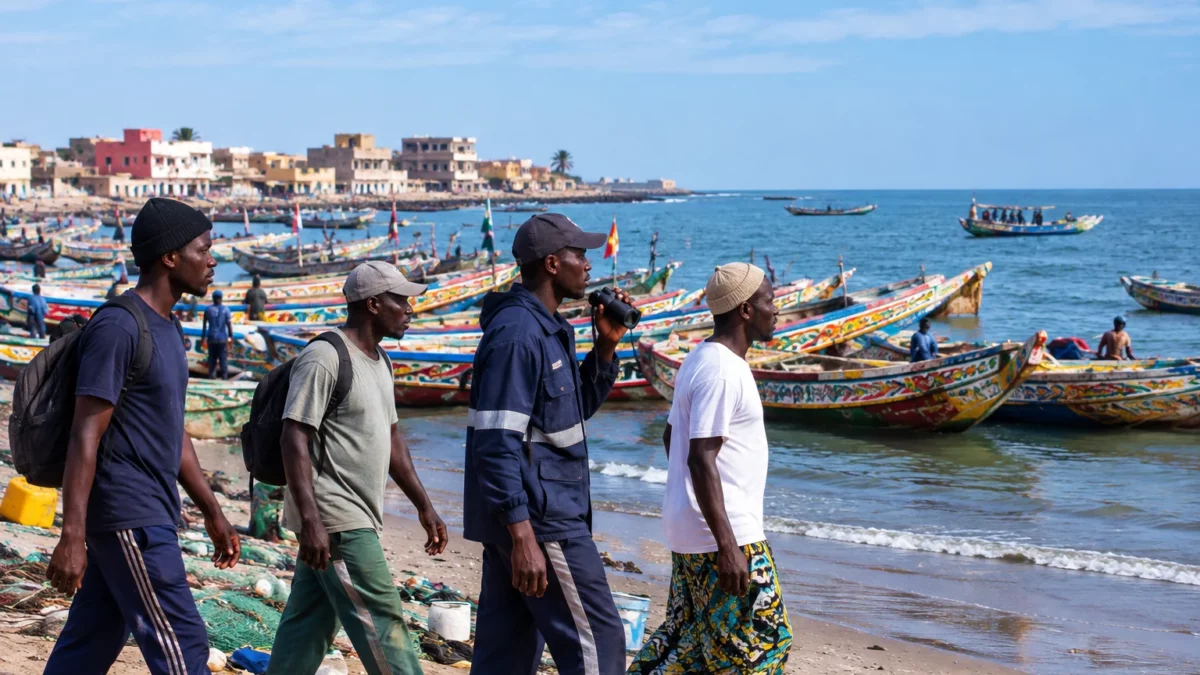
At Yenne, on the coast about 40 kilometres south of Dakar, search operations at sea quickly went beyond the initial toll reported after a pirogue capsized. Four bodies had been recovered by the morning of Thursday 19 November. Only one survivor had been identified at that point, while several passengers remained missing.
A toll that changes as searches continue
The vessel capsized during the night of 17 to 18 November off Yenne, after hitting rocks. Information gathered by Senegalese media reports a shipwreck in the Yen Todd area. A body was first reported on Sendou beach, where two more bodies were then found. The Yenne territorial brigade subsequently recovered a fourth body.
Initial figures differed: officials cited in the first reports spoke of one or two deaths. The toll of four bodies recovered, reported later by Seneweb, is an update. It does not mean that everyone on board has been located. Searches were continuing and an investigation had been opened. The authorities had not yet established the total number of passengers or identified all the victims.
According to a local elected official, the survivor questioned by gendarmes reportedly estimated that around 100 people were in the pirogue, including five women. This figure is a reported statement, not an official count. Identity documents, phones and personal belongings were found near the wreck. Their presence could help with identification, but does not by itself establish the number of people missing.
Another tragedy after the Lompoul shipwreck
The disaster comes amid a series of shipwrecks along the Senegalese coast. On 7 November, bodies were found near Lompoul, in the Kébémer department. The Senegalese Press Agency initially reported the discovery of around 20 bodies. On 10 November, it said the shipwreck had claimed 39 lives. This succession of tragedies has heightened concern in coastal communities, where residents may be waiting for news of relatives who went to sea.
Yenne is in the Dakar region, but departures for the Canary Islands form part of an Atlantic route that extends beyond Senegal’s borders. People from several West African countries take this route to the Spanish archipelago. The journey is long, exposed to sea conditions and often made in overcrowded vessels. The International Organization for Migration describes it as a dangerous route, where shipwrecks and disappearances are difficult to document fully.
Fishing is central to life in many coastal towns, including Yenne. The same maritime skills may be used to pilot pirogues, while smuggling networks organise some departures. But the precise circumstances of each journey must be established by the investigation. In this case, statements about the number of passengers and the crew’s roles remain to be verified.
Beyond enforcement, responses are needed
After the Lompoul shipwreck, Senegal’s minister for the family stressed the multidimensional nature of irregular migration. She cited local difficulties, including access to infrastructure and the marketing of agricultural produce, alongside sanctions against smugglers. This assessment is a reminder that a policy limited to arrests does not address all the reasons people leave.
President Bassirou Diomaye Faye asked the interior minister for a report on migration and possible responses, according to information published after the Yenne shipwreck. Senegalese authorities will therefore have to combine investigations into trafficking networks, efforts to prevent dangerous departures, and employment and training policies. For families, however, the immediate priority remains identifying the victims and searching for those who are missing.
The regional dimension also matters. ECOWAS, the Economic Community of West African States, brings together countries of origin, transit and departure. Cooperation between states can help tackle networks that shift their operations from one coastline to another. It does not replace national responsibilities for rescue, investigation and support for families. Engagement with Spain and the European Union also affects regular routes for mobility and border controls.
Facts still to confirm, families still waiting
In the short term, the next expected updates are a consolidated search toll, the identification of the four people recovered and the findings of the investigation. The number of passengers, their origins and the circumstances of their departure remain to be clarified. Until these checks are complete, local estimates should not be presented as a definitive toll.
The repeated shipwrecks are testing rescue services and coastal communities, as well as the authorities’ ability to combine an immediate response with lasting prevention. For Senegalese people, the issue is not simply about securing a maritime border: it is also about the chance to live, study and work without risking one’s life to cross the Atlantic.