
 Egypt
 Libya
 Morocco
 Sudan
 Tunisia
 Benin
 Burkina Faso
 Cabo Verde
 Côte d'Ivoire
 Ghana
 Guinea
 Guinea-Bissau
 Liberia
 Mali
 Mauritania
 Niger
 Nigeria
 Senegal
 Sierra Leone
 The Gambia
 Togo
 Cameroon
 Central African Republic
 Chad
 DR Congo
 Equatorial Guinea
 Gabon
 Republic of the Congo
 São Tomé and Príncipe
 Burundi
 Comoros
 Djibouti
 Eritrea
 Ethiopia
 Kenya
 Madagascar
 Malawi
 Mauritius
 Mozambique
 Rwanda
 Seychelles
 Somalia
 South Sudan
 Tanzania
 Uganda
 Angola
 Botswana
 Eswatini
 Lesotho
 Namibia
 South Africa
 Zambia
 Zimbabwe
A useful visit, but never entirely separate from Western Sahara
In Algiers, a working visit is never judged solely by the contracts signed or the statements issued. In the case of Algeria and Spain, another issue is always in the room: Western Sahara, a non-self-governing territory on the United Nations agenda since 1963 and still at the heart of an unresolved regional dispute.
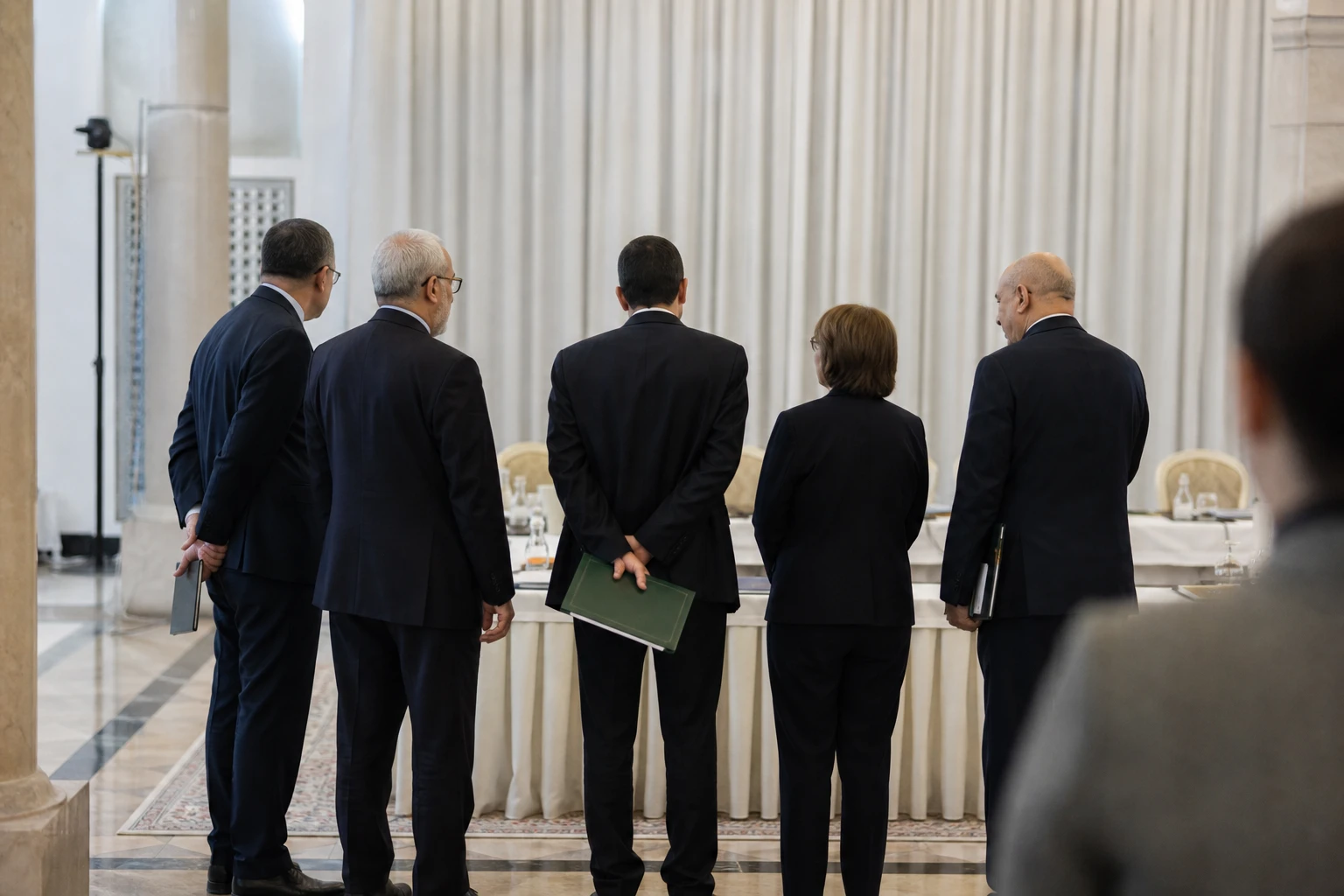
Pedro Sánchez’s visit to Algiers on Monday 20 July 2026 took place against this delicate backdrop. Spain is seeking to consolidate its economic rapprochement with Algeria, particularly on energy. Algiers, for its part, wants clear political signals without abandoning its position on the Sahrawi people’s right to self-determination. Between the two, diplomacy advances through adjustments, never by making the disagreement disappear.
This context extends beyond bilateral relations alone. In North Africa, the balance between Algiers, Rabat and Madrid influences energy flows, trade, European positions and, more broadly, the African view of unfinished decolonisation in Western Sahara. The issue is also closely followed by the African Union, where the Sahrawi question remains a sensitive political subject.
What Madrid has repaired, and what the substance of the dispute prevents it from erasing
The crisis that erupted in 2022 was triggered by Spain’s support for the Moroccan autonomy plan for Western Sahara. In Algiers, this shift was seen as an abandonment of the UN framework based on self-determination. Algeria’s response was swift: suspension of the treaty of friendship, a freeze on some trade and a lasting diplomatic chill.
The thaw is real, but remains cautious. In spring 2026, Spanish Foreign Minister José Manuel Albares had already travelled to Algiers to get relations back on track. Pedro Sánchez’s visit, in turn, gave this normalisation greater political weight. The two capitals also discussed a high-level meeting announced for October 2026, the first in eight years, signalling that both governments want to institutionalise the return to dialogue.
The factor that changes the equation most is energy. Algeria became Spain’s leading supplier of natural gas again in early 2026, after already holding that position in 2025, according to Madrid. The Medgaz gas pipeline, which links Beni Saf to Almería, remains the central axis of this mutual dependence. Spain needs a stable supply. Algeria, for its part, has political leverage that the 2022 crisis temporarily blurred, but never removed.
The figures recall the scale of the shock. In 2022, the diplomatic rupture weighed heavily on bilateral trade. Spanish exports to Algeria fell after relations were frozen, before entering a period of gradual recovery. The repair, however, has not erased the underlying dispute. It has simply pushed it behind the economic and energy imperative.
For Algiers, the issue is political before it is commercial. The Algerian government continues to advocate a settlement in line with the United Nations, within a framework in which MINURSO, the UN mission deployed since 1991, is supposed to support a process to end the crisis that has never come to fruition. For Madrid, the challenge is to preserve access to Algerian gas and its Mediterranean relationship while maintaining its alignment with Rabat on the Moroccan autonomy plan.
A Sahrawi question that also returns through law, memory and geopolitics
The issue is not limited to diplomacy and energy. At the start of the Spanish parliamentary session, a bill is still due to be examined that would make it easier to grant Spanish nationality to people born in Western Sahara during the colonial period, subject to certain conditions regarding dates and proof. The debate is technical, but its implications are political. It touches on Spain’s colonial memory, recognition of the Sahrawis and the legal interpretation of the 1976 withdrawal.
The territory itself remains at the centre of a long-standing dispute. Western Sahara, in the north-west of the African continent and bordered by Morocco, Algeria, Mauritania and the Atlantic, covers about 266,000 km². The United Nations still classifies it as a non-self-governing territory. This weighty designation is a reminder that this is not a simple border dispute, but an unresolved decolonisation issue.
Against this backdrop, Pedro Sánchez’s visit to Algiers has significance beyond the official photograph. It shows that relations can be normalised without the main disagreement disappearing. It also shows that Algeria retains, in relation to Spain as well as Morocco, an ability to exert influence underpinned by its weight as a gas producer, its regional position and its consistent reading of the Sahrawi issue.
What happens next will depend on several milestones. The autumn will show whether the announced high-level meeting between Spain and Algeria takes place as planned. Over the longer term, the next shift may come from the UN, a Spanish parliamentary debate or a new adjustment between Madrid, Algiers and Rabat. In North Africa, this is often how balances shift: through small decisions, but with major consequences.



