Egypt
 Libya
 Morocco
 Sudan
 Tunisia
 Benin
 Burkina Faso
 Cabo Verde
 Côte d'Ivoire
 Ghana
 Guinea
 Guinea-Bissau
 Liberia
 Mali
 Mauritania
 Niger
 Nigeria
 Senegal
 Sierra Leone
 The Gambia
 Togo
 Cameroon
 Central African Republic
 Chad
 DR Congo
 Equatorial Guinea
 Gabon
 Republic of the Congo
 São Tomé and Príncipe
 Burundi
 Comoros
 Djibouti
 Eritrea
 Ethiopia
 Kenya
 Madagascar
 Malawi
 Mauritius
 Mozambique
 Rwanda
 Seychelles
 Somalia
 South Sudan
 Tanzania
 Uganda
 Angola
 Botswana
 Eswatini
 Lesotho
 Namibia
 South Africa
 Zambia
 Zimbabwe
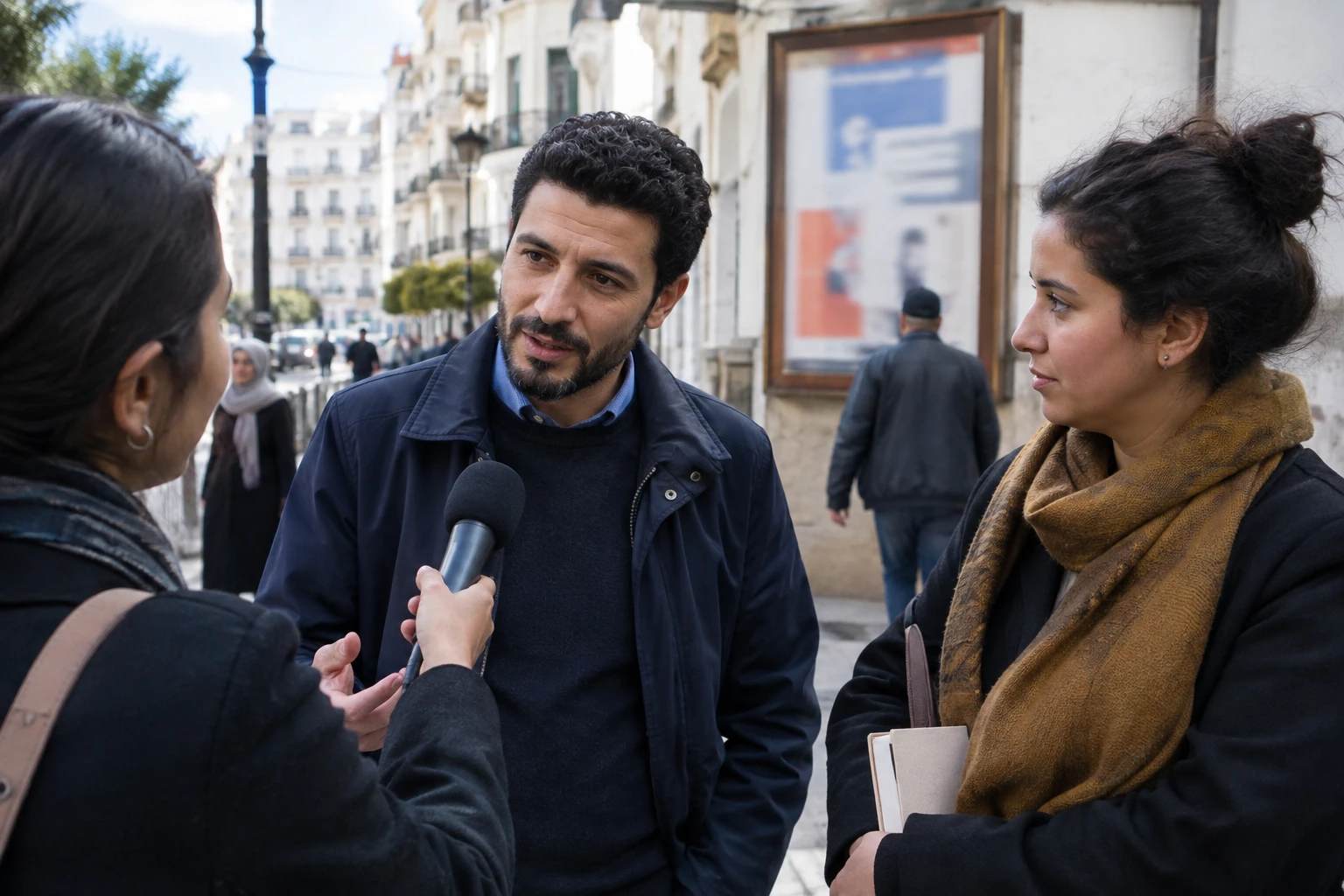
Writing in French from Algeria while being read far beyond its borders: Yasmina Khadra’s career highlights a reality that is often oversimplified. A writer’s language sums up neither their identity nor their relationship with their country. It also becomes a space for creativity, memory and dialogue with distant readers.
A journey between the army, writing and exile
Yasmina Khadra is the pen name of Mohammed Moulessehoul, an Algerian writer born in 1955 in Kenadsa. Before making a living from writing, he was an officer in the Algerian army. This experience informs part of his work, without defining all its boundaries.
His life has taken him across several places. Born in Algeria, he lived in France for many years after leaving the army and his country around the turn of the 2000s. His novels are first published in French and then circulate in many languages. His publisher Hachette says that most have been translated into more than 40 languages. Other bibliographical records refer to distribution in around 50 countries: these figures describe different realities and should not be confused.
The pen name, formed from his wife’s first names, also has a distinctive history. The author has explained that he published under this identity while serving in the army. This choice has often been linked to creative freedom in a context where his military role could complicate the publication of literary works.
The French language as a tool, not a boundary
The place of French in Algerian literature remains tied to a complex history. Colonisation imposed the language in institutions and administration. After independence, Arabic was at the heart of a policy of linguistic reclamation. Today, Algerian writers create in several languages, including Arabic, French and Tamazight.
In this landscape, writing in French does not mean keeping one’s distance from Algeria. For Khadra, the language is a means of building stories that draw on his experience and also address an international readership. The debate is therefore less about an opposition between national loyalty and the language of writing than about an author’s ability to bring Algerian stories to audiences in several cultural spheres.
This circulation brings visibility, but it also carries a risk: reducing a body of work to its role as a spokesperson for a country or region. Khadra’s novels explore societies shaped by political violence, conflicts and social divisions. They are not, however, an exhaustive account of Algeria or the Arab world. Fiction brings characters and dilemmas into view; it does not replace investigation or the diversity of local voices.
Algerian stories read beyond the country
Books such as What the Day Owes the Night and The Swallows of Kabul have helped establish his name among foreign readers. Several of his works have also been adapted for cinema, theatre or graphic novels, extending their circulation beyond books.
This international visibility is measured not only in translations or adaptations. It brings stories by an Algerian author to bookshops, festivals and universities in many countries. For diaspora readers, it can also create a point of connection with stories linked to Algeria, without implying that all Algerian experiences are alike.
But an author’s recognition should not obscure the wider conditions for creative work. Literary vitality also depends on publishing houses, bookshops, libraries, prizes and the ability to publish in the languages authors choose. International success provides a showcase; on its own, it does not address the challenges of access to books and editorial diversity in Algeria.
Resonance beyond Algeria’s borders
Khadra’s career is part of a Maghreb region where languages and cultural exchanges cross national borders. The Arab Maghreb Union, which brings together Algeria, Libya, Morocco, Mauritania and Tunisia, is the relevant regional framework. Its institutional activity is limited, however: Algeria’s foreign ministry says the most recent session of the Council of Foreign Ministers took place in May 2016.
Literature can cross borders even when regional political co-operation makes little progress. Translations and adaptations connect readers in the Maghreb, Africa and elsewhere. They do not replace institutional exchanges, but they are a reminder that ties between societies are also built through works, debates and shared memories.
On 8 October 2026, the material provided presents Yasmina Khadra as a guest on a France 24 programme. Available biographical and publishing information confirms his career as a former Algerian officer and the international circulation of his novels. However, no verifiable details about his remarks on the programme are established here, so it would be unwise to attribute a specific statement to him.
At the heart of his career is the possibility of conveying an Algerian experience in a widely spoken language without conflating it with a single identity. Across the Maghreb and the diaspora, this circulation is a reminder that contemporary creativity is shaped as much by local ties as by international exchanges.