
 Egypt
 Libya
 Morocco
 Sudan
 Tunisia
 Benin
 Burkina Faso
 Cabo Verde
 Côte d'Ivoire
 Ghana
 Guinea
 Guinea-Bissau
 Liberia
 Mali
 Mauritania
 Niger
 Nigeria
 Senegal
 Sierra Leone
 The Gambia
 Togo
 Cameroon
 Central African Republic
 Chad
 DR Congo
 Equatorial Guinea
 Gabon
 Republic of the Congo
 São Tomé and Príncipe
 Burundi
 Comoros
 Djibouti
 Eritrea
 Ethiopia
 Kenya
 Madagascar
 Malawi
 Mauritius
 Mozambique
 Rwanda
 Seychelles
 Somalia
 South Sudan
 Tanzania
 Uganda
 Angola
 Botswana
 Eswatini
 Lesotho
 Namibia
 South Africa
 Zambia
 Zimbabwe
An industrial bet in an already mature market
In Algeria, the smartphone is no longer a luxury product reserved for a small urban minority. It is an everyday object, at the intersection of work, payments, family exchanges and access to information. In this context, opening an assembly plant in Oran is more than a commercial event. It is an industrial signal. Available data also show that the country is already highly connected, with 77% of people using the internet in 2024, according to the World Bank, and widespread use of mobile services.
The Es Sénia site in Oran is also part of a broader trend. For several years, Algeria has been seeking to develop local supply chains in electronics and reduce its dependence on finished imports. In a domestic market estimated at several million units a year, the question is not simply how to sell more. It is where value is created, who it employs and which components can genuinely be produced in the country.
What the opening of the Oran plant means
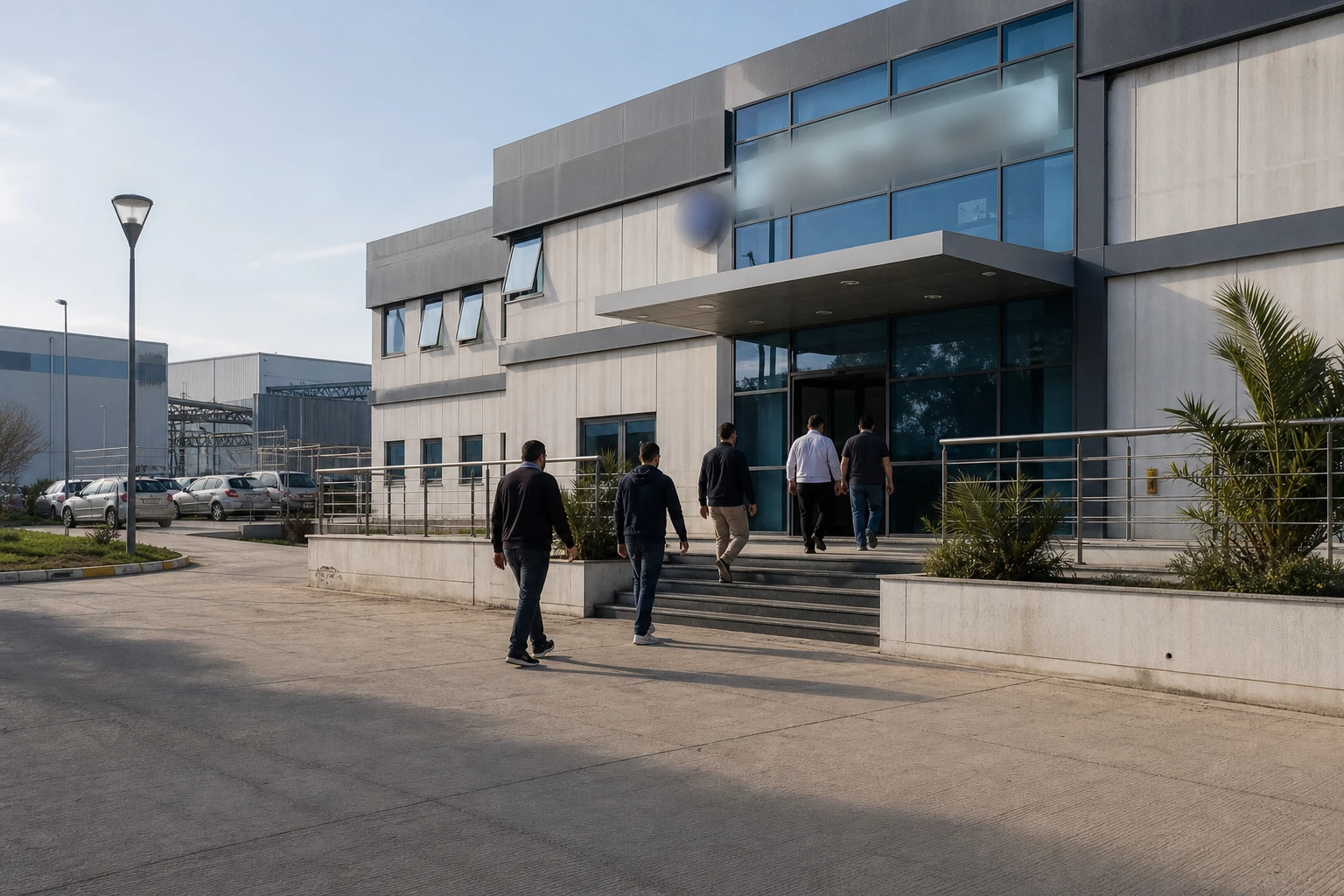
On 20 August 2026, Chinese manufacturer Vivo launched an assembly plant in Algeria with its local partner Smart Technologie Innovation, known by the acronym STI. The factory is located in Oran and covers 7,000 sq m. It is starting with a production capacity of about 2,000 smartphones a day. The announced ramp-up is expected eventually to take that figure to around 6,000 phones a day.
Employment is following the same gradual pattern. According to information reported by the APS and other Algerian media, the site has nearly 200 workers at launch. The stated aim is to reach 600 direct jobs, with more than 1,200 indirect jobs potentially added. Such projections should be treated with caution, as they depend on the actual pace of production, subcontracting and local sourcing. But the direction is clear: the plant does not want to remain a simple assembly workshop.
The partnership also provides for a gradual increase in the level of local integration. In other words, components that can be made in Algeria are to be produced increasingly on site. This is a key point. In the electronics industry, the difference between assembly and manufacturing changes everything. It determines the share of wages, industrial purchases, skills transfer and resilience to supply disruptions. Internationally, Vivo describes itself as a group specialising in smartphones, accessories and related services.
Why Oran, and what this means for the Algerian economy
The choice of Oran is no accident. The wilaya has a denser industrial base than the national average, useful logistical access to the west of the country and a subcontracting environment that is still developing but making progress. In an economy where the cost of electronic imports has long weighed on trade balances, every local production line counts. It reduces, at least in part, pressure on foreign currency and keeps some of the added value within the country.
For Algerian consumers, there are two issues. First, availability. A local site can shorten lead times and stabilise some supplies. Second, price. In time, producing part of the supply chain locally could limit some additional costs linked to transport, import margins and customs clearance delays. But none of this is automatic. If the components’ value remains imported, the effect on the final price may be limited. The industrial promise will therefore depend on the actual level of integration.
For the Algerian state, the project goes beyond phones. It concerns industrial policy, employment for young graduates, skills development for qualified workers and the country’s ability to retain more technology on its soil. Algeria is not starting from scratch. The country already has public and private players in electronics and telecoms, as well as a domestic market large enough to test local industrial models. The real question is whether the initiative can be sustained. An assembly plant can launch an industry. It can only consolidate it if suppliers follow.
A significance that extends beyond Algeria’s borders
The opening also speaks to the rest of the continent. In several African countries, demand for smartphones is growing faster than local industry is taking shape. The challenge is therefore continental: to manufacture more in Africa, for an African market, rather than depending almost entirely on imports from Asia. Algeria, with its demographic and industrial weight in North Africa, is seeking to position itself as a regional production base, even if Maghreb integration remains less advanced than in other African blocs.
The issue also resonates at the level of the African Union and the AfCFTA, the African Continental Free Trade Area, which aims to facilitate intra-African trade. For an industrial group such as Vivo, producing locally in Algeria could pave the way for stronger access to neighbouring markets. For Algeria, the challenge is to avoid a showcase effect. The country must turn the announcement into a sustainable value chain, with suppliers, maintenance, training and export opportunities. Only then will the Oran plant amount to more than a symbol.
The coming months will be decisive. The actual delivery of the announced volumes, the real share of components produced locally and the site’s ability to meet its employment promises will all need to be watched. In a country where demand for digital services remains strong, this project will reveal much about Algeria’s industrial strategy: producing locally, yes, but also moving upmarket rather than stopping at final assembly.



