Algeria
 Egypt
 Libya
 Morocco
 Sudan
 Tunisia
 Benin
 Burkina Faso
 Cabo Verde
 Côte d'Ivoire
 Ghana
 Guinea
 Guinea-Bissau
 Liberia
 Mali
 Mauritania
 Niger
 Nigeria
 Senegal
 Sierra Leone
 The Gambia
 Togo
 Cameroon
 Central African Republic
 Chad
 DR Congo
 Equatorial Guinea
 Gabon
 Republic of the Congo
 São Tomé and Príncipe
 Burundi
 Comoros
 Djibouti
 Eritrea
 Ethiopia
 Kenya
 Madagascar
 Malawi
 Mauritius
 Mozambique
 Rwanda
 Seychelles
 Somalia
 South Sudan
 Tanzania
 Angola
 Botswana
 Eswatini
 Lesotho
 Namibia
 South Africa
 Zambia
 Zimbabwe
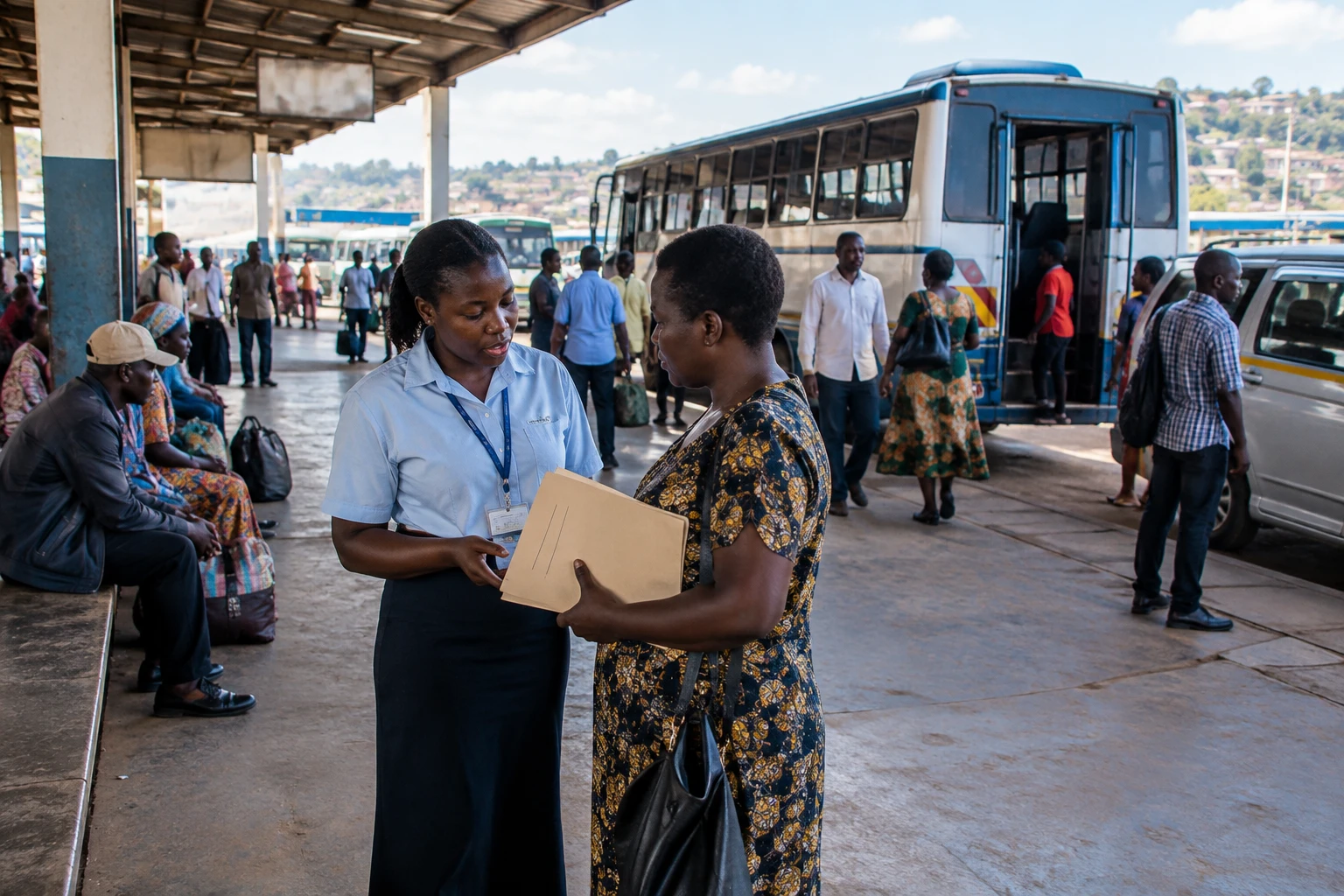
In Mbarara, western Uganda, a form of prevention requiring just two injections a year is attracting considerable interest. But innovation protects no one while it remains difficult to obtain. The issue therefore goes beyond the choice of medicine: it also concerns the continuity of community-based care and the country’s ability to meet the needs of those most exposed to risk.
A new option in Uganda’s prevention efforts
Lenacapavir is an injectable medicine used for pre-exposure prophylaxis, or PrEP: preventive treatment for people who are HIV-negative and at risk of contracting HIV. Administered twice a year, it complements daily pills and cabotegravir, another injectable PrEP whose doses are given two months apart.
Since July 2025, the World Health Organization has recommended offering lenacapavir as an additional option within a combination prevention approach. Clinical trials have shown very high efficacy. However, the medicine does not replace testing or other prevention methods. An HIV test is still required before starting or continuing injectable PrEP. The WHO’s recommendations on lenacapavir also stress the importance of expanding the choices available to people.
Uganda launched its nationwide roll-out on 17 April 2026, after receiving an initial batch of 19,200 doses in February, according to information from the Ministry of Health and the national press. Initial distribution is targeting priority areas and selected facilities. A national launch therefore does not mean the medicine is available everywhere, or in sufficient quantities. Uganda’s Ministry of Health presented the roll-out as an additional prevention option.
In Mbarara, access remains decisive
In this city in the western region, the few available doses are being shared among several districts. People seeking lenacapavir are sometimes offered cabotegravir or oral PrEP instead, depending on stocks and the services available. The real choice therefore depends as much on individual preferences as on supplies at health centres.
For sex workers supported by the organisation Action for Improved Health and Wealth, the longer interval between injections can make prevention easier. It removes the need to take a pill every day, a constraint sometimes associated with stigma or the difficulty of keeping treatment discreet. Activist Immaculate Nyamwija describes a six-month respite between doses. Lisa Mutoni, a Rwandan sex worker living in Uganda, says she has sometimes looked for the medicine without finding it. These accounts describe individual experiences, not a comprehensive measure of national availability.
Shortages are not the only obstacle. Immaculate Nyamwija says funding cuts have also reduced outreach activities: testing, information and the distribution of prevention methods in communities. When these services shrink, people who live far from health centres risk seeking care late. This can delay diagnosis and access to treatment.
The issue is particularly visible in the Mbarara region. Data cited by local authorities put HIV prevalence in the city at around 10%, above the national average. The figures vary according to the year, area and age group considered. Preliminary results from Uganda’s 2025 national survey put prevalence at 5.9% among adults aged 15 and over. They also estimate that around 1.5 million people are living with HIV in the country. The preliminary results of the national survey provide a more recent benchmark than earlier estimates.
An innovation that also depends on local services
For patients, consistent availability matters as much as a medicine’s efficacy. Health teams must be able to provide follow-up, check HIV status and arrange for people to return for subsequent doses. Residents of less well-served areas, people facing stigma and those with irregular incomes may encounter different obstacles. A policy focused solely on injections would leave these disparities in access unaddressed.
HIV prevention in Uganda relies on a range of services: testing, condoms, oral or injectable PrEP, treatment for people living with the virus and community support. Lenacapavir can broaden this range, but it cannot make up for the loss of outreach activities. UNAIDS had already reported disruptions in prevention services for key populations in 2025 following US funding cuts. Its analysis of Uganda’s response highlights the importance of community services, particularly for sex workers and other groups at risk.
Pressure on stocks is also part of a broader international trend. In April 2026, the Global Fund and the United States announced plans to expand their initiative to reach up to three million people by the end of 2028. On 24 September, the Global Fund said that more than 118,000 people had received the medicine through national programmes by mid-September. These figures cover all the countries involved, not Uganda alone. The Global Fund expects generic supplies to increase, with an initial offer expected in late 2026 and wider availability planned for 2027, subject in particular to national approvals.
A regional and pan-African issue
Uganda’s experience is part of HIV prevention efforts in East Africa, where countries must adapt access to services to diverse local realities. The Intergovernmental Authority on Development (IGAD) and the East African Community (EAC) shape some regional co-operation, but medicine distribution and the organisation of care are primarily the responsibility of national systems. For Uganda, the immediate challenge is to link facilities in Kampala with the districts, without leaving rural areas or stigmatised populations behind.
What happens next will depend on three practical factors: regular deliveries, expanding the number of sites able to provide the injection, and maintaining testing and community outreach. The arrival of generics could broaden supply from 2027, but it will not in itself guarantee equitable distribution. In Mbarara, as elsewhere, the success of this new form of prevention will ultimately be measured by whether those who choose it can receive it on time and continue their follow-up care.