Algeria
 Egypt
 Libya
 Morocco
 Sudan
 Tunisia
 Benin
 Burkina Faso
 Cabo Verde
 Côte d'Ivoire
 Ghana
 Guinea
 Guinea-Bissau
 Liberia
 Mali
 Mauritania
 Niger
 Nigeria
 Senegal
 Sierra Leone
 The Gambia
 Togo
 Cameroon
 Central African Republic
 Chad
 DR Congo
 Equatorial Guinea
 Gabon
 Republic of the Congo
 São Tomé and Príncipe
 Burundi
 Comoros
 Djibouti
 Eritrea
 Ethiopia
 Madagascar
 Malawi
 Mauritius
 Mozambique
 Rwanda
 Seychelles
 Somalia
 South Sudan
 Tanzania
 Uganda
 Angola
 Botswana
 Eswatini
 Lesotho
 Namibia
 South Africa
 Zambia
 Zimbabwe
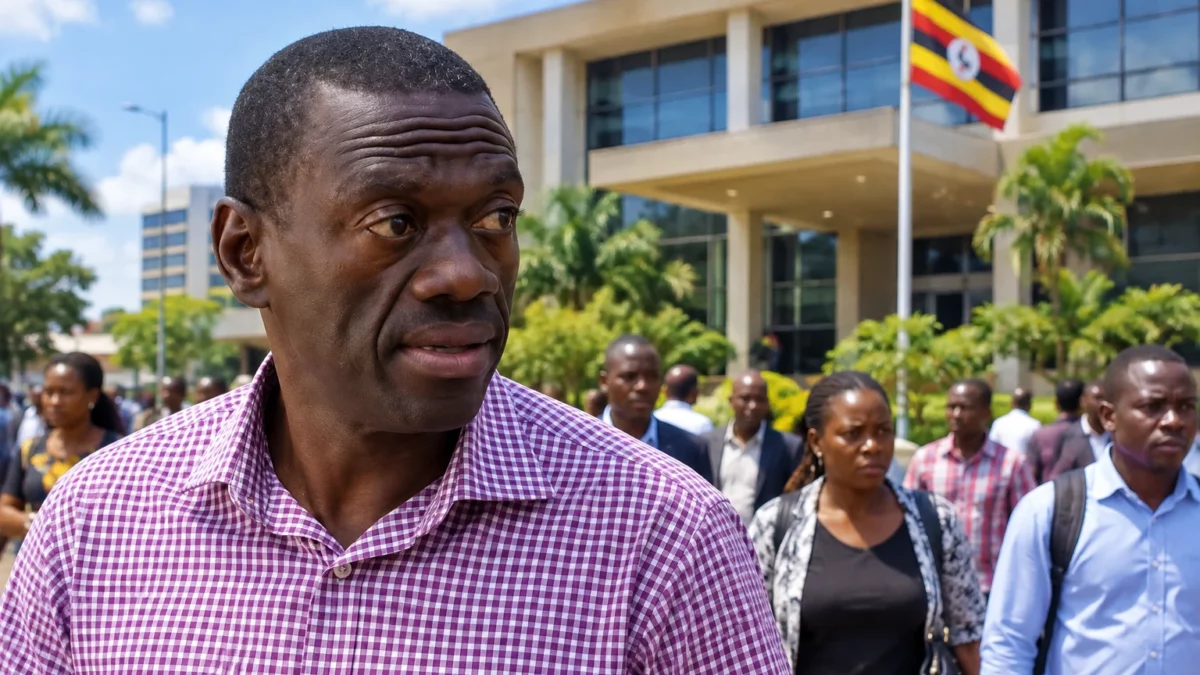
Kizza Besigye’s health has become an immediate issue in his trial: his family is calling for his release so that he can undergo tests and receive specialist care. Two years after his arrest in Nairobi, the case now involves a treason charge, challenges to his conditions of detention and a political dialogue initiative whose mandate remains disputed.
An arrest in Kenya, a trial in Uganda
On 16 November 2024, Kizza Besigye was in Nairobi for the launch of a book. He was subsequently transferred to Uganda and brought before a military court. His associates have questioned the Kenyan and Ugandan authorities about the circumstances of the transfer. In Uganda, the trial is now being heard by the civilian courts. The allegations made by the prosecution — including a plot to overthrow the government — remain to be established before the court.
The legal proceedings have also been marked by an institutional debate. On 31 January 2025, Uganda’s Supreme Court ruled that the trial of civilians in military courts was unconstitutional and ordered the transfer of the cases concerned to civilian courts. The government subsequently amended the law governing the armed forces. This sequence has led rights advocates and Besigye’s lawyers to challenge the scope of the reform and the safeguards available to defendants. Human Rights Watch reviews the Supreme Court ruling and its aftermath.
Health at the centre of the defence’s demands
According to his wife, Winnie Byanyima, Besigye has struggled to walk, speak and use his hands since becoming unwell during a hearing in July 2026. She says the necessary specialist examinations have not yet been carried out. These details have been reported by his family and do not, in themselves, constitute a publicly available independent medical diagnosis.
Byanyima is calling for his release so that he can receive care at a facility chosen by his relatives. She describes military surveillance around his hospital room and says his personal doctor cannot remain with him continuously or control the equipment available. These sensitive claims are attributed to her. The authorities have not been cited here in response to each of them.
The issue is not solely medical. If Besigye’s condition limits his ability to speak or write, as indicated in a psychiatric report provided to the press by his lawyer, it could affect his participation in his defence. The document cited recommends, among other things, a specialist assessment. It is for the court to evaluate the medical evidence and its implications for the proceedings.
The defence says several applications for release on bail have been rejected and that a new application is awaiting a hearing date. Lawyer Eron Kiiza describes the proceedings as “political persecution disguised as a trial”; this is his assessment, not a judicial finding. The next hearing was scheduled for 25 November. The date should provide an opportunity to track both the case timetable and Besigye’s ability to appear in court and communicate with his lawyers.
Political dialogue between openness and mistrust
The controversy extends to talks proposed by General Salim Saleh, the half-brother of President Yoweri Museveni. Winnie Byanyima says she does not know whether the initiative has an official government mandate. She disputes the legitimacy of talks being held while her husband and other political leaders are detained. Eron Kiiza, for his part, says the family is not taking part in any negotiations over Besigye’s release.
The talks have not been reported solely by his associates. In October 2026, party officials meeting in Jinja discussed talks linked to Besigye and proposals for power-sharing, according to the Ugandan daily New Vision. This confirms that an initiative is being debated in political circles, but does not establish its mandate or whether those detained have agreed to take part.
In a video broadcast on 15 November, Byanyima set out the conditions she considers necessary for credible dialogue: a neutral venue, a facilitator accepted by the parties and the freedom of all leaders concerned to participate. She says she is not speaking on behalf of a political party. Her demand puts a practical question at the forefront: can negotiations represent the opposition if its leaders are detained, in exile or prevented from participating by their health?
A Ugandan issue with implications beyond Kampala
In Uganda, the case touches on relations between the executive, the judiciary, the military and the opposition. It also concerns families and legal teams, who must be able to access a detainee and prepare his defence. For the authorities, the trial concerns a serious charge; for the defence, the conditions of detention and participation in the trial are inseparable from its fairness. Neither position relieves the court of its duty to examine the evidence in accordance with the law.
The regional dimension is tangible: the arrest took place in Kenya, another member of the East African Community, a political and economic integration organisation. The circumstances of a transfer between two states may raise questions about judicial co-operation and the protection of rights. The case is also fuelling a continental debate about the role of military courts, respect for judicial decisions and the conditions for genuinely inclusive political dialogue.
In the short term, three milestones will matter: the hearing scheduled for 25 November, effective access to medical examinations and the status of the discussions associated with Salim Saleh. They will help show whether the case is proceeding as an ordinary judicial process or whether health concerns and political mistrust continue to shape its pace.