Algeria
 Egypt
 Libya
 Morocco
 Sudan
 Tunisia
 Benin
 Burkina Faso
 Cabo Verde
 Côte d'Ivoire
 Ghana
 Guinea
 Guinea-Bissau
 Liberia
 Mali
 Mauritania
 Niger
 Nigeria
 Senegal
 Sierra Leone
 The Gambia
 Togo
 Cameroon
 Central African Republic
 Chad
 DR Congo
 Equatorial Guinea
 Gabon
 Republic of the Congo
 São Tomé and Príncipe
 Burundi
 Comoros
 Djibouti
 Eritrea
 Ethiopia
 Kenya
 Madagascar
 Malawi
 Mauritius
 Mozambique
 Rwanda
 Seychelles
 Somalia
 South Sudan
 Tanzania
 Angola
 Botswana
 Eswatini
 Lesotho
 Namibia
 South Africa
 Zambia
 Zimbabwe
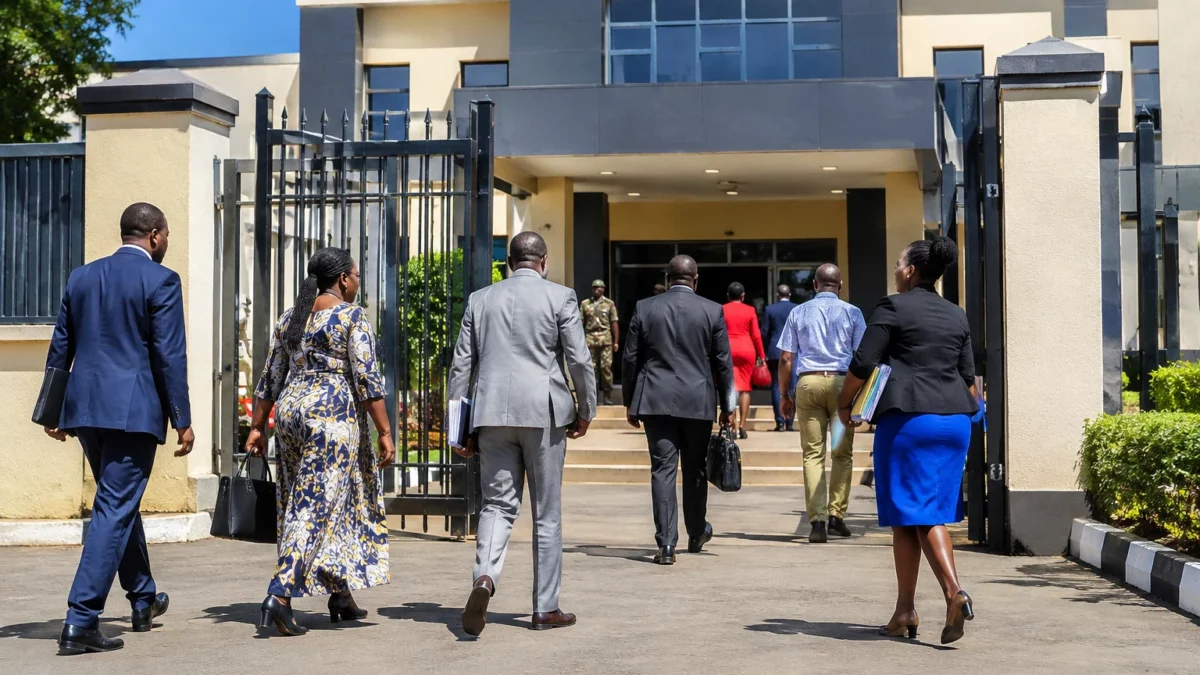
In Kampala, an opposition figure’s appearance after 15 months without news has shifted the debate: beyond the charges, the authorities must now explain where he was and under whose authority he was detained. Sam Mugumya, a former aide to Kizza Besigye, appeared before a military court on 18 November 2026.
A detention case becomes a question of justice
The activist disappeared on 26 August 2025 in Mbarara, in western Uganda. His family and associates said armed men had taken him away. The army denied holding him, according to reports at the time.
In September 2025, an application for habeas corpus was brought before the High Court in Kampala, a procedure that allows a judge to examine the legality of a detention. In its ruling, the judge noted that Mugumya’s whereabouts remained unknown and asked the authorities to investigate. Amnesty International reports that the army had publicly denied holding him.
On 18 November, Mugumya appeared alongside two soldiers before the General Court Martial in Makindye, the capital. He is charged with treason and security-related offences. According to the army, the group allegedly held meetings in several regions and sought to coordinate activities with the Allied Democratic Forces (ADF), an Ugandan armed movement active in the east of the Democratic Republic of the Congo. Mugumya and his co-defendants pleaded not guilty, Reuters reports.
His defence team and Ugandan media reported that he had difficulty walking and needed help to enter the courtroom. These details alone do not establish the cause of his condition or the circumstances of his detention. They do, however, make the possibility of an independent medical examination and regular access to his family and lawyers all the more important.
The military court at the centre of the dispute
The venue for the trial raises a legal question distinct from the charges. In January 2025, Uganda’s Supreme Court ruled that the trials of civilians in military courts were unconstitutional and ordered that such cases be transferred to civilian courts. In June, President Yoweri Museveni signed an amendment to the Defence Forces Act, once again authorising certain trials of civilians before a military court.
Amnesty International considers that the law relies on vague provisions. The choice of court in the Mugumya case is therefore part of a national debate over the jurisdiction of military courts, fair-trial safeguards and the scope of Supreme Court rulings. The issue is not to prejudge the merits of the case, but to determine whether the proceedings comply with the rules that protect every accused person.
The contrast is also institutional: for months, his family and associates sought to establish his fate, while the High Court called for his situation to be clarified. His appearance confirms that he is in detention, but does not resolve the questions raised by the period when his whereabouts were not publicly known. The authorities must now clarify the timeline and legal basis for his custody.
A precedent that goes beyond Mugumya’s case
The case comes amid concern among human rights organisations over the disappearance and contested detention of opposition figures. Amnesty has also documented the case of Eddie Mutwe, an associate of opposition leader Robert Kyagulanyi, who was held incommunicado in 2025 before being brought before a court. The cases are distinct, but raise the same practical question: how can it be guaranteed that an arrested person is quickly located, can contact a lawyer and is brought before a competent court?
For families, uncertainty directly affects their ability to visit a relative and check on their condition. For lawyers and civic organisations, it makes judicial oversight more difficult. And for the authorities, conducting proceedings openly and in a verifiable manner has become a matter of trust in institutions.
Uganda is a member of the East African Community (EAC), which brings together several countries in the region for political and economic cooperation. The Mugumya case is not, in itself, a regional case. But it resonates in East Africa, where governments regularly invoke national security in response to armed groups, while courts and civic organisations emphasise the safeguards owed to detainees.
The next step will be the continuation of the military proceedings and the publication of verifiable information about Mugumya’s detention since August 2025. The court will have to examine the disputed charges. At the same time, the legality of his appearance before a court martial remains an open question and could reignite debate over the limits set by Uganda’s judiciary.