Algeria
 Egypt
 Libya
 Morocco
 Sudan
 Tunisia
 Benin
 Burkina Faso
 Cabo Verde
 Côte d'Ivoire
 Ghana
 Guinea
 Guinea-Bissau
 Liberia
 Mali
 Mauritania
 Niger
 Nigeria
 Senegal
 Sierra Leone
 The Gambia
 Togo
 Cameroon
 Central African Republic
 Chad
 DR Congo
 Equatorial Guinea
 Gabon
 Republic of the Congo
 São Tomé and Príncipe
 Burundi
 Comoros
 Djibouti
 Eritrea
 Ethiopia
 Kenya
 Madagascar
 Malawi
 Mauritius
 Mozambique
 Rwanda
 Seychelles
 Somalia
 South Sudan
 Tanzania
 Angola
 Botswana
 Eswatini
 Lesotho
 Namibia
 South Africa
 Zambia
 Zimbabwe
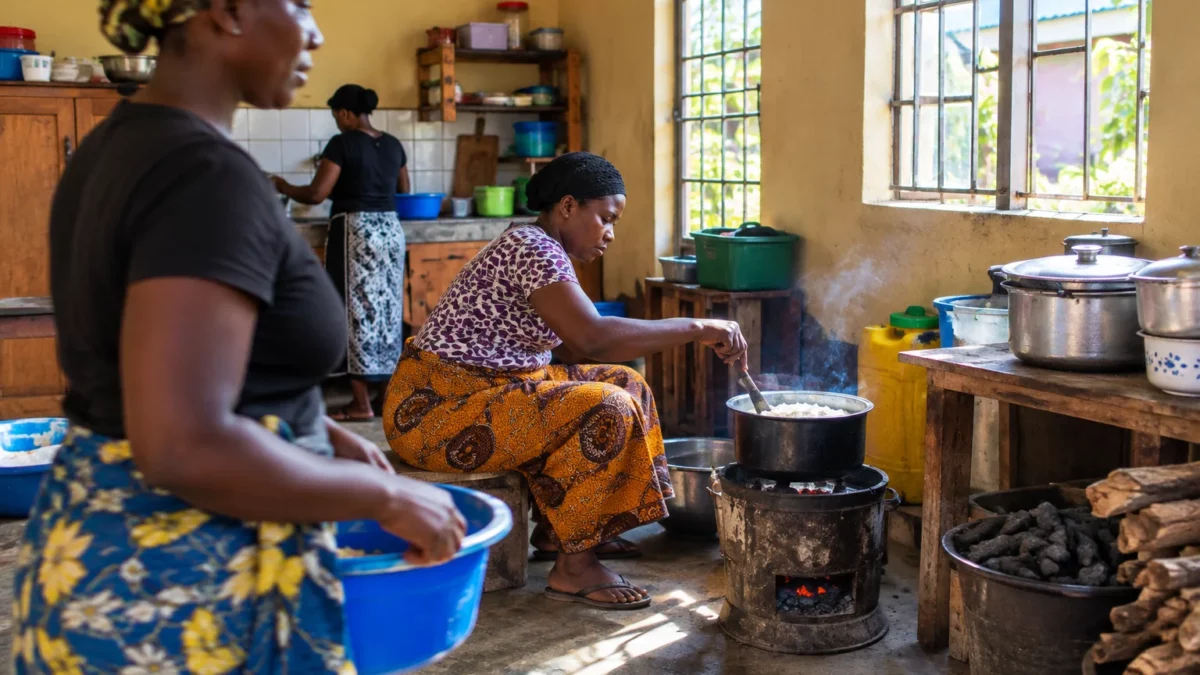
In Kampala and rural areas alike, cooking still depends heavily on wood and charcoal. Uganda wants to turn organic waste into a source of energy, but the challenge will be making these solutions accessible, reliable and affordable for households.
National plan still under review
Uganda’s Ministry of Energy and Mineral Development has presented a draft national strategy on biodigesters. According to information released about the proposal, ministry officials reviewed it on 17 November 2026. The document was then due to be submitted for approval ahead of a launch announced for 24 November.
The programme sets three targets for 2031: 75 commercial or municipal waste-to-energy facilities, 35,000 household biodigesters and 600 systems for institutions. These figures are planned targets, not equipment already installed.
A biodigester converts organic matter — agricultural residues, food waste or animal manure — into biogas. This can be used for cooking and, depending on the facility, to generate electricity. The process can also reduce the amount of waste requiring treatment. Its effectiveness, however, depends on a regular supply of organic matter, ongoing maintenance and local technical expertise.
Clean cooking, a daily challenge
The scale of the task is clear from the available data. The United Nations analysis of Uganda, based in part on the 2019-2020 national household survey, indicates that 94% of households used biomass as their main cooking fuel: 73% used wood and 21% charcoal. Rural households were more affected than those in cities.
More recent data show that this reliance remains high. The United Nations country analysis published in 2025 reports that in 2024, 92.7% of households still used wood or charcoal for cooking, while 3.9% had access to clean cooking technologies, including gas, electricity or biogas. The figures are not directly comparable: they come from different years and use different measures. Taken together, they highlight the slow pace of the transition.
Cost matters as much as technology. In rural areas, fuels are available through different channels than in cities, while buying, installing and repairing a biodigester can present obstacles. Institutions — schools, hospitals or markets — could benefit from larger equipment, but operating it requires organised waste collection and a maintenance budget.
Burning wood and charcoal in homes contributes to indoor air pollution and puts pressure on forest resources. Women and girls, who are often more involved in meal preparation and collecting firewood, are particularly exposed to these burdens. Biogas could reduce this reliance where feedstock and maintenance are assured. It is not, however, a universal solution: energy needs, incomes and available resources vary from one area to another.
Funding, implementation and oversight
The ministry has asked the various departments to incorporate biodigester priorities into their plans and budgets. It has also called for funding and governance mechanisms to be examined. This step will be decisive: announcing a number of installations does not guarantee that they will be built or operate sustainably.
The draft was developed following consultations with stakeholders and with support from initiatives focused on emissions reduction and biodigesters in Africa. To turn the plan into equipment, Uganda will need to clarify the division of responsibilities, mobilise funding and organise training for technicians. Monitoring will also need to measure actual use of the facilities, how long they remain operational and the cost borne by users.
Uganda’s 2023 energy policy aims for 50% access to clean cooking solutions by 2040. This deadline differs from the 2030 target cited in some earlier planning documents. The biodigester strategy is therefore part of a long-term trajectory, but its results will depend on how it is coordinated with other options: electric cooking, gas, improved cookstoves or other modern fuels.
A shared challenge in East Africa
The issue extends beyond Uganda’s borders. Within the East African Community (EAC), countries are exploring different ways to broaden access to energy and make better use of local resources. Agricultural and organic waste can support economic activities, but collection systems, distribution networks and funding vary across territories. A strategy suited to Uganda cannot therefore automatically be applied to its neighbours.
For Ugandans, the test will be concrete: will the planned facilities be able to provide a regular energy supply without shifting costs on to households or local authorities? The announced timetable, official confirmation of the strategy and initial budget allocations will help determine whether the 2031 targets become an operational programme. At regional level, Uganda’s experience will be watched for lessons on funding, maintenance and equitable access to clean cooking.