Algeria
 Egypt
 Libya
 Morocco
 Sudan
 Tunisia
 Benin
 Burkina Faso
 Cabo Verde
 Côte d'Ivoire
 Ghana
 Guinea
 Guinea-Bissau
 Liberia
 Mali
 Mauritania
 Niger
 Nigeria
 Senegal
 Sierra Leone
 The Gambia
 Togo
 Cameroon
 Central African Republic
 Chad
 DR Congo
 Equatorial Guinea
 Gabon
 Republic of the Congo
 São Tomé and Príncipe
 Burundi
 Comoros
 Djibouti
 Eritrea
 Ethiopia
 Kenya
 Madagascar
 Malawi
 Mauritius
 Mozambique
 Rwanda
 Seychelles
 Somalia
 South Sudan
 Tanzania
 Angola
 Botswana
 Eswatini
 Lesotho
 Namibia
 South Africa
 Zambia
 Zimbabwe
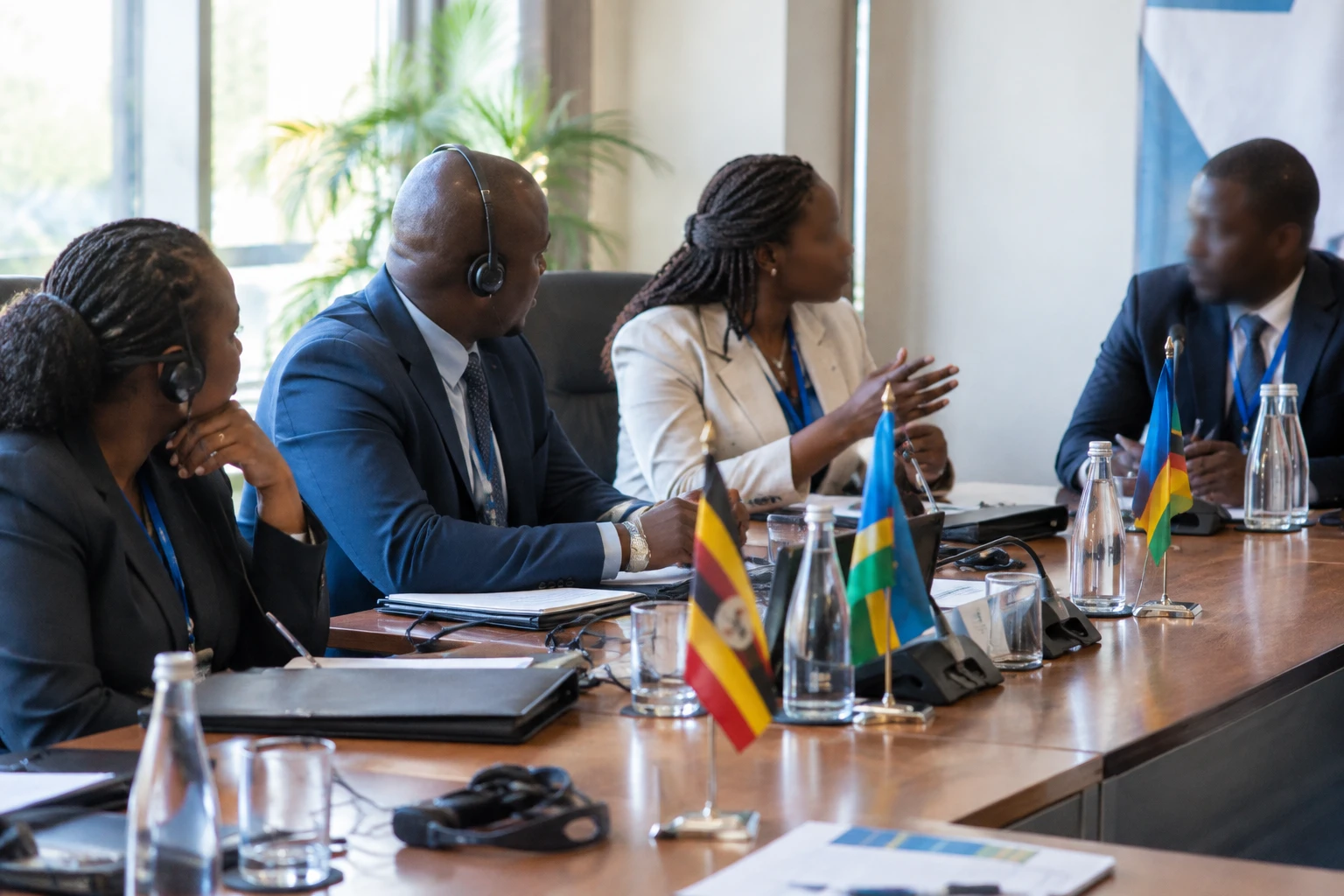
Rising economic activity does not automatically translate into higher household incomes. In Uganda, growth edged up in 2025/26, while tax revenue increased. The challenge now is to turn these results into services, jobs and opportunities for businesses.
Growth confirmed by national data
The 2025/26 financial year marks the first year of the Fourth National Development Plan, which covers 2025-2030. It forms part of the government’s so-called “tenfold growth” strategy, which aims to increase gross domestic product (GDP) to $500 billion by 2040. The ambition sets a direction, but achieving it will depend on investment and its impact on production.
Preliminary estimates by the Uganda Bureau of Statistics (UBOS) put real growth at 6.4% in 2025/26, up from 6.3% the previous year. In nominal terms, GDP rose from 227,875 billion Ugandan shillings to 250,447 billion. These figures are also cited in the annual report of the Bank of Uganda. The preliminary GDP estimates published by UBOS and the Bank of Uganda’s annual report confirm this trend.
Growth is not evenly distributed across sectors. According to UBOS, services account for 42.1% of the economy, ahead of agriculture, forestry and fishing at 26.2%, and industry at 24.1%. Agriculture grew by 6.5%, industry by 6.4% and services by 5.5%. These figures describe a diversified economy, but on their own they do not show how gains are shared among regions, businesses and workers.
Tax revenue close to target
The Finance Ministry’s annual budget performance report records tax revenue of 34,049.87 billion shillings. This was almost exactly the target of 34,051.43 billion, equivalent to 99.9% of the goal. Revenue rose by 14% year on year. These figures slightly revise the rounded numbers circulated in the initial presentations of the results.
Total domestic revenue, including tax and non-tax receipts, amounted to 36,991.01 billion shillings. Including grants, revenue and grants reached 37,985.40 billion, below the budget target of 39,973.85 billion. Grants, in particular, came in below forecasts. In other words, the strong tax result does not mean that all expected resources were raised. The 2025/26 annual budget performance report details these shortfalls.
Tax performance matters for public finances: it makes it possible to fund national policies without relying solely on borrowing or aid. But rising revenue alone does not show how much of a burden it places on taxpayers or how effectively spending is managed. The World Bank estimates that tax revenue remains modest relative to the country’s development needs. The challenge is therefore both to broaden the tax base — the number of activities and sources of income actually taxed — and to improve the quality of public investment.
From local funding to sustainable incomes
The government says 92% of the funds earmarked for the Parish Development Model (PDM) have been disbursed. The programme includes channelling finance through local co-operatives to support income-generating activities and bring households closer to the market economy. Disbursement is an administrative step, not proof that incomes or production have already increased. Concrete results still need to be measured: loan repayments, market access, storage capacity and access to buyers.
The distinction is particularly important between Kampala and rural districts. Businesses in the capital can benefit more directly from infrastructure, financial services and concentrated markets. In rural areas, the impact of funding depends more heavily on roads, electricity, the transport of harvests and co-operatives’ ability to support their members. Small operators and informal workers, who make up a large part of Uganda’s economy, do not necessarily benefit from growth at the same pace as formal sectors.
The PDM sits within a broader plan focused on agro-industrialisation, tourism, industry linked to mineral resources, and science, technology and innovation. Co-ordination among these priorities will be decisive. Processing more agricultural produce locally can create value and jobs, but requires sustained investment in energy, logistics, training and business finance.
A national ambition with an East African dimension
The trajectory also matters to Uganda’s partners in the East African Community (EAC), a regional organisation that aims, among other things, to facilitate trade and economic integration. Ugandan producers can find opportunities in neighbouring markets, while regional infrastructure and trade rules influence the cost of imports and exports. The plan’s success therefore depends not only on national indicators, but also on the ability to turn growth into competitive products and get them to markets across the region.
For the African Union, the issue illustrates a broader question: how can development be financed from domestic revenue while production and employment are expanded? The growth figure measures economic activity, not the well-being of every Ugandan. Future assessments will need to establish whether revenue can be raised sustainably, whether investment supports businesses and whether PDM funding generates lasting incomes. These results will determine the practical impact of the plan launched in Kampala.