Algeria
 Egypt
 Libya
 Morocco
 Sudan
 Tunisia
 Benin
 Burkina Faso
 Cabo Verde
 Côte d'Ivoire
 Ghana
 Guinea
 Guinea-Bissau
 Liberia
 Mali
 Mauritania
 Niger
 Nigeria
 Senegal
 Sierra Leone
 The Gambia
 Togo
 Cameroon
 Central African Republic
 Chad
 DR Congo
 Equatorial Guinea
 Gabon
 Republic of the Congo
 São Tomé and Príncipe
 Burundi
 Comoros
 Djibouti
 Eritrea
 Ethiopia
 Kenya
 Madagascar
 Malawi
 Mauritius
 Mozambique
 Rwanda
 Seychelles
 Somalia
 South Sudan
 Tanzania
 Angola
 Botswana
 Eswatini
 Lesotho
 Namibia
 South Africa
 Zambia
 Zimbabwe
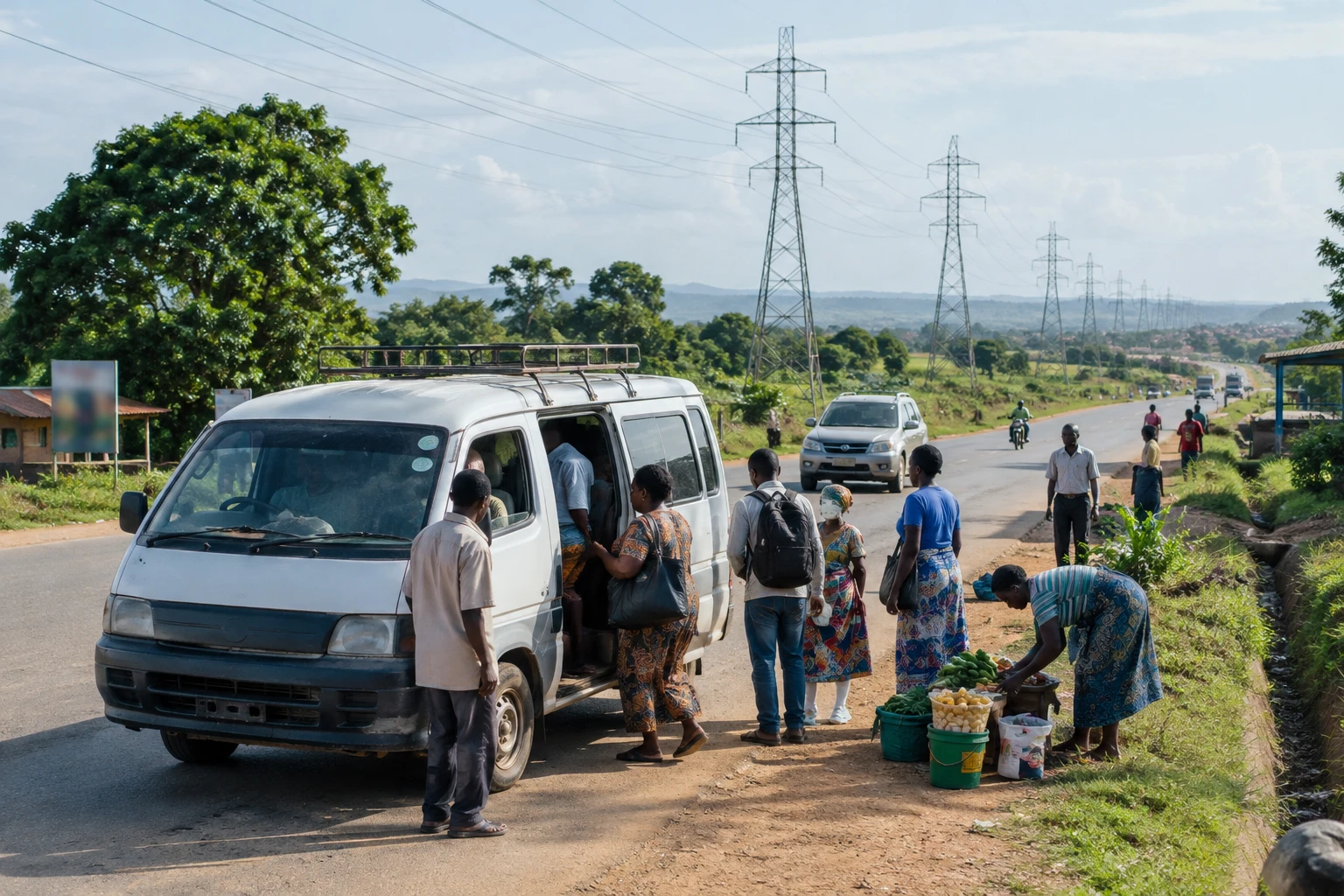
Generating large amounts of electricity is not enough if transmission lines cannot carry it to cities, businesses and homes. In Uganda, the Karuma–Tororo project is intended to address precisely this link: connecting a major hydropower plant to areas of demand in the east and Greater Kampala.
A new link between the north and east of the country
The Ugandan government launched construction on 22 October 2026 in Kampala. The 400-kilovolt (kV) link, a very high-voltage line, is due to stretch for about 347 kilometres and cross 15 districts. The project also includes substations and the reinforcement of existing facilities. Construction has been awarded to Kalpataru Power Transmission Sweden AB and is expected to take 36 months, according to the Ugandan newspaper Daily Monitor.
The announced cost is €342.6 million, or about $383.6 million. Standard Chartered arranged the financing, with support from the Swedish Export Credit Agency (EKN) and the Swedish Export Credit Corporation (SEK). The Swedish institutions had already outlined the route and its main environmental and social risks in their presentation of the Uganda power transmission project.
Energy and Mineral Development Minister Monica Musenero described the line as infrastructure intended to support industry, employment and economic transformation. Kwame Ejalu, chair of the board of state operator UETCL, said it complements investment in generation, notably the 600-megawatt Karuma plant. These are the objectives set out by project officials; the benefits will also depend on connections and local distribution.
The challenge: getting electricity to users
The project comes amid rapid change in the sector. The Electricity Regulatory Authority (ERA) puts the country’s installed capacity at 2,098.6 MW at the end of 2025. Hydropower accounts for the largest share. The Karuma plant is therefore contributing to rising national generation, but that power must be able to flow through the grid to meet demand. The figures are published by the Ugandan electricity regulator.
The gap between generation and access remains substantial. A guide from the US government agency International Trade Administration estimated that, including off-grid solutions, access stood at 51.5% nationally: 76.4% in urban areas compared with 42.4% in rural areas. Published for a period before the end-2025 capacity data, these figures should not be mistaken for a current measure of access. They nevertheless illustrate the geographical divide that infrastructure must help to narrow. The data on Uganda’s energy sector also point to transmission and distribution constraints as a brake on the use of available electricity.
A high-voltage line does not, by itself, connect a rural home. It strengthens bulk transmission; distribution networks, transformers and connections then determine who actually receives power. For businesses in urban and industrial centres, a more reliable supply can help production. For residents of the districts along the route, the benefits will depend on local infrastructure, connection costs and continuity of service.
The project also raises practical questions for communities along the route. EKN identifies risks related to land acquisition, possible displacement, the safety of local residents, and effects on soil, water and biodiversity. Fair compensation for those affected, referred to by UETCL at the launch, will therefore be an important part of the project’s implementation, alongside meeting the timetable.
National infrastructure with regional significance
Karuma–Tororo is not solely about domestic supply. Uganda’s public investment plan presents the line as a link towards a 400 kV interconnector at the border with Kenya. An interconnector enables neighbouring countries’ grids to exchange electricity, subject to the necessary infrastructure and agreements. The document places the project within regional initiatives and the work of the Eastern Africa Power Pool, East Africa’s electricity cooperation mechanism. It also refers to strengthening the power corridor linked to Kenya. These objectives are set out in the investment plan for the fourth national development plan.
This direction aligns with the East African Community’s (EAC) ambitions for economic integration; Uganda is a member. But regional trade will not advance through the construction of a line alone: it also depends on grid compatibility, trading rules and available capacity in partner countries. At the continental level, the project is a reminder that transmission infrastructure is as important as power plants in developing interconnected electricity markets.
The next step will be to track construction, the associated substations and the measures taken to compensate affected people. It will also be important to distinguish installed capacity from outcomes on the ground: more power available on the grid does not automatically mean more households connected. For Ugandans, the project’s impact will be measured as much by the reliability of supply in Kampala and the east as by effective access in rural areas.